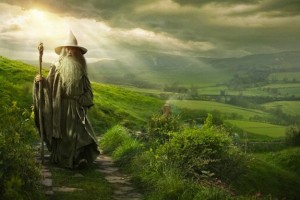
 For readers of The Hobbit, which became an almost overnight classic following its 1937 debut, the new movie may elicit some puzzlement. Seemingly extraneous flourishes clog up what many remember as a simple fairy tale, and random characters appear at every twist and turn throughout Middle Earth.
Yet those fans who went on to immerse themselves in J.R.R. Tolkien’s wider lore will find inspiration. For the most part, director Peter Jackson does not exercise an extra heaping of artistic license. Rather, Jackson—reportedly something of a nerd himself—borrows from the larger Tolkien literature to create a rich Hobbit tableau.
“Jackson knows the lore pretty well and wanted to bring that larger material in there wherever he could,” said Michael Drout, an English professor at Wheaton College who founded the academic journal Tolkien Studies and edited the J.R.R. Tolkien Encyclopedia. It’s this so-called textuality—or texts behind texts behind other texts—that lends Tolkien’s work the air of reality, he said, and which Jackson seeks to capture in his films.
Jackson isn’t free to tap into any detail he wants from Tolkien’s wider works, however. “He had a very difficult task in that the movie rights extend only to The Hobbit and Lord of the Rings,” said John Rateliff, an independent Tolkien scholar and author of The History of the Hobbit. “He’s well aware that there’s a great deal more material set in that world, but contractually not allowed to use that material in the movies.”
[Read More]
Posted in:
Share:

 I haven’t yet seen The Hobbit: An Unexpected Journey, but what I’ve seen and read of the White Council sequence has intrigued me. Continue reading “Galadriel, political animal of Middle-earth”
If you have a Tolkien/Middle-earth inspired poem you’d like to share, then send it to poetry@theonering.net. One poem per person may be submitted each month. Please make sure to proofread your work before sending it in. TheOneRing.net is not responsible for poems posting with spelling or grammatical errors.
Posted in:
Share:
 Parma Eldalamberon (The Book of Elven-tongues) is a journal of the Elvish Linguistic Fellowship, a special interest group of the Mythopoeic Society. This new issue presents previously unpublished writings by J. R. R. Tolkien about an early version of one of his invented scripts, edited and annotated by Arden R. Smith, under the guidance of Christopher Tolkien and with the permission of the Tolkien Estate.
The Qenya Alphabet is an edition of Tolkien’s charts and notes dealing with the circa-1931 version of the writing-system later called Fëanorian Tengwar. It includes 40 documents in which Tolkien’s examples of the scripts are reproduced using electronic scans of black-and-white photocopies of the original manuscripts. Continue reading “New Eldalamberon from Elven Linguistic Fellowship”
Posted in:
Share:
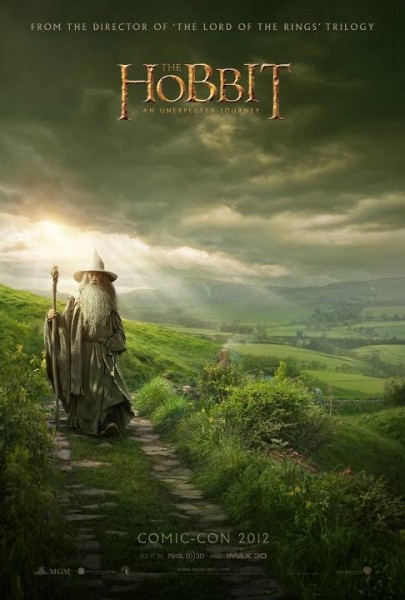 So over the last 24 to 48 hours, there’s only been about half a billion articles posted across the interwebs about the Hall H presentation. Then add an equal number of video interviews that Peter Jackson, Philippa Boyens, Martin Freeman, Ian McKellen and Richard Armitage have been doing about The Hobbit.
Talk about feast or famine!
So without further ado, here’s a round-up of the latest ones, and a bit of a summary for many of the articles to help you decide what to read or watch.
Bootnote: big props to everyone who has been sending in links to spymaster at theonering dot net — you’re all ace! And be sure to drop us a line if you think you have a scoop about the production — we’d love to hear from you!
Now updated! with press conference video footage!
SPOILER WARNING!
Continue reading “TORn’s ultimate Comic-Con 2012 round-up!”
Posted in:
Share:
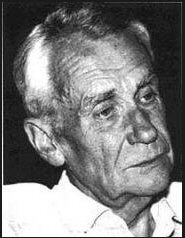 Christopher Tolkien is the youngest son of J.R.R. Tolkien, and his literary executor. He recently gave a rare interview to French newspaper Le Monde. In it, he talks about his father’s works, reputation, and the slow evolution of Tolkien’s Middle-earth.
The posterity of J.R.R. Tolkien is both the story of an extraordinary literary transmission from a father to a son, and the story of a misunderstanding. The most well-known works, the ones that have hidden the rest, were only an epiphenomenon in the eyes of their author…
[In French] | [English translation]
Posted in:
Share:
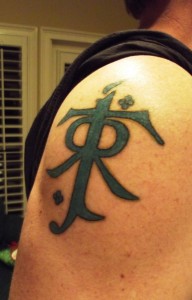 I never considered myself a tattoo guy.
Until now.
It started innocently enough. I wanted to commemorate what I considered no small achievement: reading all 12 volumes of the History of Middle-earth in one year. I made the pledge and started the trek in January of 2011, and managed to turn the last page in mid-December of that year. (I wrote about the experience here and here)
So what could I do to mark this considerable milestone?
I’d had every opportunity in my younger days to become one of the Inked. Lived with several bands, traveled around with all sorts of characters in a circus-like caravan for years before pretending to settle down and got a “real job”.
But never once did I feel the urge to get a tattoo. Big, small, cool or silly, it never crossed my mind as anything I would ever want to do. “How permanent!” “Do I really want everyone to see and judge me?” “Wouldn’t it affect my job or the impression customers and co-workers would get?” All of that crossed my mind, but not in any sort of huge, conflicting way. I just never wanted one.
So why, when searching for an appropriately Big Sign statement to mark the conclusion of my most recent Tolkienian Journey, was that one of the first things that came to mind?
Mayhap, as some have speculated (myself included), it’s a sort of midlife crisis, only instead of a Porsche I got some ink. (By the way – if this truly is the midpoint of my life, 50% gone and 50% still to come, I’ll take it, say thankee-sai.)
Others have said, simply, “I think he’s lost his mind…”
Possibly so.
Continue reading “Under My Skin: Externalizing Tolkien”
Posted in:
Share:


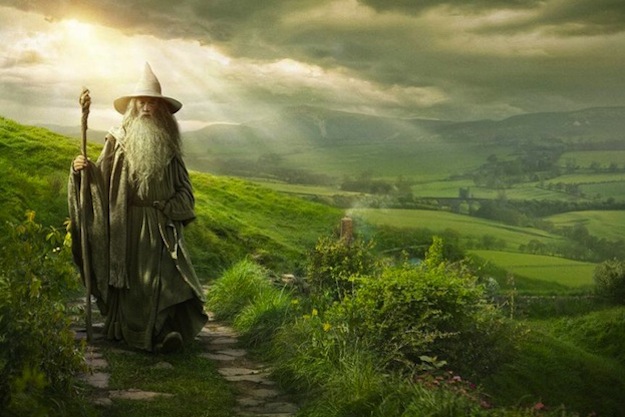 For readers of The Hobbit, which became an almost overnight classic following its 1937 debut, the new movie may elicit some puzzlement. Seemingly extraneous flourishes clog up what many remember as a simple fairy tale, and random characters appear at every twist and turn throughout Middle Earth.
