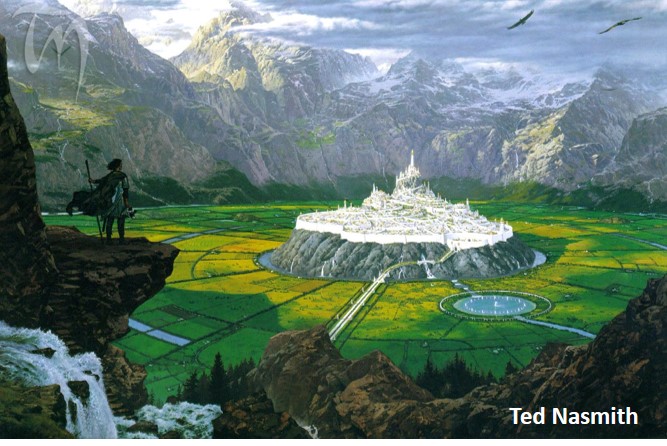
We’re all familiar with the events of the end of the Third Age depicted in The Lord of The Rings books: Frodo, aided by the Fellowship of the Ring and other free peoples of Middle-earth, finally defeated the dark lord Sauron. But what about previous ages, and the rich history that led up to those events? The reality is that there were thousands and thousands of years of trials, tribulations, love, bravery, betrayal, and sacrifice that led to the events of the Third Age.
You’ll find some of the backstory in The Fellowship of the Ring chapter: “The Shadow of the Past,” and even more bits and pieces in “The Tale of Years” in The Lord of the Rings appendices. Other than those two sources, if you haven’t read The Silmarillion or Unfinished Tales – or if you have, but have trouble keeping your Fingolfins and Finrods straight, – you’ll want to read this summary of the First Age before you dive into Middle-earth March Madness voting.
TheOneRing.net will be at WonderCon this year, and we will be hosting two panels over the course of the weekend, April 1-3 in the Anaheim Convention Center. If you plan to attend the convention, please read through the WonderCon COVID protocols.
Our first panel, Middle-earth! Coming to your TV this Fall will be at 4:30 pm on Friday, April 1 (no joke) in room North 200A. This will be our big overview panel, with all the news, rumors, and anecdotes about Amazon’s Lord of the Rings: The Rings of Power, as well as the WB’s upcoming animated War of the Rohirrim. There will be an update on any and all Middle-earth news, activities, and events coming up this year. And we can wait to see if anyone has had enough time to create a costume from the recent Amazon Teaser Trailer.
Our Second panel, I am no Man: The Women of Middle-earth will be a deep dive into Tolkien’s legendarium to discuss all the unique and wonderful women that Tolkien created. For those who have just read The Hobbit, Middle-earth feels like an ‘all males club’, but in The Lord of the Rings and some of the books of deeper lore, there are queens and warriors and creators, all women, who had a hand in shaping the Middle-earth we all know and love. The presentation is still being crafted, if there is a specific woman of Middle-earth you wish to see discussed, send an email to Garfeimao@TheOnering.net. Include the character name and a brief note about what makes her so special for you, we will include as many as we can fit into our allotted panel time.
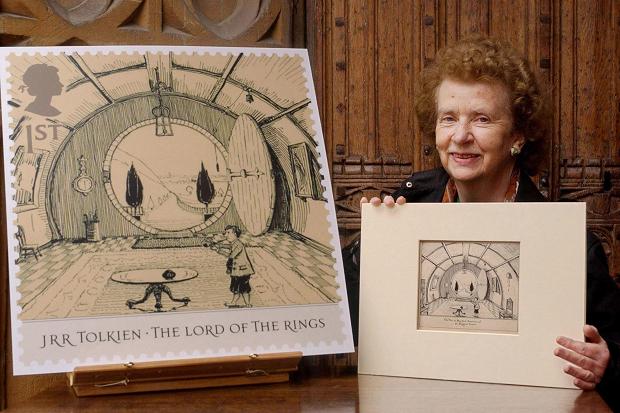
Priscilla Tolkien, the youngest of J.R.R. Tolkien’s four children, died on February 28 2022. She was 92 years old.
Born June 18 1929, Priscilla was the only daughter of the Professor and his wife Edith. They were already living in Oxford when she was born. At the age of fourteen, Priscilla typed up some of the early chapters of The Lord of the Rings for her father. She studied English at Lady Margaret Hall college in Oxford, who yesterday announced her passing.
Priscilla, like her older brother Christopher, was a champion of her father’s work. She was Vice-President of the Tolkien Society, and together with the oldest of the four children, her brother John, she published in 1992 The Tolkien Family Album. Frodo’s name in early drafts of The Lord of the Rings, Bingo Bolger-Baggins, apparently came from her names for a family of toy bears she had as a child.
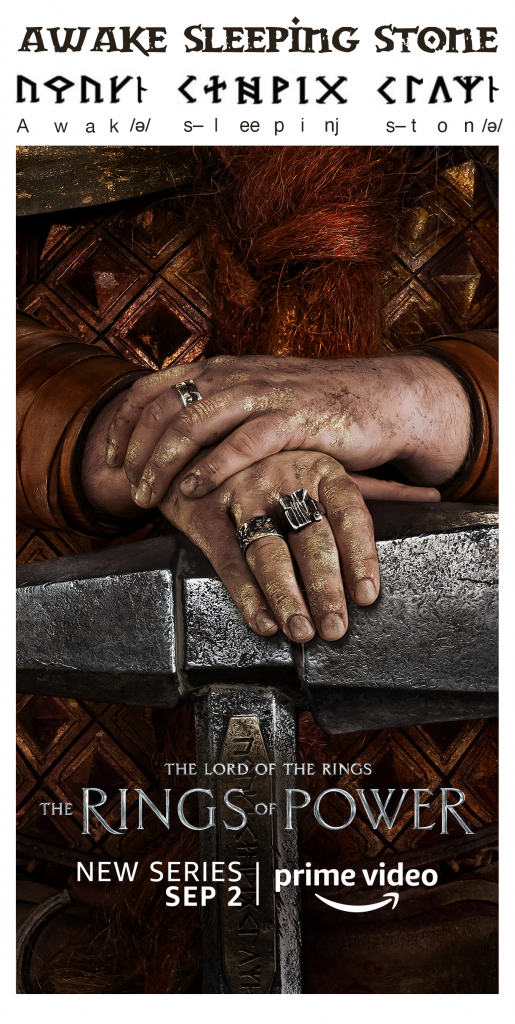
Partially hidden behind the show title on one of the new Amazon Prime The Lord of the Rings–The Rings of Power posters is a hammer handle bearing Cirth runes. They appear to say “AWAKE SLEEPING STONE”, which is appropriate since the poster seems clearly to portray a Dwarf, hands permeated with gold dust.
The words on the sword seem to translate as “Awake Sleeping Stone”
Perhaps the meaning behind these words can be discovered in The Silmarillion. When Aulë, one of the Valar, created the Dwarves in secret “in a hall under the mountains in Middle-earth”, he preempted Eru Ilúvatar’s desire that the Elves, the Firstborn of his design, be the first sentient beings in Middle-earth. Instead of destroying Aulë’s creations, Ilúvatar granted them life, but not until after the Elves were awakened. Ilúvatar tells Aulë:
“They shall sleep now in the darkness under stone, and shall not come forth until the Firstborn have awakened upon Earth; and until that time thou and they shall wait, though long it may seem. But when the time comes, I will awaken them…”
J.R.R Tolkien, The Silmarillion, Of Aulë and Yavanna
Or it could be that the inscription on the hammer refers to the Dwarves’ love of delving deep under the earth, awakening the stone to its potential to become vast and glorious halls, such as Menegroth, the realm of King Thingol and Queen Melian, and Moria, or as it is called in the Dwarven tongue, Khazad-dûm.
In regards to the runes that appear on the hammer, they are a system of writing called the Cirth, or the Angerthas. They were created by Tolkien and appear in a chart in the Lord of the Rings in ‘Appendix E: Writing and Spelling’. Historically, runes were used across Northern Europe during the Middle Ages by the Anglo-Saxons and Vikings. Tolkien borrowed from these sources and others to create his own unique set of runes. In Tolkien’s legendarium, the origins of the Dwarven runes as we know them date back to the Sindar and Noldor Elves, and the Dwarves did not come to learn them until the beginning of the Second Age, which fits in with the show’s timeline. The Elves later abandoned Cirth for Tengwar, used commonly to write Quenya and Sindarin. Cirth only represented the sounds of Sindarin, and were primarily used for engraving into stone, metal, or wood, the reason for the straight edges and angles of the letters. The Dwarves of Moria added to and expanded the Angerthas to serve their own language and purposes.
In translating the poster, there were two runes that confused the meaning at first. The first was the rune used for “ng” in “Sleeping”. The poster uses the rune for “nj” instead of “ng”. According to the LotR appendices, the “ng” rune was one of the newer cirth introduced by the Dwarves of Moria, though it does not say at what date. It does say “This Angerthas Moria is represented in the tomb-inscription.” Assuming this references Balin’s Tomb, the “ng” rune might not have been in popular usage until later than the series may portray. The second thing that tripped me up was the rune used for the silent “e” in “Awake” and “Stone”. The symbol for the silent “e” is given a value of “*” on the chart in the appendices, and it was only through further research that I was able to confirm the corresponding letter and sound.
It’s really wonderful to return to Arda! There is so much to look forward to when The Rings of Power airs this fall – and even sooner if these posters are any indication.
It’s the most wonderful time of year, when TheOneRing.net staff pick some of our favorite Tolkien inspired gifts for our 2021 Holiday Gift guide. From all of us, we wish you a safe and joyous holiday season.
Please note that all prices are in US currency and subject to change.
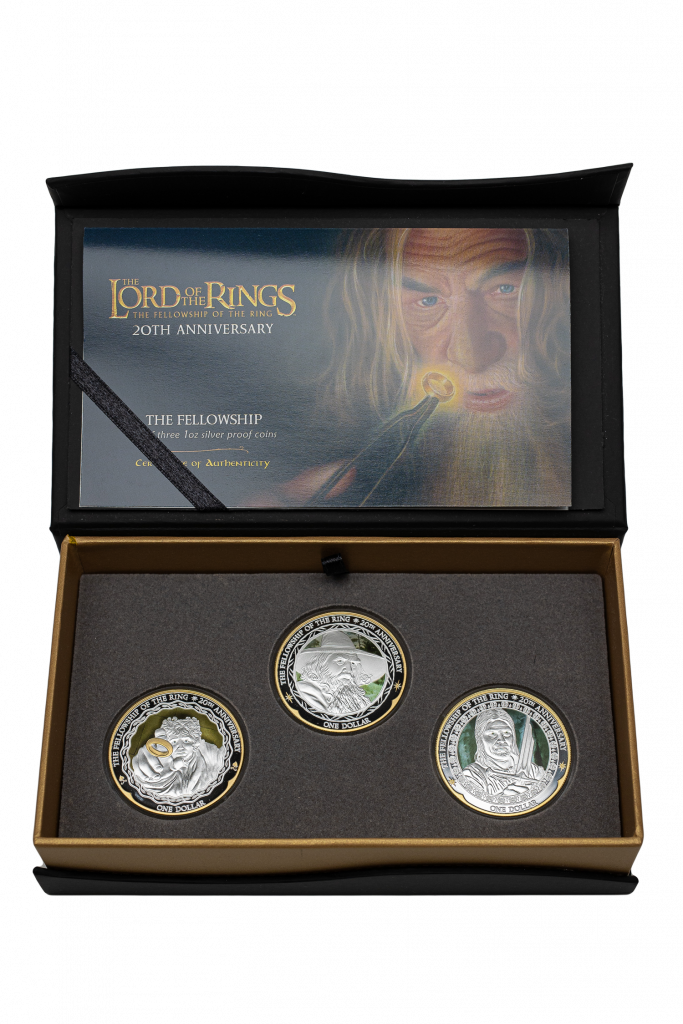
At the start of August, we told you about NZ Post’s beautiful stamps which were being issued to celebrate 20 years since the release of Peter Jackson’s The Fellowship of the Ring movie. Now NZ Post have shared with us EXCLUSIVE news about their next new release – a set of commemorative coins. Here’s what they tell us: