Thanks to Ringer Tajik for the heads-up on this interesting read about a Yiddish translation of The Hobbit.
Cool quote that gives some insight into the difficulties of translating texts:
But when Bilbo Baggins played with the meaning of his name in a long discussion with the dragon Smaug, Goldstein was forced to admit defeat. “There’s no way to do it, there’s just no way to translate it,” Goldstein said. “So, I put in a footnote and said, ‘This is a pun and I give up.’ ”
For one of his first translation projects after his retirement, Barry Goldstein, a former computer programmer, found an empty table at his local Starbucks in Boston and settled in to work on the “Treebeard” chapter from J.R.R. Tolkien’s Lord of the Rings trilogy. But Goldstein soon realized that he needed something more sizable to occupy his time: 95,022 words later, he had translated the entire text of The Hobbit, the prequel to the Ring series, into Yiddish.
Only a little more than 130 copies of Goldstein’s translation have sold since it was released in December. But as Goldstein tells it, he always knew Der Hobit wouldn’t be a best-seller, and the sales were still double his original two-figure estimate.
In the heyday of Yiddish literature, the translation of literary classics into the mamaloshen was entirely commonplace. The prewar Yiddish readership is estimated at about 10 million—many of whom spoke Yiddish as their first language and had a rabid appetite for the classics of world literature.
Some of the best-selling Yiddish adventure stories included gems like Robert Louis Stevenson’s Treasure Island, Jack London’s Klondike series, and Mark Twain’s The Adventures of Tom Sawyer. “There was a sense that we had to catch Yiddish up with the world and modernism and that any important literary phenomenon that was taking place in the larger world had to be conveyed to the Yiddish-speaking world,” said Miriam Udel, a professor of Yiddish at Emory University. “The cultural ambitions of Ashkenazic Jewry were on the grandest scale, so they didn’t think of themselves as having a small or minority literature or a cultural complex.”
This new story caught my eye because of its parallel with the original situation that got THE HOBBIT published in 1937 — all because of a child’s honesty in reviewing the book! Over at The Guardian website their Children’s Book section features all-kid reviews. Rather smart to provide children a proper voice in a marketplace directed at them. Young writer Krazy Kesh turns in a delightful review of THE HOBBIT after experiencing the thrill of the first movie in the “Hobbit” film trilogy [click here to read]. Continue reading “DEJA VU: 12 Year-old Writes Delightful Review of THE HOBBIT”
In my internet wanderings, I sometime stumble on cool Tolkien things. Not necessarily news, but interesting — like this transcript of a live chat with renowned Tolkien scholar Professor Tom Shippey (author of the acclaimed J.R.R. Tolkien: Author of the Century) over on Tolkien Library to celebrate the release of The Legend of Sigurd and Gudrun back in 2009.
Yes, we can all agree that’s fairly old.
However, if you’re interested in Norse myth, Shippey’s thoughts on Tolkien’s parallels with other early fantasists such as William Morris, Lord Dunsany and E.R. Eddison, as well as what he thought of meeting Tolkien himself, then you’ll find (like I did) this a worthwhile read. Continue reading “Tom Shippey talks Tolkien and Norse myth”
If you have a Tolkien/Middle-earth inspired poem you’d like to share, then send it to poetry@theonering.net. One poem per person may be submitted each month. Please make sure to proofread your work before sending it in. TheOneRing.net is not responsible for poems posting with spelling or grammatical errors.
German cinema magazine.German Magazine Cinema, has published a pretty fascinating article all about the second Hobbit movie, “The Hobbit: The Desolation of Smaug,” dropping casual spoilers as if they are common knowledge. What is a little odd is that the magazine doesn’t make clear where it gets quotes from Peter Jackson or Evangeline Lily or Orlando Bloom and it sure doesn’t make clear where all the spoilerific plot information comes from. We can’t vouch for the accuracy of the quotes.
Friends at thorinoakenshield.net have a full online translation of the print publication and since we aren’t German speakers, we can’t say if anything is lost in translation, but it reads pretty clearly.
Here are some highlights but if you read beyond this point, expect full-on potential spoilers! (We can’t say if they are true or not, but the writer surely dishes the info matter-of-factly.)
****Seriously, last chance, major potential spoilers!****
“A greedy dragon, a rather testy skinchanger, a river ride full of action and the battle of the White Council against the Necromancer of Dol Guldur: Middle-earth fans should be prepared for something big; because with “The Hobbit – Desolation of Smaug” (starting December 12th) Peter Jackson will (once again) show all he’s got.”
“A lot of the appendices will also be used in part 2.”
“Hardcore fans will find the revelation of the Necromancer (Benedict Cumberbatch as CGI shadow) as witch master Sauron just in a couple of sentences in the book. And according to Tolkien the pale orc Azog doesn’t survive the Battle of Azanulbizar (in the beginning of “The Hobbit – An Unexpected Journey”), while Jackson definitively turns him into Thorin Oakenshield’s arch enemy now. Orcs invading Esgaroth on the other hand was completely invented by Peter Jackson. Just like Tauriel – this young, only 300 years old elf which will add a bit of femininity to the male dominated story.”
“This story needs estrogens”, Evangeline Lilly jokes. And Peter Jackson adds: “Thanks to characters like Tauriel we will discover more about the life in Mirkwood, which is completely different from Rivendell.” But the Silvan pointy-eared beauty is not supposed to be a mere copy of Arwen from the old trilogy. After all the people of the wood elves is a lot more dangerous and suspicious than Elrond and his companions. “We are like ninjas from the undergrowth.” (Lilly)”
“Peter Jackson not only uses additions like this to narrate a coherent chronicle of Middle-earth, he also uses them to sprinkle a little treat for spare time hobbits here and there. For example fanboys will anticipate the first encounter of Legolas and Gloin, father of grumpy dwarf Gimli from the “Rings” films. Other than “An unexpected Journey” the sequel is going to be distinctly darker though, stresses Jackson.
“One climax of the new trilogy, which over 2000 actors and extras worked on, is the death of the dragon. Whether Smaug’s fall will end part 2 however is yet unknown. Certain is that the Battle of the Five Armies will play the center role in “The Hobbit – There and Back Again”.
Those are the highlights and you can read the full translation right here, from ThorinOakenshield.net along with scans of the magazine’s pages while the German publication can be found online here, but we didn’t find a link directly to the article.
Tom Bombadil has always been the most enigmatic of characters in the writings of J.R.R. Tolkien’s Middle-earth. When he didn’t make the cut in the movies, despite not being central to the plot, many fans objected and wondered why. The answer is revealed below at last from the Brotherhood Workshop!
Tolkien wrote a few times about his character, especially in letters to those who asked. In one such letter to Peter Hastings he says in part,
“I don’t think Tom needs philosophizing about, and is not improved by it. But many have found him an odd or indeed discordant ingredient. In historical fact I put him in because I had already ‘invented’ him independently (he first appeared in the Oxford Magazine) and wanted an ‘adventure’ on the way. But I kept him in, and as he was, because he represents certain things otherwise left out. I do not mean him to be an allegory – or I should not have given him so particular, individual, and ridiculous a name – but ‘allegory’ is the only mode of exhibiting certain functions: he is then an ‘allegory’, or an exemplar, a particular embodying of pure (real) natural science: the spirit that desires knowledge of other things, their history and nature, because they are ‘other’ and wholly independent of the enquiring mind, a spirit coeval with the rational mind, and entirely unconcerned with ‘doing’ anything with the knowledge: Zoology and Botany not Cattle-breeding or Agriculture . Even the Elves hardly show this : they are primarily artists. Also T.B. exhibits another point in his attitude to the Ring, and its failure to affect him. You must concentrate on some pan, probably relatively small, of the World (Universe), whether to tell a tale, however long, or to learn anything however fundamental – and therefore much will from that ‘point of view’ be left out, distorted on the circumference, or seem a discordant oddity. The power of the Ring over all concerned, even the Wizards or Emissaries, is not a delusion – but it is not the whole picture, even of the then state and content of that pan of the Universe.”


 Thanks to Ringer Tajik for the heads-up on this interesting read about a Yiddish translation of The Hobbit.
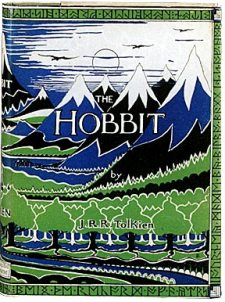
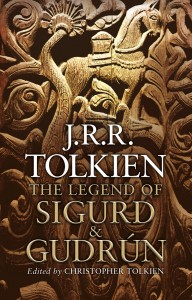 In my internet wanderings, I sometime stumble on cool Tolkien things. Not necessarily news, but interesting — like this transcript of a live chat with renowned Tolkien scholar Professor Tom Shippey (author of the acclaimed J.R.R. Tolkien: Author of the Century) over on Tolkien Library to celebrate the release of The Legend of Sigurd and Gudrun back in 2009.
 You push through furs to hide at the back of the wardrobe. Suddenly, fur gives way to twigs, floorboards to snow. A lamp-post glimmers ahead…