It’s almost a week since the official opening in theatres of the epic animated movie The Lord of the Rings: The War of the Rohirrim. It’s definitely a film to see in the cinema; the inspiring soundtrack, rich, lush sound design, and sweeping, stunningly artistic vistas are best served by the biggest screen you can find, with an outstanding sound system.
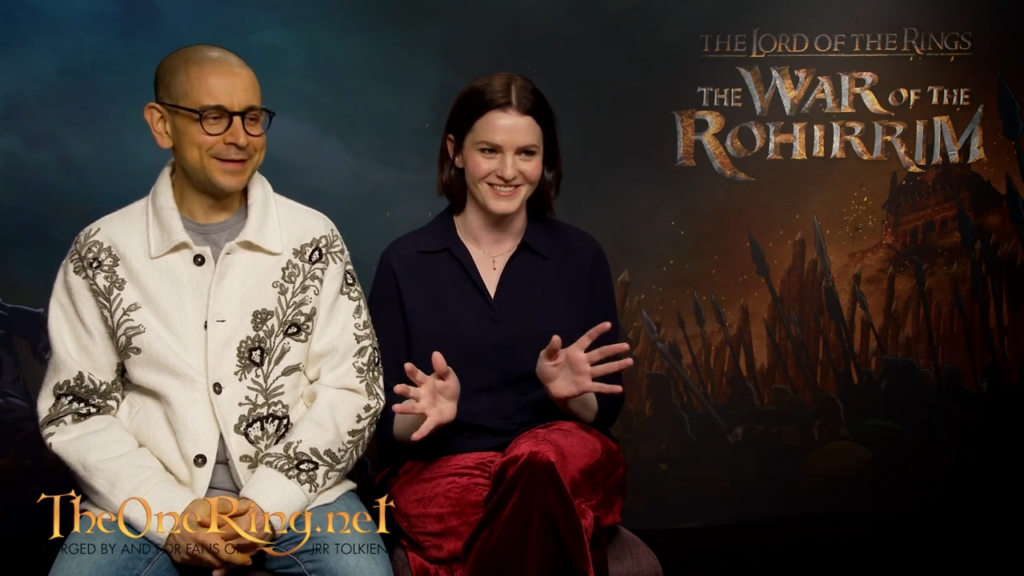
Earlier this month, staffer greendragon joined the press junket in London, following the red carpet premiere. There she was able to chat with producer Philippa Boyens, writers Phoebe Gittins and Arty Papageorgiou, and actors Gaia Wise and Laurence Ubong Williams. They covered topics such as the challenges – and liberations! – of voice acting; being awestruck by being in a room with Peter Jackson, Fran Walsh and Andy Serkis; and the warmth and ‘family’ nature of the Tolkien fandom. You can find all these interviews on our YouTube channel.
Quickbeam has shared his thoughts on the movie in this review, calling it ‘a terrific film, hands down’. Look for more thoughts and reviews from staffers, coming soon!
Meanwhile, TORn’s friend Dr. Maggie Parke (Director of Signum Studios, Co-Presenter and Producer of Rings and Realms) was able to attend the red carpet in London on December 3rd, and she shared her thoughts with us:
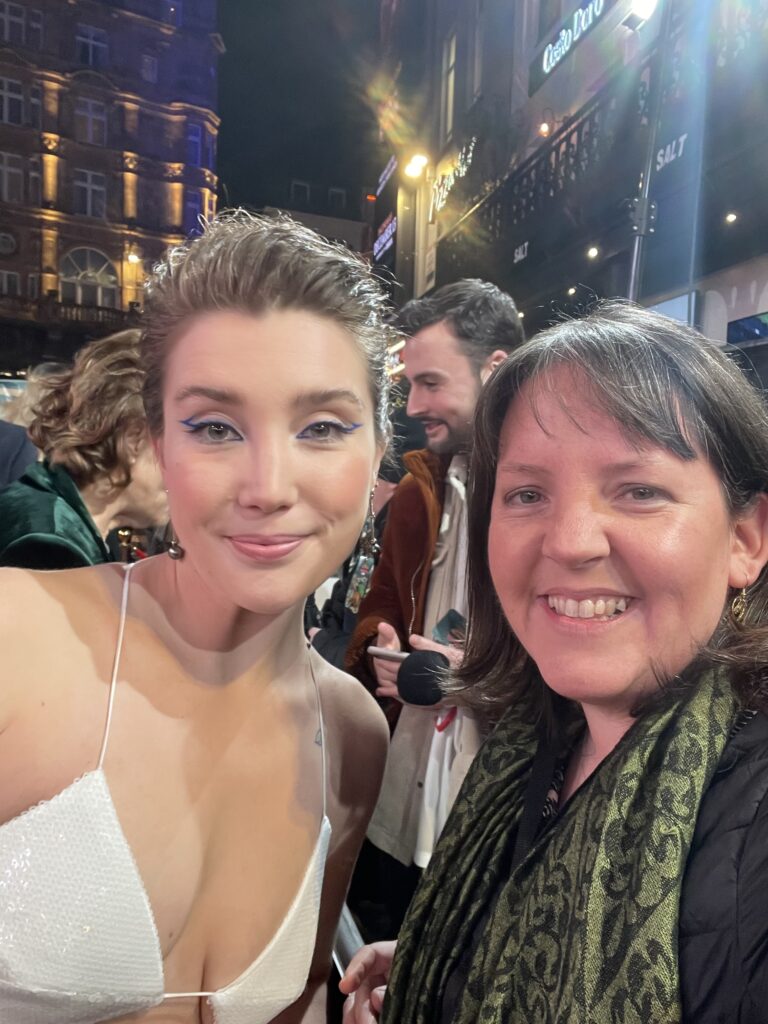
Dr. Maggie Parke with actor Gaia Wise
Premiere Report – London, December 3rd
As a lecturer of film adaptation and fan engagement, it is a rare and exhilarating experience to engage directly with the people behind a project that bridges beloved source material with cinematic innovation while relishing in the energy of the fan community. At the start of December, I had the privilege of attending the red carpet event and worldwide premiere for The Lord of the Rings: The War of the Rohirrim in London, UK. This animated feature is set in J.R.R. Tolkien’s (and Peter Jackson’s) Middle-earth, directed by Kenji Kamiyama. The film, executive produced by Peter Jackson and out of Warner Bros. Studio, is a gorgeous adventure through animation into Middle-earth, 183 years before the events from the trilogy.
The premiere was at the Odeon in Leicester Square, the traditional premiere spot in London, England. The Christmas market in the middle, twinkling fairy lights, market stalls, happy shoppers and holiday-makers, created a joyful vibe walking up to the theatre. Taking my place in the media pen on the red carpet allowed my geek heart to sing! Connecting with the cast and crew whose work on the Jackson trilogy ignited my love for filmmaking, adaptation, and production, was pretty dang magical. I relished the dynamic energy surrounding this ambitious anime project that is so different from what we know, but still so familiar from the visual’s of Jackson’s Middle-earth.
The night was vibrant and the theatre decked out for the Worldwide premiere with photo backdrops, a section for cosplayers and die-hard fans, contest winners, LED screens with video and posters, basins of actual fire, and a stage for cast and crew interviews during the red carpet time, which made the event more engaging, and like a show itself.
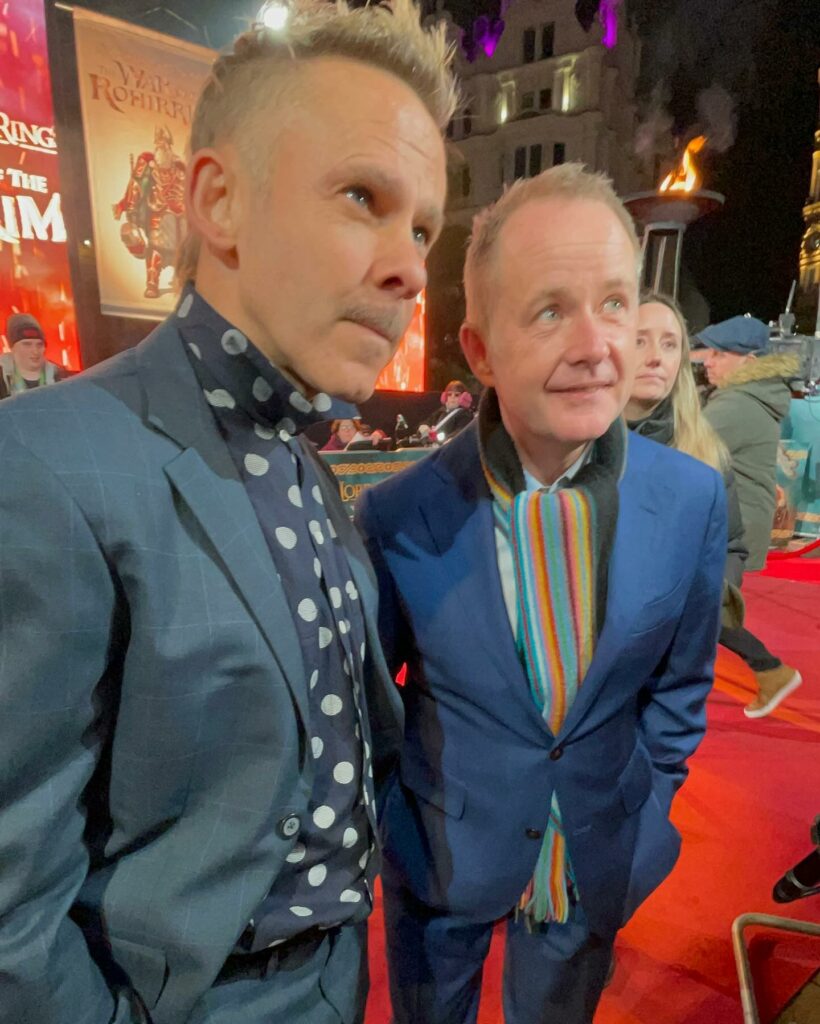
Dominic Monaghan and Billy Boyd on the red carpet
The Red Carpet: Conversations with Cast and Crew
The red carpet event was an excellent opportunity to speak with some of the key figures involved in bringing The War of the Rohirrim to life. My geek heart rejoiced as I was able to chat with Executive Producer Peter Jackson, producer Philippa Boyens, Producer Jospeh Chou, composer Stephen Gallagher, and voice cast members including Gaia Wise (Hera), Brian Cox (Helm Hammerhand), Laurence Ubong Williams (Fréaláf), and the glorious duo of Billy Boyd and Dominic Monaghan who cameo as orcs in WoR.
Phillips Boyens was SO excited to see TORn there, and spoke with passion about their approach to the film, describing how she viewed this as an opportunity fill out what we know of Rohan, and to blend the epic scope of Tolkien’s world with the unique narrative style of Japanese animation; the challenges and techniques that anime supplies are so different from a live-action film. She mentioned nods to deep Tolkien fans and the moments that they’ll appreciate, including adding some Old English (a nod to Tolkien) in the lament for Helm, sung by Lorraine Ashbourne (who voices Olwyn, and whose husband is Andy Serkis). She felt like the story “never let up….” And that while it was a fun challenge, she knew that it would get to where they wanted it to go.
Joseph Chou, the producer, highlighted the collaborative nature of the project. He discussed how the original idea came from Phillipa, and how they asked ALL of the questions to ensure this story could stay true to the world of Tolkien, but provide an exciting space to tell the story of Helm, and explore the character of his nameless daughter, now the heroine shield-maiden, Hera. He passionately described how carefully they wanted to ensure the film stayed true to the spirit of Tolkien’s world, and also was faithful to the Peter Jackson universe, while adding new layers to the mythology.
Stephen Gallagher, Gaia Wise, and Brian Cox
Stephen Gallagher, the composer, is a familiar friend of Tolkien in Jackson’s adaptation, and he was sound editor on the Hobbit films. He’s a long-time Tolkien fan, from the age 11 he devoured the books and the video games from the 80s. He said Hera’s theme is one of his favourite elements of his work on the film. He was inspired by Eowyn’s theme, but uniquely referenced it, so Hera’s is her own, but it is familiar to the tradition of shield-maidens, the culture of the Rohirrim, and the lineage of Eowyn.
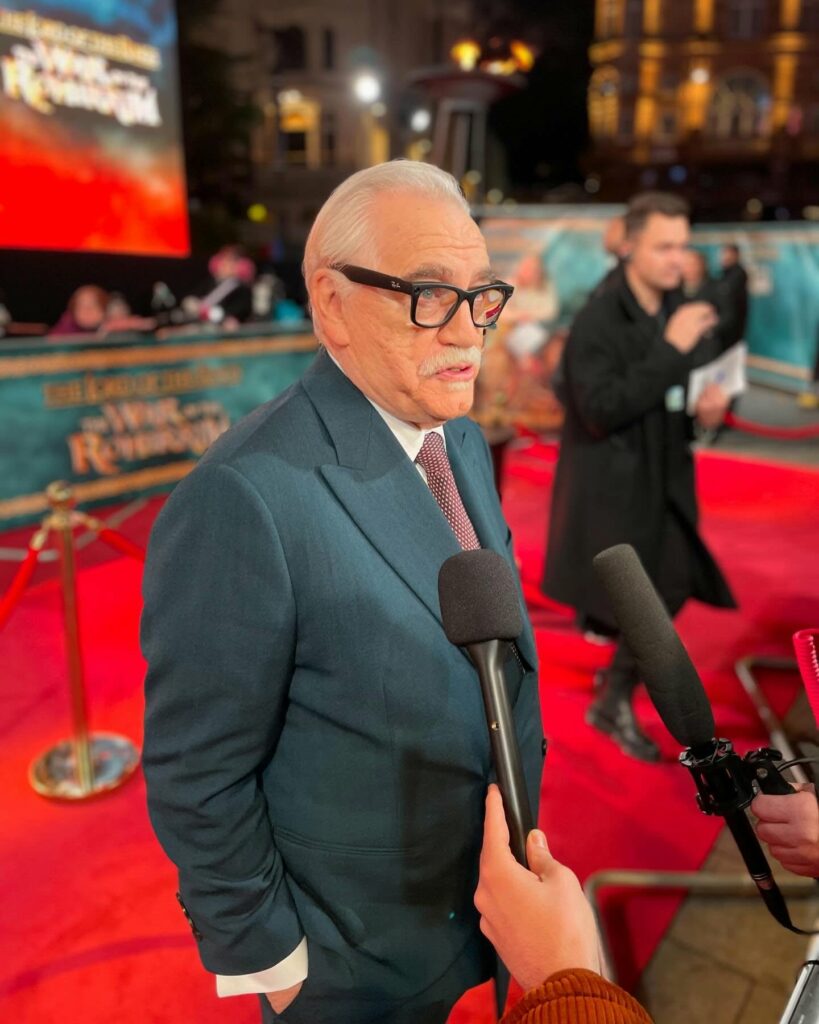
Brian Cox
Brian Cox, who voices Helm Hammerhand, felt his performance came from classic theatre training, and he shared his excitement at bringing such a legendary character to life. He also conveyed his deep respect for Tolkien’s legacy and his gratitude to Peter Jackson for providing his ‘gateway’ into Tolkien’s rich world.
Gaia Wise, the voice of Hera, said she felt in incredibly safe hands, with her ‘walking encyclopaedias of Philippa, Arty, and Phoebe’. She was grateful she was able to focus purely on developing the Hera of the script, because she knew that they had “mined all of the jewels that they could mine” from the text and world of Tolkien, so she used the script, but also them as resources for making Hera come to life.
Peter Jackson
And lastly, Peter Jackson, the ‘godfather’ of this of Middle-earth, impressed his excitement for other perspectives, styles, and artistic interpretations of Middle-earth. He said as they were returning to Middle-earth, he didn’t want it to compete with the Lord of the Rings and The Hobbit, so “handing it over to a brilliant animator and director like Kenji Kamiyama would at the very least give us an interesting result.” He said it was so exciting to sit back and fell like he was back in the world that he knew watching early cuts, and it only got stronger as the production moved ahead. He was excited to have anime come into the portfolio, although he didn’t know if there’d be another anime to follow, and he mentioned The Hunt for Gollum, Andy Serkis’s upcoming film. He referred to that film as a ‘psychological thriller,’ and was excited for exploring Middle-earth in a different way.
Peter Jackson’s version of Middle-earth in different styles? From informed, and passionate creators who aren’t afraid to take a chance on creative practices? Yes. Please.
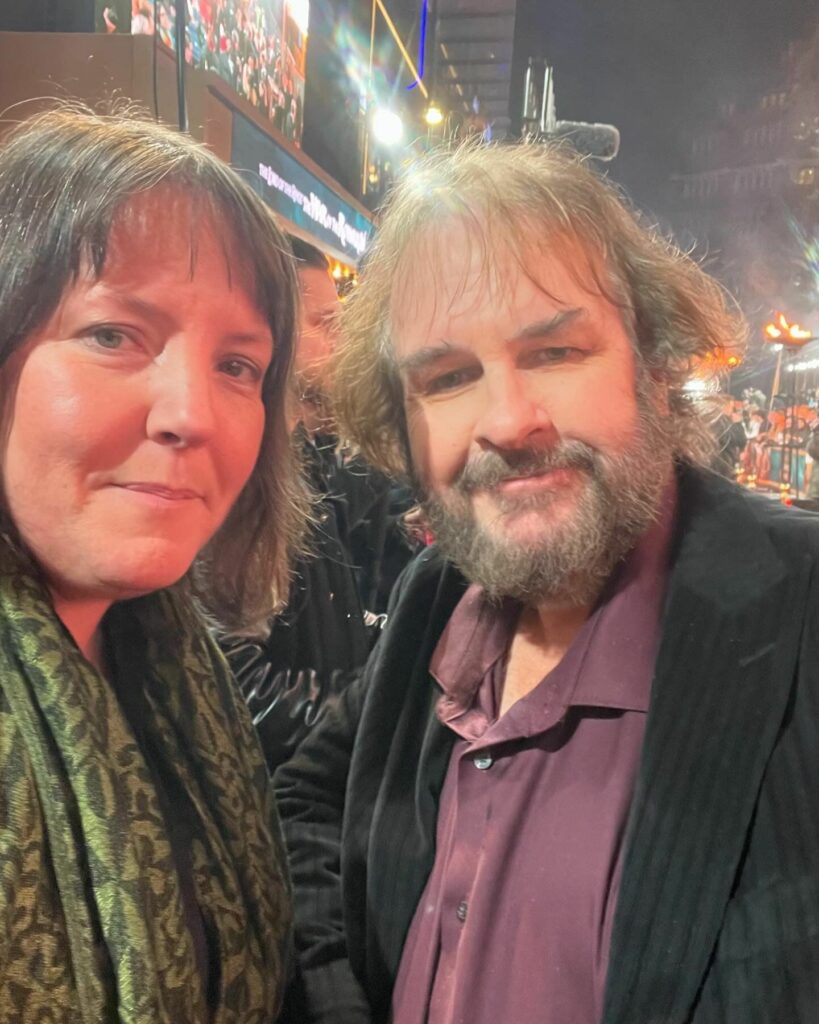
Maggie Parke with Peter Jackson
Dr Maggie Parke has her PhD in Film Adaptation and Fan Engagement, and lectures with Signum University. She is the director of Signum Studios, and produces and co-presents on Rings & Realms.
If you haven’t yet seen The Lord of the Rings: The War of the Rohirrim, what are you waiting for? Treat yourself to a voyage back to Middle-earth, and enjoy seeing Rohan, Meduseld, and other familiar sights on the big screen once again.
If you’re curious to know more about this particular story from Tolkien, and its adaptation to the big screen, we have good news for you! TheOneRing.net is partnering with the team at Rings and Realms to create a deep dive documentary all about The Lord of the Rings: The War of the Rohirrim. Find out more about this exciting project, here.
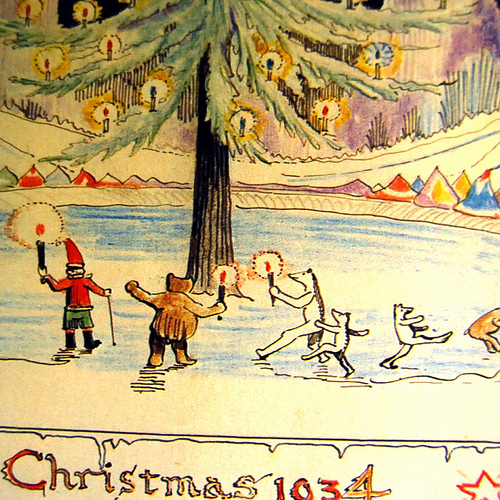
Father Christmasand North Polar Bear – J.R.R. Tolkien
It’s that most wonderful time of the year again! If you’re looking for the perfect holiday gift for your favourite Tolkien fan, you’ve come to the right place. The staff of TheOneRing.net have put together a list of our favourite items of the year, with price points for every budget.
From our Fellowship to yours, TheOneRing.net would like to wish you all a peaceful and happy holiday season.
Please note, unless otherwise indicated, all prices are in US Dollars.
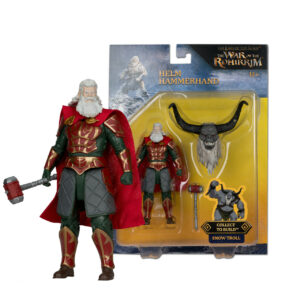
Staffer Wee Tanya recommends McFarlane’s $19.99 War of the Rohirrim figurines, for the LOTR Collector in your life.
Helm HammerhandWulf
If you are also a collector of action figures based on the Peter Jackson LOTR franchise, I am happy to share that McFarlane Toys has a set of licensed figures for War of the Rohirrim, including Hera, Helm, and Wulf, and a few others. The figures are 4″ tall with six articulation points (neck, shoulders, hips, knees), and nicely detailed.
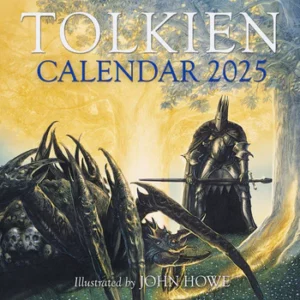
Kelvarhin recommends John Howe’s beautiful 2025 Tolkien Calendar, with images from The History of Middle-earth for $16.99.
If you’re a lover of Tolkien Calendars, like me, this is a must have for the coming year. Featuring images from the Three Ages of Middle-earth, it’s the perfect gift for all Tolkien fans.
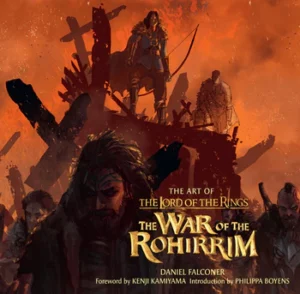
Demothenes recommends The Art of The Lord of the Rings: The War of the Rohirrim by Daniel Falconer, $50.00 from Harper Collins.
A comprehensive, large-format hardcover offering unparalleled insight into the making of The War of the Rohirrim, and the complete creative journey from concept to finished film told by the artists and filmmakers themselves.
Written and compiled by Daniel Falconer, conceptual artist at the Academy Award-winning design studio, Weta Workshop, this indispensable book chronicles the stunning conception and design of the world of Middle-earth in Kenji Kaimyama’s The Lord of the Rings: The War of the Rohirrim
If it’s Middle-earth clothing you’re after, Garfeimao suggests you check out the range from Hot Topic and Her Universe.
Our wonderful greendragon has a dragon’s hoard of suggestions, with something special for every Tolkien fan!
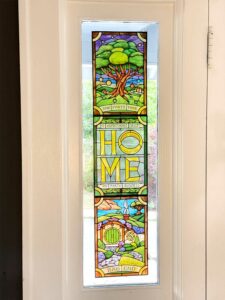
If you’re looking to adorn your own cosy hobbit hole with some authentic stained glass, look no further! Ian Leino of Geek Orthodox is an incredible artist, and his stained glass pieces are amazing. Even better – he also makes very high quality window cling versions of his stained glass, for those whose budget doesn’t quite stretch to an actual glass piece. He has some stunning designs from multiple fandoms; but of course his Middle-earth piece are my favourites!
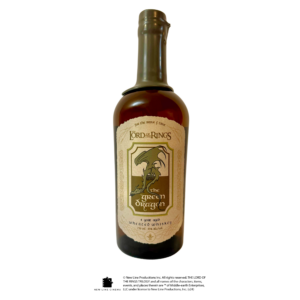
The holidays are traditionally a time to eat, drink and be like Merry… But even if you’re not a consumer of alcohol, the collectible spirits from the good folks at Syzyrgy Forge are worth having just for the beautiful bottle. Check out their Green Dragon whiskey. If you DO enjoy a tipple, you may need to buy two bottles – one to drink, and one to keep unopened. Look out for their Gandalf and the Balrog design coming next…
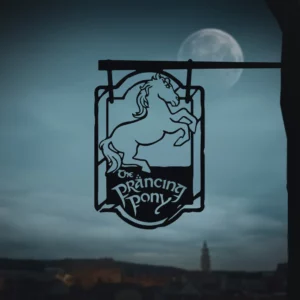
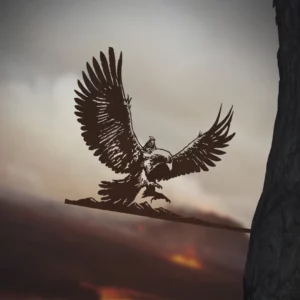
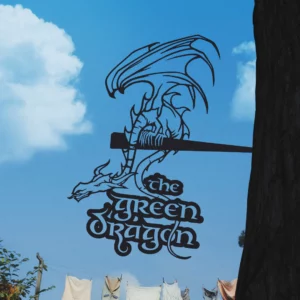
This one is really for folks who have an outdoor space to adorn – though as an apartment dweller in a city, I’m trying to work out how to display my ‘Green Dragon’ sign indoors. The folks at Metalbird create extraordinary silhouette signs, which can be attached to a fence post or tree trunk. Their original creations were – as you might expect – metal birds, but now they’ve ‘branched out’ (ha, see what I did there?) and collaborated with Weta to create Lord of the Rings pieces. Choose from Gwaihir (with a tiny Gandalf passenger), a Balrog, the Witch-king on his Fell Beast, or the Green Dragon pub sign. All beautiful; but of course I have a clear favourite…
Bring the atmosphere of Middle-earth into your home this festive season, with the incredible immersive soundscapes from Jordan Rannells. His latest creation is for The Hobbit: you can use it as an accompaniment for reading the book, or sync it with the official audiobook to get an amazing, immersive audio experience. Better yet, you can get a discount with a special code (TORN25) for TORn friends!
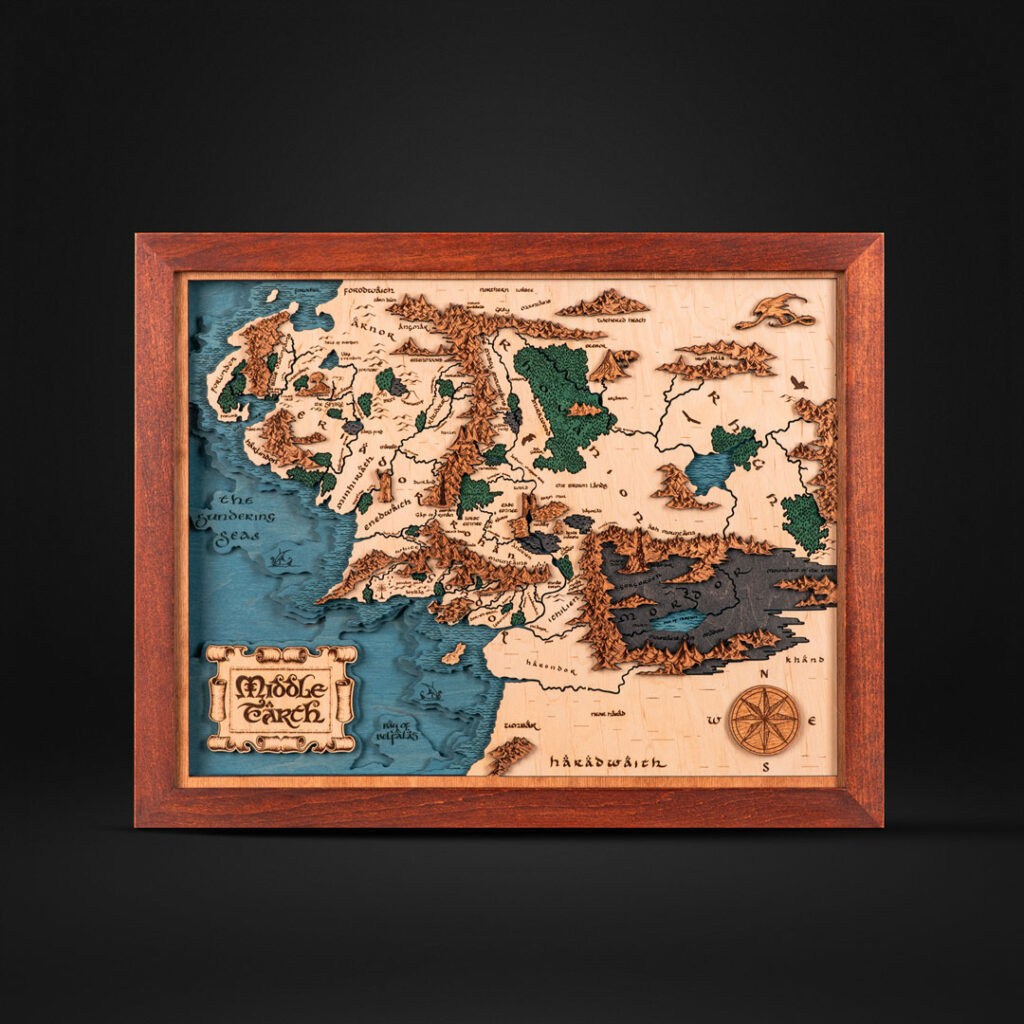
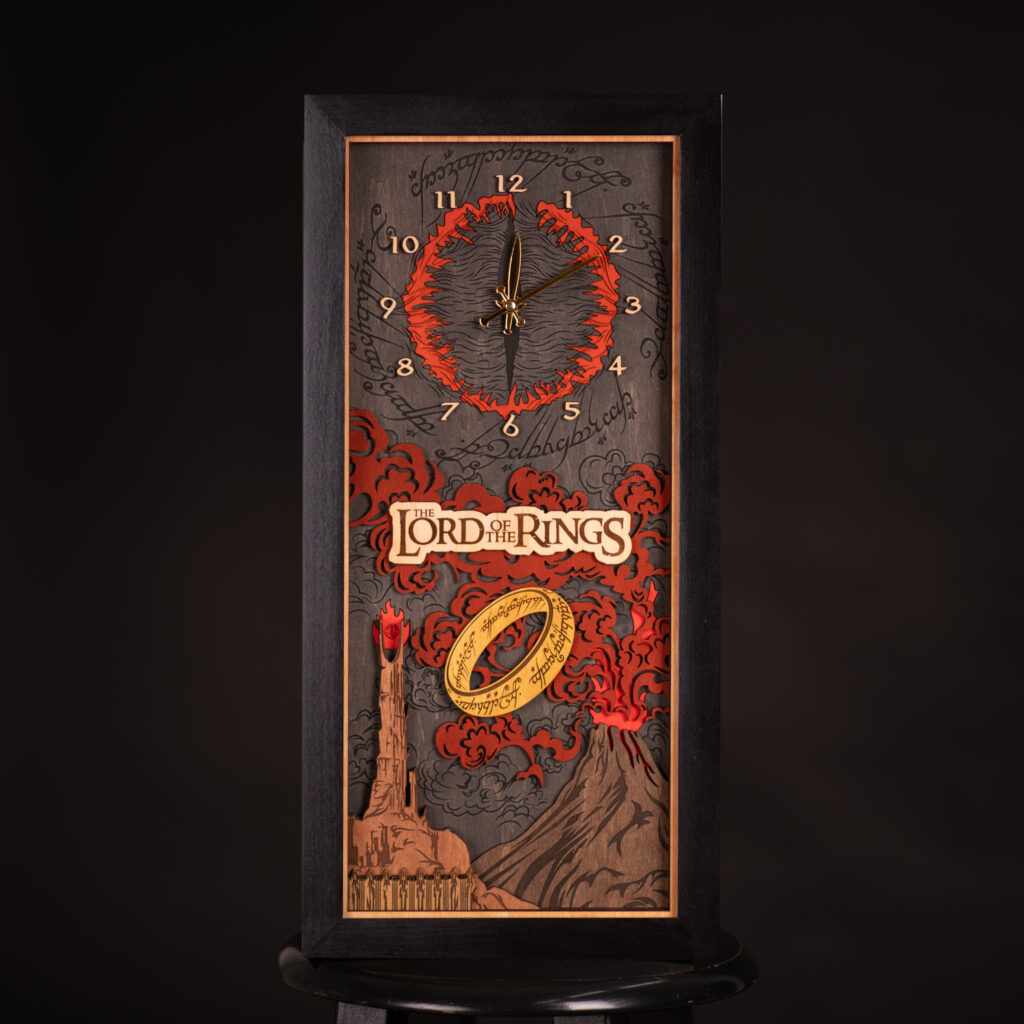
If you want something stunning to adorn your walls, look no further than Zewood’s wonderful clocks and maps. We’ve discovered this company recently, as they acquired a license to create Middle-earth pieces. They tell us:
The maps are available in three sizes, ranging from 10 to 29 inches in width, and three color schemes that can easily fit any interior. It can help you fully immerse yourself in the Middle-earth world: explore the routes of key characters, admire the sights, and stop at the places of decisive epic events.
The scent of wood and the depth of glass – all this makes the Zewood map a memorable gift for true Tolkien fans and everyone who appreciates the aesthetics of unique pieces of art. The map can also be engraved with a special phrase, favorite quote, or a name, making the gift even more personalized.
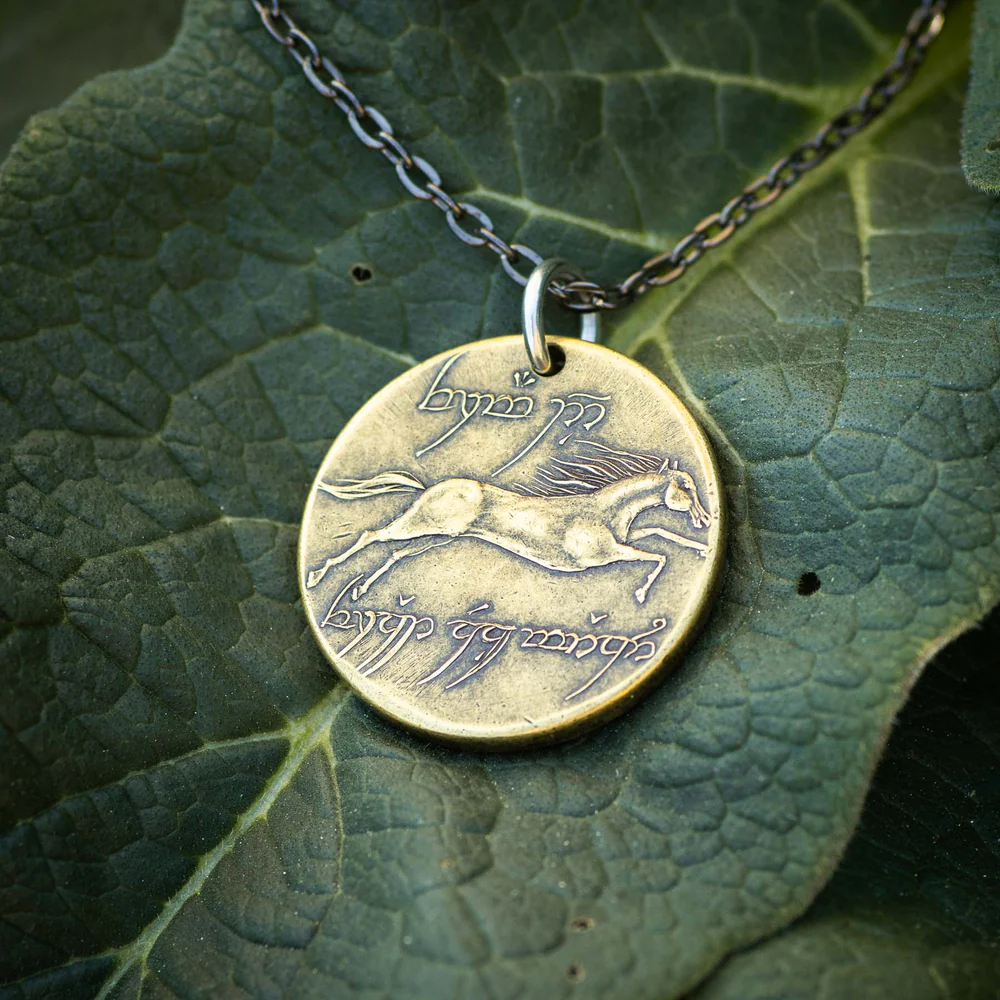
The good folks at Shire Post Mint have some beautiful pieces, including new ones released for The Lord of the Rings: The War of the Rohirrim. If you’re looking for jewelry for someone, how about their brass Stallion necklace? Their treasures are all high quality, but priced very reasonably; and they have a sale going on this weekend only!
Of course our friends at Oscha have many gorgeous goodies, from throws and blankets, to clothing, drinkware, and even yoga mats! Beware, a visit to their website can be hard on the wallet, as you may find yourself saying, ‘We wantsss it all, precious…’ But the good news is, they have a special offer – THIS WEEKEND ONLY. They are calling it ‘Thank You Friday’ – to thank people for choosing to shop with a small, ethically conscious business. From 10am Thursday 28th Nov – to 10am (UK time) Tuesday 3rd Dec, at the Oscha Slings website, you can get:
£10 off if you spend £100 £20 off if you spend £150 £30 off if you spend £200
Here are a few of their own staffers’ personal favourites:
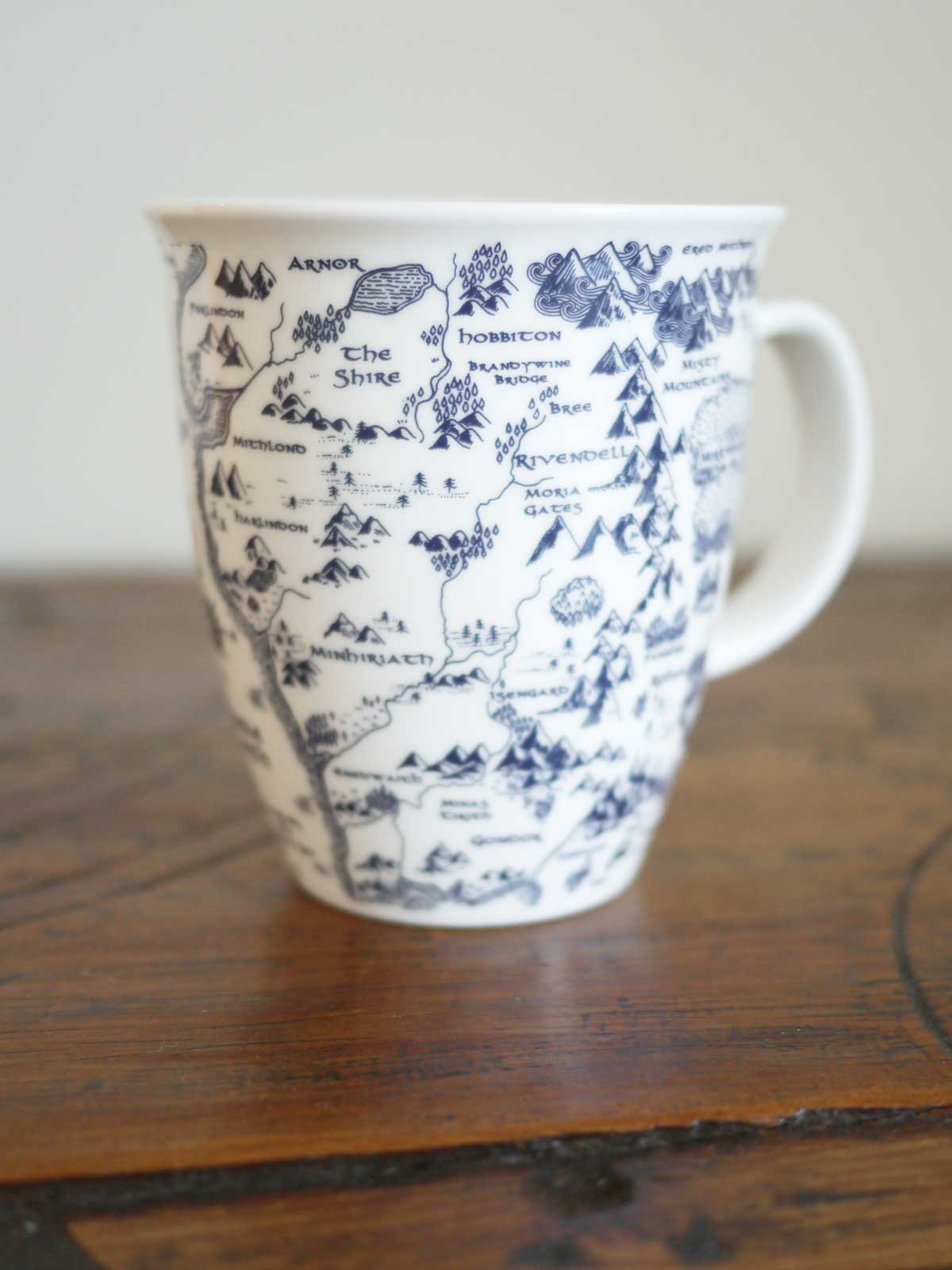
Realm of Middle Earth Indigo Mug:If you are looking for the perfect middle earth map coffee mug, this is for you. Crafted in bone china, these high quality mugs are made by a family business in Staffordshire, UK. It features beautiful touches on the handle and inside.
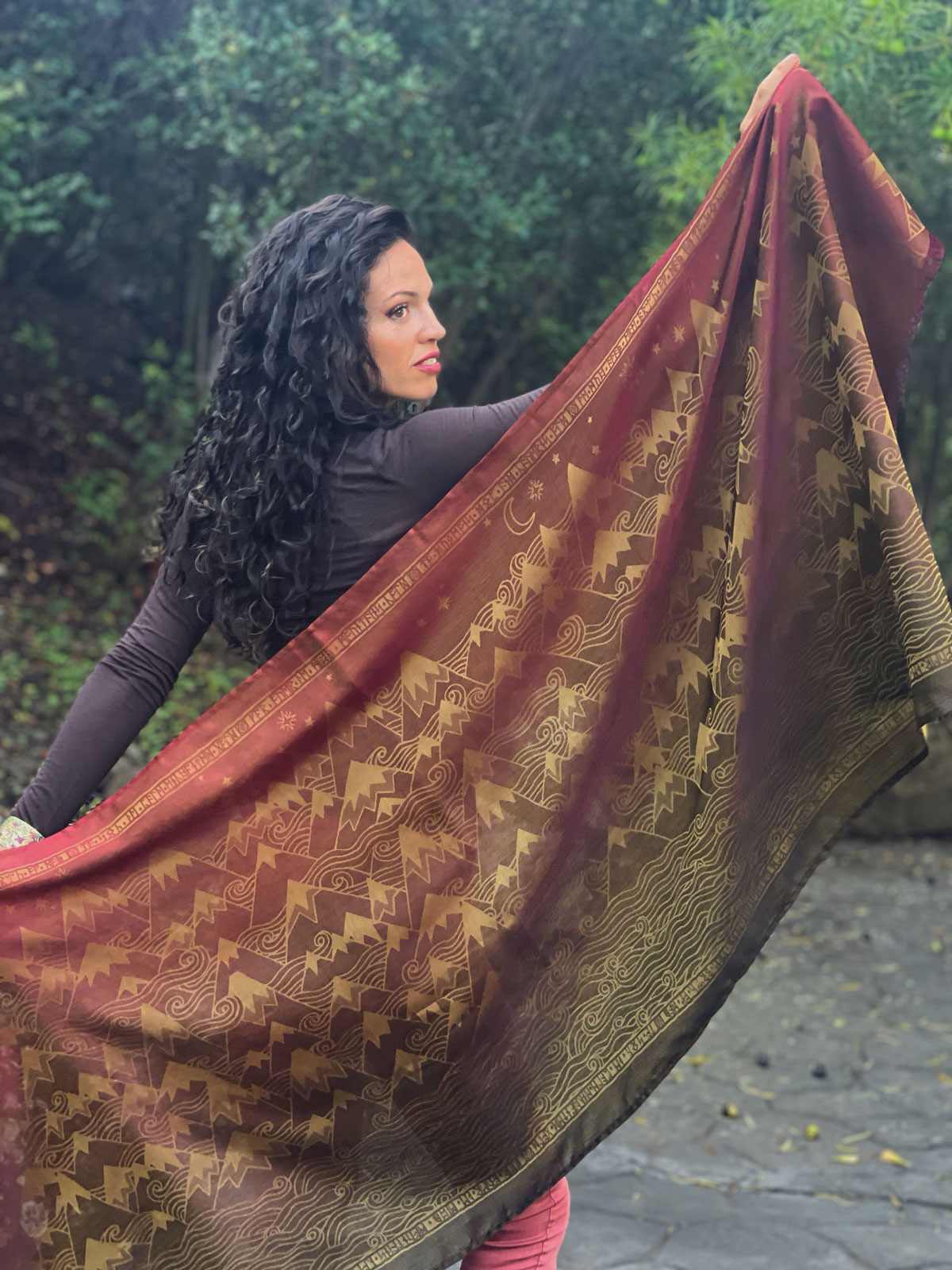
Misty Mountains Astralis Scarf Loop & cowl:The peaks of the Misty Mountains glow in gold against a fade of burgundy on this beautiful lightweight and shimmery scarf. Woven with luxurious Mercerised Egyptian Mako cotton and ethically made in the UK, it’ll make a truly special gift this season.
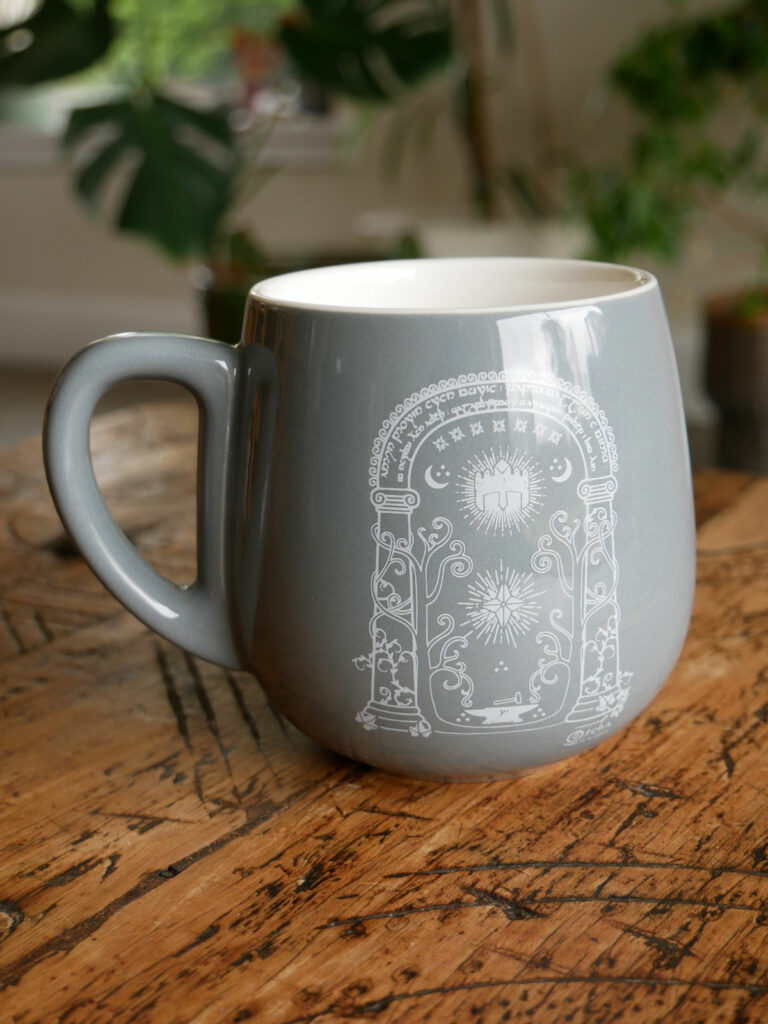
Doors of Durin Ithildin Yoga Mat: Whether you’re mastering your Warrior pose or simply meditating, this mat is the perfect blend of fandom and functionality—a thoughtful gift for Lord of the Rings fans. Crafted for eco-conscious adventurers, these mats are biodegradable, PVC-free, and non-toxic, offering a high performance experience.
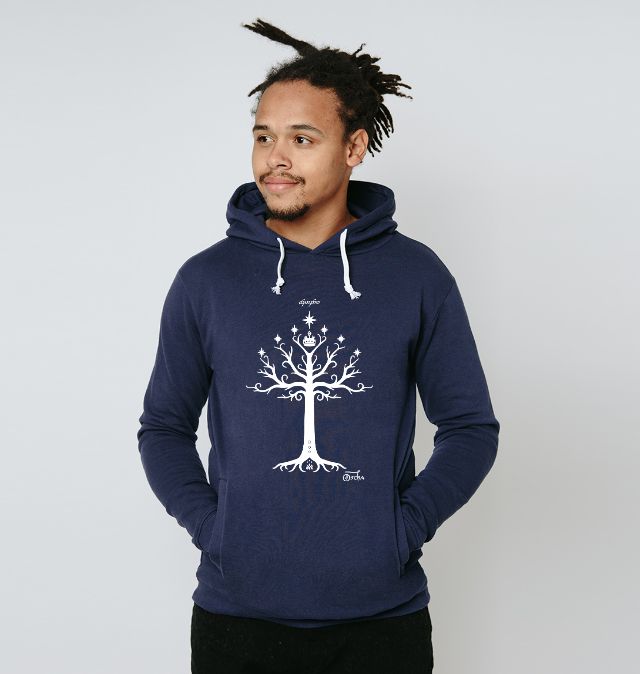
Tree of Gondor Hoodie: A thoughtful gift for Tolkien enthusiasts. Featuring the iconic white tree emblem, this hoodie is a must-have for Lord of the Rings fans. Made from 100% organic cotton, it’s soft and breathable, perfect for any adventure.
And finally – we’ve saved the best till last… ! There is just a HANDFUL of TORn’s 25th Anniversary mug available to order for the holidays! This is the absolute last chance to grab one of these beautiful mugs, as we come to the end of this anniversary year; so if you missed it when it was available earlier this year, (or if you want another in case you break the first one you ordered), you’ll definitely want to place your order! Order your mug here. It’s the perfect gift for any follower of TORn or lover of Tolkien. Happy Holidays!
In a new anniversary retrospective, creators of John Wick talk about how The Lord of the Rings inspired and is connected to the production of the huge action franchise.
Over at Indiewire, director Chad Stahelski talks about the Tolkien influence on John Wick:
“I’m a big Tolkien fan, and I’d always wanted to do a modern-day fantasy that scratched that itch so when this came along, it was the perfect hanger to put our coat on. I’d been trying to sell this idea of Greek mythology and underworlds but Tolkien was probably my favourite growing up [and a big influence]. I was fascinated by world creation. Add 10 years working with the Wachowskis, and I didn’t want to do a regular old action or assassin movie. I wanted something where we could have a little element of fantasy.”
The LOTR Film Connection
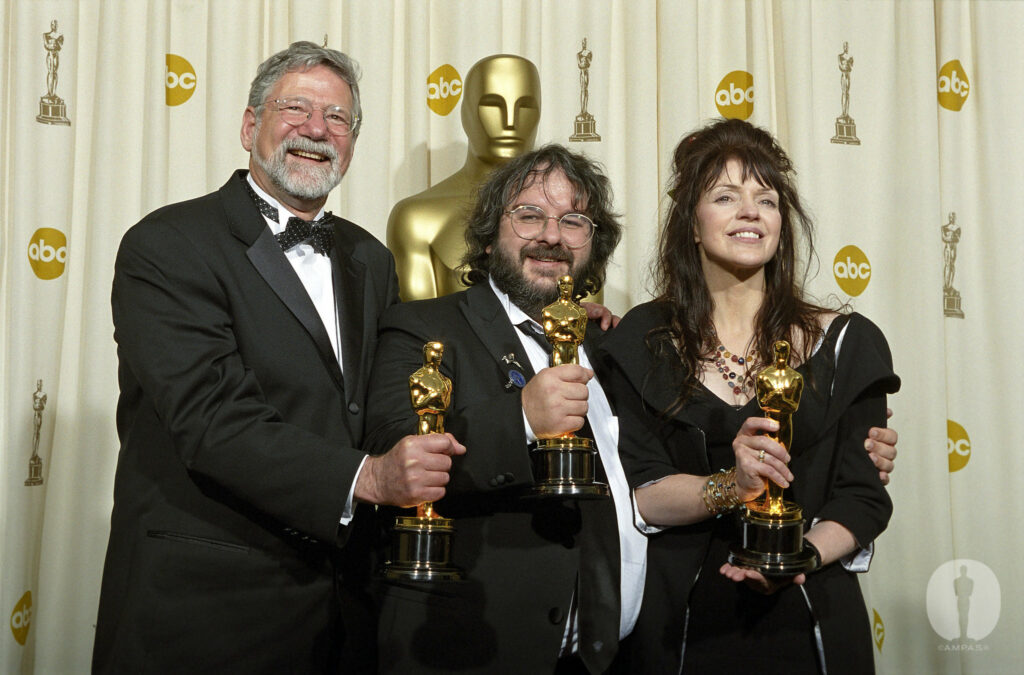
That’s not the only LOTR connection! Stahelski was the stunt double for Keanu Reeves on The Matrix, which was produced by Barrie Osborne before he jumped into producing the Lord of the Rings films with Peter Jackson (bringing Hugo Weaving with him).
Read the whole 10 year anniversary interview of John Wick over at Indiewire. This, naturally, prompts the question, what would a Chad Stahelski directed LOTR movie or Rings of Power episode look like? Discuss in our Discord!
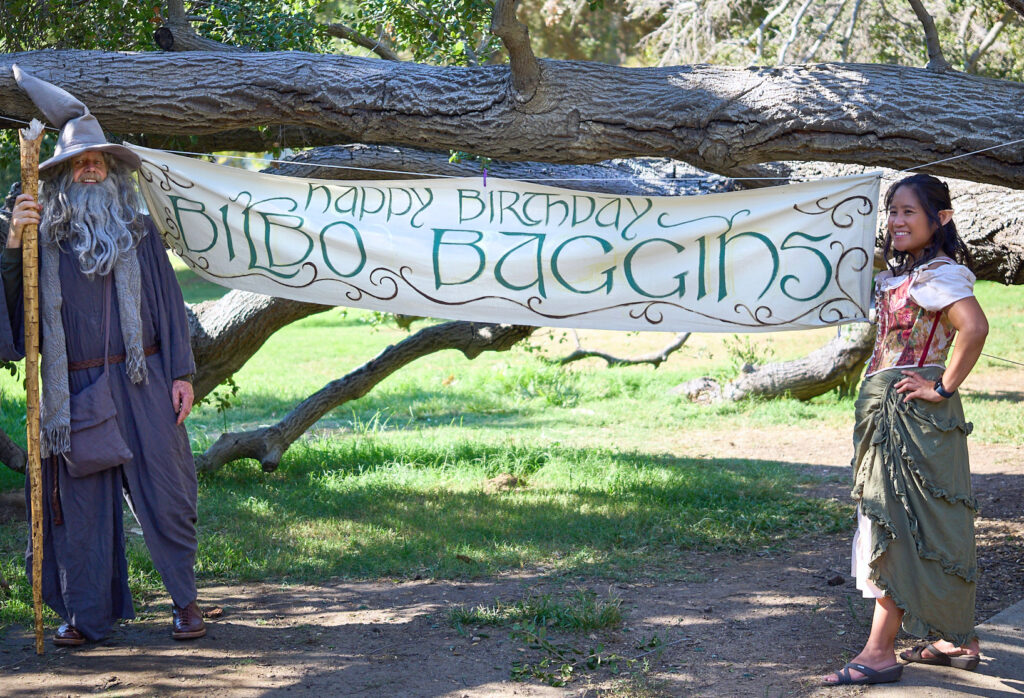
On September 22nd, the very date of Bilbo’s and Frodo’s birthdays, a large group of Hobbits, Elves, Dwarves, Men, Wizards, and well-behaved Wargs, gathered for a day of merriment, feasting, and activities.
The Party took place under the sheltering trees of Griffith Park, in the Mineral Wells picnic area, close by a meandering river. The day was warm, but not too warm. The sun high and bright. The leaves sparkled green and gold in a fair breeze which ruffled the Baggins’ Birthday banner and the feathers adorning Hobbit hats. Tents dotted the landscape: an Elven enclave here, a Dwarven fortress there, a Hobbit hole beneath a tree.
The banqueting table was laden with dishes–pulled pork, barbecue chicken salad, spicy sausages, cheese samplings, Lembas, watermelon, pasta salad (I could go on and on, but it’s making my mouth water all over again.) There were even two big jugs of delicious homemade apple brew crafted from a long list of enticing ingredients.
Oaths hold an astonishing power in Tolkien’s Middle-earth. Here, TORn Discord member Narrative Epicure explores how Sauron and Elrond’s understanding of this fact drives each to behave very differently toward others.
~ Staffer Demosthenes
Concerning Oaths in Middle-earth
by TORn Discord member Narrative Epicure
In December 3018 of the Third Age, everybody’s lucky number was nine. After an involuntary white-water rafting trip down the Bruinen, Sauron’s Nazgûl returned to Mordor. These servants, so long bound to him by works he wrought in ages past, gathered once more in the dark shadow of Barad-dûr. In the Elven realm of Rivendell, Lord Elrond prepared a Fellowship whose journey would determine the fate of Middle-earth.
“The Company of the Ring shall be Nine;”1 he declared, “and the Nine Walkers shall be set against the Nine Riders that are evil.”2
Contrasts between the Ringwraiths and the Fellowship are legion, but in their preparations, one particular distinction reveals the nature of the hands that send them: while Sauron insists on sending servants bound to him by rings of power, Elrond demands nothing of anyone but Frodo (to not cast away the ring or deliver it to an Enemy). To the fellowship, he says, “no oath or bond is laid upon you.”3
As they depart on their journey south, he demands no promise from the nine he sent.
This difference between Elrond and Sauron is illustrative of each lord’s perspective on oaths and—to a larger degree—of the way each lord interacts with and treats the people of Middle-earth.
Concerning Oaths
Oaths and promises are fascinating subjects that could fill volumes on their own. On a surface level, an oath is a set of words promising some conduct or restraint. Yet, the way we treat an oath transforms it from a set of words to a power. In our own world, this power is usually subtle, intangible, and typically confined to the effects on psyche, trust, or the occasional legal ramification. In large part, oaths have over us what power we give them. In Middle-earth, this intangible power becomes tangible. Tolkien writes of oaths not only as if they have power, but as if they behave.
Oaths are living things that bless those who honor them, and occasionally impose consequences on oathbreakers. Tolkien describes the Oath of Fëanor (an oath that drives much of the action and conflict of the First Age) as “ever at work,”4 and on other occasions he says it has “slept now for a time.”5
In The Lord of the Rings, we see the terrible result of going back on your word when the Men of Dunharrow break oaths to fight Sauron and Isildur curses them to “rest never until [their] oath is fulfilled.”6
Tolkien’s writing ascribes another unique trait to oaths: they bind people to each other. Tolkien’s Legendarium offers many examples of this: the Oath of Eorl bound Rohan and Gondor together, the Oath of Finrod bound him to aid the kin of Barahir (at the cost of his life), and the sons of Fëanor were “bound by the oath”7 they swore.
But the people of Middle-earth can be bound even without oaths. When Melkor darkened the two Trees of Valinor, the Valar determined that the light of the Silmarils could restore the trees if Fëanor allowed their use. Fëanor refused. The Silmarillion describes him as “fast bound” to the Silmarils. Long before his oath, the love of his crafts bound him.
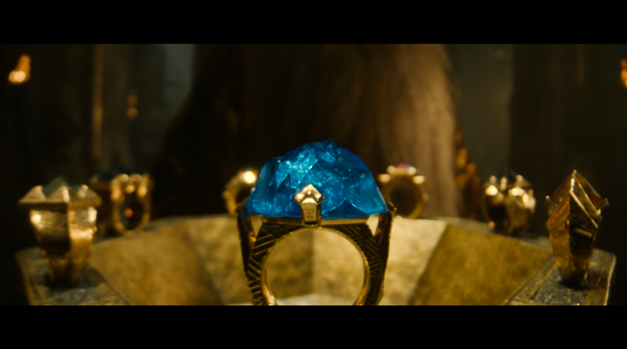
It was this binding power that Sauron would seek to replicate. In the Second Age, he bent the power of oaths back on itself, twisting it into the shape of rings, “for his desire was to set a bond upon the Elves.”8
Bound by Oaths
In Season 1 of the Rings of Power, young Elrond describes his outlook on oaths. “To some, [oaths] may now hold little weight, but in my esteem, it is by such things our very souls are bound.”9
He sees oaths as Tolkien wrote of them, and he uses them to build a web of collective strength. Elrond gives oaths. He enters them freely as a show of loyalty to those he cares about. Some may argue he enters them too freely.
Yet, despite the impetuous manner in which he binds himself to others, he’s hesitant to let others make oaths to him. When the Fellowship departs, and he asks no oath or bond, he explains some of his reasoning (paraphrased to just dialogue):
Gimli: “Faithless is he that says farewell when the road darkens.” Elrond: “Maybe, but let him not vow to walk in the dark who has not seen the nightfall.” Gimli: “Yet sworn word may strengthen quaking heart.” Elrond: “Or break it.”10
He’s cautious to hold others to promises made without all facts. We see this again in the mines when he stops Durin from sharing his true name—an act that, while not an overt oath, would have bound the two together. And while he freely binds himself, he’s cautious with whom he makes such promises. Note that in Season 2, when Galadriel asks, he immediately refuses to swear any promise “whose asking is born of that ring.”11
But seconds later, he swears exactly what she wishes, only this time to her. He will not suffer himself to be bound to or by her ring, but holds no qualms for his friend. And despite his fears that she is bound to Sauron through that ring, he demands no similar oath from her lips.
At his core, Elrond believes oaths are about people. He cares much more about binding himself to others than binding them to him. He cares deeply about them. When he stumbled into Durin’s Mithril mine in Season 1, he wasn’t looking for mithril itself like Durin suspected. He was looking for his friend. He worried about Durin’s secrets and went there to maintain trust between them.
After swearing an oath to Durin, he’s given a nugget of mithril, which he immediately offers to return. His king sought that ore, but to Elrond, this was always about his friend. Incidentally, this outlook works to his favor. Durin never would have given him the mithril if it were why he came lurking.
Bound in Darkness
If Elrond is the give, Sauron is the take. Elrond builds strength, Sauron builds power. To the dark lord, the purpose of oaths is to ensure those beneath him remain subservient. We see this in the very terminology he uses. He almost always eschews the word “oaths” in favor of “binding.” He doesn’t want to forge webs like Elrond; he wants to forge chains.
Sauron is cautious about oaths he swears. When faced with no alternative, he tries to manipulate them in his favor. “I swear to serve the lord of Mordor”12 is the juicy example that springs to mind. He’s there to bind others to him, not the other way around. Oaths don’t show loyalty or closeness, they keep others in line.
In the finale of Season 1, he asks Galadriel to bind herself to him. What he wants from Galadriel is a promise—an oath—so he can make her a queen, fair as the sea and the sun, stronger than the foundations of the earth. But notice again his subtlety. He offers her effectively nothing. “You bind me to light, and I bind you to power.”13
In exchange for her legitimizing his “healing” of Middle-earth, he binds her to power. But in Sauron’s estimation, he is that power. He binds her to him, and in exchange, she validates his rule. But as Gandalf famously warned Saruman, “he does not share power.”14
He’s promised her only chains.
Since he cannot elicit true loyalty, Sauron must demand it. He can deceive and win hearts, but he cannot keep them. It is this inability to earn true loyalty that—in part—drives Sauron’s need for the rings. Elrond cares for people while Sauron seeks only what he can use from them.
Each ring of power is a literal manifestation of that search for utility. If the people of Middle-earth will not swear to him, he will find some other way to bind them to him.
Frodo observed that “the Shadow . . . can only mock, it cannot make: not real new things of its own.”15
Unable to make bonds and elicit oaths, Sauron mocks, imitating the power of an oath’s bond with his rings. That involuntary bond shreds trust, but he doesn’t need trust when he has control. Dominate some creatures, bind others, make empty promises, and—when your army is threatening enough—maybe some people will swear with less coercion and deception.
And so, nine walkers set out from Rivendell, each a hero, while nine riders set out from Mordor, each a thrall. Sauron told us his plan from a prison cell in Númenor: “identify what it is that [a person] most fears . . . [and] give them a means of mastering it so you can master them.”16
Elrond’s line of thinking would likely be more along the lines of “identify what it is that a person most fears, and swear to protect them from it.”
With that contrast laid out, it’s clear in which fellowship you’d find better company.
About the author:Narrative Epicure is an aspiring loremaster and practicing attorney longing to read or write things that aren’t legal. When he’s not buried in Tolkien’s Legendarium, he enjoys books, board games, and other activities with his Fellowship, which includes his wife and three daughters.
If you have a Tolkien/Middle-earth inspired poem you’d like to share, then send it to poetry@theonering.net. One poem per person may be submitted each month. Please make sure to proofread your work before sending it in. TheOneRing.net is not responsible for poems posting with spelling or grammatical errors.
If you have read The Lord of the Rings, there is a good chance that you skipped over one or more of the 75 songs and poems in J.R.R. Tolkien’s fantasy epic. Yet long before he was the “father of modern fantasy”, Tolkien’s great ambition was to be a poet.
He wrote hundreds of poems throughout his life, running the gamut from playful limericks to lengthy verse epics in Old English alliterative meter (verse that focuses on alliteration, the repetition of consonant sounds in two or more words or syllables). But despite his prolific poetic output, Tolkien remains best-known for his prose. Published by Harper Collins, The Collected Poems of J.R.R. Tolkien – the first tome to bring together all of his poetry – will not alter its author’s reputation as a storyteller first and foremost, but it will offer readers illuminating new insights into this oft-neglected side of his personality.
This new book has been in the works since 2016, when Christopher Tolkien sent editors Wayne G. Hammond and Christina Scull several folders of his father’s unpublished poetry. Hammond and Scull are two of the world’s most respected Tolkien scholars, having written painstaking reference works such as the J.R.R. Tolkien Companion and Guide (2017) and The Lord of the Rings: A Reader’s Companion (2008). They have also edited previous works by Tolkien, including the short poetry collection The Adventures of Tom Bombadil (2014).
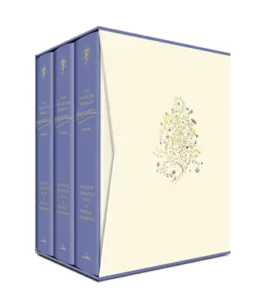
Between them, Hammond and Scull have precisely the obsessive eye for detail and encyclopaedic knowledge of Tolkien’s corpus required to pull off such an undertaking. And once you hold this deluxe, three-volume, 1,500-page tome in your hands, you will grasp just how monumental an undertaking it is.
The Collected Poems of J.R.R. Tolkien contains nearly 250 individual works spanning more than five decades, 70 of them previously unpublished.
Hammond and Scull do not present the poems as standalone texts. They meticulously document the manuscript history of each poem from initial fragments to final drafts, tracing their evolution over the course of years or even decades.
This is because Tolkien would frequently return to the same poem throughout his life, revising and reworking it over and over – much as he did with his literary mythology.
The Sea-Bell is a perfect example. In 1934, Tolkien published a poem in The Oxford Magazine entitled Looney. It describes a man’s voyage to an enchanted other-world and his desolation upon returning to ordinary life afterwards.
Almost 30 years later, Looney underwent major redrafting to become The Sea-Bell, which was published in The Adventures of Tom Bombadil in 1962. The poem’s basic narrative arc remained the same, but the imagery was darker, more evocative, more devastating. The protagonist is utterly cut off from his contemporaries, with no words to communicate an experience they cannot understand.
But The Sea-Bell is not merely a revision of its predecessor. Looney was conceived and published as an independent work. In The Adventures of Tom Bombadil, on the other hand, The Sea-Bell is framed as a text written by an unnamed hobbit within Middle-earth, which Tolkien had discovered and translated for modern readers. This conceit invites readers to put the poem in direct conversation with the themes of melancholy and sea-longing which run throughout The Lord of the Rings.
By charting how the poem and its context changed over time, Hammond and Scull show how its meaning changed too.
Many of us live with a nagging sense that industrialised modernity has cut us off from the cosmos, from nature and from our authentic selves. The Romantics and their inheritors believed that art could reconnect us to what is deepest and truest in ourselves and in the world around us – could re-enchant the world.
This is one way to read Tolkien’s entire literary project. He suggests as much in his famous essay On Fairy-Stories (1947).
Eminent Tolkien researcher Verlyn Flieger reads The Sea-Bell as a profound expression of disenchantment, a reflection perhaps of Tolkien’s service in the first world war. But the powers of re-enchantment are at work elsewhere in his work, in the elven-realm of Lothlórien for instance. This dialectic of disconnection and reconnection lies at the heart of Tolkien’s enduring appeal.
As The Collected Poems of J.R.R. Tolkien attests, that same dynamic is at play in his poetry as much as his prose. But be forewarned: this book is not for the faint of heart. Its massive scope, and the academic presentation of the material, are better suited to the Tolkien scholar than the casual reader – certainly not the one who leapfrogs the songs in The Lord of the Rings.
But if you, like me, feel a compulsion to own everything released under the professor’s name, that is hardly going to stop you.
If you have a Tolkien/Middle-earth inspired poem you’d like to share, then send it to poetry@theonering.net. One poem per person may be submitted each month. Please make sure to proofread your work before sending it in. TheOneRing.net is not responsible for poems posting with spelling or grammatical errors.