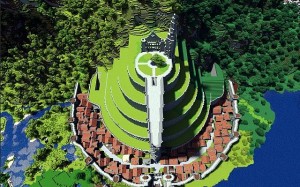
 Our sister site tolkienbrasil.com has posted and sent word of some very interesting verification that there is at least a possibility of a J.R.R. Tolkien inspired Middle-earth theme park. In records obtained by the website from the U.S. Patent office, the Saul Zaents Company, has registered in a goods and services document, several uses for Middle-earth properties that includes theme parks. When rumors of this first surfaced there was no credible source, or even really any source, that this was being explored. It didn’t even rise to the level of a rumor but now, those floating ideas are officially documented.
The Zaents Company owns Middle-earth Enterprises and that company gives Warner Bros. and other studios the right to produce Hobbit films and all that springs from them. The author, Tolkien sold his movie rights before his death to pay for medical expenses.
The found document is below, click it for a larger version:
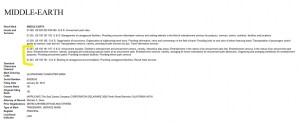
The document, dated January 22, 2013, could be the company simply protecting its rights to develop a theme park in response to the message board rumors late last year or it could be actively considering such a development as a real possibility. It isn’t clear if this park would be in New Zealand or in one of the established theme-park regions of the U.S., such as Flordia or California, or perhaps both. Warners recently had a successful port of its Harry Potter movie franchise to a well-received theme park experience. The possibilities of what to do with such a park, is a nearly limitless source of message board content.
Thanks again to Tolkienbrasil.com for the heads up. You can read the story right here or below is a rough translation:
FROM TOLKIENBRASIL.COM:
Warner Bross and Univeral are already thinking of a theme park ride on Middle Earth and it looks like the rumors are true.
The first news about occurred in early January in a post on micro site Micechat.com. In saying only: “Great news in the world of theme parks. Universal is negotiating the possibility of bringing the sights and scenery of The Lord of the Rings at a theme park near you. Heated with the success of the magical world of Harry Potter, Universal is unwilling to let Disney take the reins of the market with parks Avatar or Star Wars. We will have an exciting time for fans of theme parks. ”
Many took no credibility with the post, why not present any kind of source on this information. And there is no announcement from Universal about. Thus, the information was taken as mere rumor.
Given the recent process of merchandising products on The Lord of the Rings and The Hobbit, Tolkien Estate promoted by the companies face in administering the films (Warner Bros, New Line and Saulz Company), started to think that a theme park would still be far from becoming reality.
However, recently the site parkrumors.com presented what appears to be a piece of a document relating to the transaction that is like a theme park. This is the trademark registration of the name “Middle Earth”, which is the company Saulz Company. But that was extended with the possibility of doing a theme park.
The document presented by Parkrumors site is authentic?
Well, the document that the site has not parkrumors has its source, ie, we do not know its origin, since it is not told what department this document originou.O that could still form the opinion that it is only a rumor from fact.
Lawyer Site Tolkien Brazil came into contact with the industry patent records from the U.S. government on this information and the veracity of the document. And it was confirmed as true in an email received this morning. In that email it was confirmed that no such document exists and can be found on-site records of U.S. patents (see HERE).
parquetemáricodoc
Click on image to enlarge
In this document we see that is dated on January 22, 2013, with the word mark “Middle Earth”. Taking as the record owner of the company The Saul Zaentz COMPANY (which is the company that holds the rights to produce adaptations of the hobbit, lord of the rings and that makes the licenses of any products derived from these stories). Below is the translation of the terms of the document:
IC 028. U.S. 022023038050. G & S: Amusement
IC 035. U.S. 100101102. G & S: Management facilities for camping; Providing consumer information services and making referrals in the field of entertainment services for products, services, events, activities, facilities and locations
IC 039. U.S. 100 105. G & S: Organization of excursions; Organization of sightseeing trips, providing information, news and commentary in the field of travel, providing links to websites of other guidebooks, transportation of passengers and / or goods by car, boat and rail, transportation services, namely, providing transport services by bus services travel information
IC 041. U.S. 100101107. G & S: Salas games, entertainment centers for children, interactive play areas; entertainment as amusement, entertainment services in the form of an amusement park to show, entertainment services, namely, arranging and conducting special events at an amusement park, entertainment services, namely, arranging for ticket reservations amusement park attractions; Organizing and organizing exhibitions for entertainment purposes; Providing amusement parks; Provide recreation facilities; Provision of park thematic
IC 043. U.S. 100 101. G & S: Reservation of accommodation for camping, camping facilities provide services Resort Hotel
The document is official. And we see clearly that this is a trademark registration document for the purpose of producing a theme park. It remains now await negotiations to be made quickly and it becomes reality theme park on the middle ground.
A pity that the park “Middle Earth” will have no character of Silmarillon stories …
Posted in:
Share:

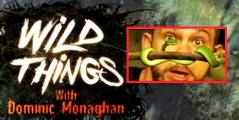
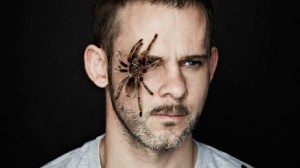 Last night in North America marked the launch of the remarkable new nature series Wild Things with Dominic Monaghan; and he kindly agreed to give TheOneRing.net an exclusive sit-down Q&A. The British actor, best known to Ringer fans as Meriadoc Brandybuck, is already receiving rave reviews from The Hollywood Reporter and other press. His show premiered in this country on BBC America and will have a full season of eight episodes at 10:00pm Eastern, 9:00 Central.
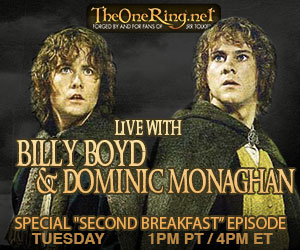
With the very funny TORn TUESDAY webcast freshly completed, and Billy Boyd having left the Meltdown Comics studio, Dom took a more reflective moment to sit with host Cliff ‘Quickbeam’ Broadway and discuss his passion for, and desire to get closer to, those creatures least likely to inspire a kiss, yet all the more fascinating for his enthusiasm!
———————————————————————————–
Quickbeam: Dominic, congratulations on the launch of your new show!
Dominic Monaghan: Well thanks. Yeah – I’m nervous about the launch, because it’s just me. You know, it’s not me being incredibly well protected and insulated by a huge trilogy of movies and a big ensemble cast. And also, it’s something that I feel very protective and precious about – you know, it’s like my little ‘precious’ One Ring. The natural world is something that I’m passionate about, and something that I want people to be compassionate about, because of the way that I feel about it … so, it’s the first time I’ve really hosted something – especially something that’s a significant portion of my life – and there’s a vulnerability attached to that. As an actor, you can always say, “Well, they didn’t like my character in Wolverine but maybe they just didn’t like Wolverine, or they didn’t like that character I played; or they didn’t like my character in The Lord of the Rings, but maybe they just didn’t like that character or they don’t like fantasy films … but with Wild Things, if someone doesn’t like it, there’s a pretty high chance that they don’t like ME. And that is something that you have to come to terms with. And you know, I’ve been an actor for twenty years now, so I’m okay with people saying anything they want about me, but it does put you in a much more vulnerable position.
Q: Well, you created this show, and the heart and the concept comes from your love of the great outdoors, and your affinity for the creatures in the natural world, with whom we share this planet. How do you feel about the state of conservation efforts, and protection of wildlife efforts?
DM: I did create the show; it’s something that I’m passionate about. I think the thing that irks me the most about where we’re at right now in our society, is … there’s an automatic rejection of anything that’s put forward as a notion in our society. So, if someone says, ‘Justin Bieber is great,’ someone will automatically say, ‘Justin Bieber is rubbish.’ And that’s just because you can’t please anyone all of the time. My issue with the conservation situation is, people say, ‘We need to change the way that we’re behaving because we’re creating global warming and we’re changing our climate.’ And then other people come out and say, ‘Climate change isn’t real, that isn’t what’s happening – we’re going through a natural change in the planet.’ My argument is, let’s say for the sake of argument, global warming ISN’T real – which I don’t necessarily believe – but let’s say it isn’t real; why wouldn’t we make positive changes to deal with our carbon footprint and how much of an impact we make on our planet? We know for a fact that we create poisons and toxins by working in our industries and by driving our cars and moving our vehicles around. If those poisons are toxic, they have to go somewhere; and even if they go somewhere that doesn’t affect us, it affects the general balance of our galaxy. We create a poison, and we go, ‘Here you go planet – or galaxy – deal with it!’ That’s a negative stance to take. So my whole idea is, you can call us liberal and you can call us mong bean salad eaters, and you can call us hippies – and we wear hemp and all that kind of thing … but what we’re trying to do is the right thing, I think. It’s the correct way to behave. Make less waste, be responsible, be positive. Treat everything living correctly.
Q: And appreciate the synergistic connections you have with other creatures on this planet.
DM: Right. We have a very ‘overfaluted’ idea of what humans are, and our place on the planet. And outside of creating technology and art, we don’t really do anything special, I don’t think. And the most damaging animal on the planet, I would say, is categorically a human. And the most valuable animal on the planet is probably something like a worm, or an ant, or a small beetle. Or a parasitic fly, or something like that – because of what they do. They create fresh air, they till our soil, they pollinate our fruits and vegetables. Humans don’t even feature in the top fifty. But we walk around like we’re the bosses and like we know what’s going on … meanwhile ants, millions of them living in very confined quarters … there’s no murder, there’s no rape, everyone gets fed, they look after their kids, they don’t cause a carbon footprint, they take care of their trash. And we shun them, we throw them off our picnic table! These are important animals!
Q: Indeed. What are some of the most appealing animals you’ve encountered, during the first season of Wild Things?
DM: I really like hymenoptera. Hymenoptera’s a class in the insect species which is bees, wasps and ants; they all come from the same place. Essentially, an ant is a wingless wasp from an evolutionary point of view, and bees fit in there as well; highly social, sophisticated societies … they behave in a way that we understand, because we live in highly social, sophisticated societies. I admire the way that they organize their communities, where they don’t cause as much of a mess as we do!
I wanted to tell those stories, but also I needed to tell – and I wanted to tell – dynamic stories in the invertebrate world, and that led me to things like the world’s largest spider, the world’s most dangerous aquatic insect, the world’s most dangerous scorpion. Nowadays, you have to stick yourself on the firing line a little bit – which I was more than happy to do, because I love these animals and I wanted to tell their stories. There’s an element of shocking the audience; but what I talk about with the world’s largest spider is that, for me at least, that has the same cache as something like a great white shark or a bengal tiger. When you say to someone, ‘I went to find the world’s largest spider,’ they recoil; they go, ‘How big was it, what does it look like?!’ It’s the same feeling as a great white shark. So I wanted to show that you can go to these places. It might not be really easy to access those places; but you can go there, you can have an amazing experience with these animals; and they’re not out to get you! They don’t wake up in the morning and think, ‘Where’s a human? I need a human to eat!’ Spiders don’t act like that. If you hurt them or damage them, or come into their territory, they might protect themselves; but they’re not out to get us.
Q: There’s an interesting approach to telling these animals’ stories; we anthropomorphize them. We attach certain human qualities to some of these creatures; have you noticed that, while you were making the show?
DM: Yeah, we talk about ‘nasty spiders’ or we talk about ‘vicious snakes’ or ‘man killing sharks’. These are animals that have unfortunately got themselves into a situation that they don’t want to be in, which is coming into contact with a human. Sharks do not want to go around us; they’re not interested in going around us. Not only are we not good eating, but we’re going to cause a lot of trouble for that shark; we’re probably either going to – they think – kill it, or the fishermen will come back and kill it later. And with these animals like bees and wasps, and scorpions and spiders – all these things that have venom that can hurt us – that venom is very, very important to that animal. It’s a very sophisticated amount of proteins that they create, and it takes a lot of energy for them to create that venom; so they don’t give it away cheaply. You’d have to really annoy a spider for it to envenomate you, because they use it when they really need it. So my feeling with people when they talk about, ‘Urgh, bees, they’re so scary!’ – I’m just like, look, if you get away from the hysterical four year old that’s living inside you, that was at one point stung by a bee – and generally, you know, it hurts when you’re a little kid – nowadays if you get stung by a bee, it’s annoying, it’s not your favourite part of your day, but it’s not going to ruin your day.
Q: What is the coolest, most exotic place you went to visit?
DM: Gosh … hmmm – the geographical place that sticks in my head from the first season was Laos, southeast Asia. I’ve been to Thailand a few times, loved it; I got told that Thailand was like Laos, fifty years ago. You know, not very built up; great street food; great people – they’re all Buddhist, very very chilled out, very keen to help; amazing natural flora and fauna everywhere – mountains and greenery. The main thing that really struck me about Laos was the food; when we were in Vientiane, which is the capital city, we’d wake up and go for breakfast – and you’d have really fresh, spicy fish soup for breakfast. I love spicy food! I was like, ‘Ah, this is heaven!’ The people were so friendly, they went out of their way to help you – lovely nature; they all love Manchester United, which works for me [laughs] … and you know, it’s very exotic. You’re eating stuff that you’ve never seen before – it’s all so fresh…
Q: You can’t pronounce what you’re eating!
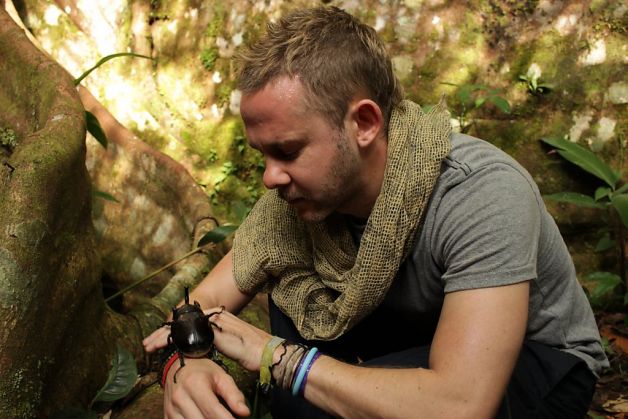 DM: Yeah, you just go [points], ‘Can I have that please?’ Yeah, great country.
I really liked Cameroon as well. Very different, Cameroon. Lots of red and brown clay everywhere, in terms of the colour scheme of the country. The people that we went to see didn’t have a lot; they lived in houses where the electricity was turned off at 9pm … they didn’t have an abundance of food or water, or even clothing – stuff like that … [but] so happy, so sweet. All the little kids just wanted to get picked up, and play, and hang out with you … I was doing silly little magic tricks that they liked … and you know, stray dogs running around everywhere… The food wasn’t fantastic in Cameroon but the spirit of the people was amazing, you know? They’re all very entrepreneurial – they genuinely are. They really have nothing, and you see them making kids’ toys out of little bits of broken wood and rubbish, you know, trash that you would throw out – and these little kids have got these little remote control cars made out of elastic bands and plastic bottles and stuff. Very, very innovative – I loved Cameroon.
Q: What was the biggest challenge you had, in creating and pitching this show?
DM: I think the biggest challenge pitching the show was convincing the people who were giving me the money that I could do the job; because I think all they’d been exposed to, as a general rule, was me in Lord of the Rings, and me in Lost, and maybe a couple of other things that they might have seen … so they’re probably sat there, being very polite, thinking, ‘OKAY, what does this English actor know about tropical species? And why are we giving him an inordinate amount of money to fly a six man crew to Vietnam or Malaysia … and he gets there and goes, “I’m not doing that, and I’m not doing that – and I’m not eating that, and it’s too hot, and where’s my hotel?” ‘ I think there was a feeling of, ‘What is this even going to be?’
So I would sit in these meetings and just talk at length about my passion about animals, and I think that opened people up a little bit; and then I went to the Malibu mountains with a friend of mine, and we shot footage of me catching lizards and catching velvet ants – this type of wingless wasp – and catching snakes, and checking out animal tracks and stuff – just to show that …
Q: You’re an outdoorsman!
DM: Yeah. I mean, I like being outside and I go to Joshua Tree a lot; spend some time out there … whenever I’m countries I tend to go into the wilderness and see what’s available. I know what to look for, where the animals are going to be – and I think people needed to be educated on that. Hopefully, now that the show is going to be available for an audience, the audience will feel the same way.
I also didn’t want to come across as a professor, because I’m not – or a learned guy, when I’m not. I’m a very, very enthusiastic animal lover – and if you put me in a biology class in university, I’ll embarrass myself! But if you put me with a group of people on the street, and they say, ‘Pick a holiday’ – you know, some people might say, ‘Go to Cabo San Lucas,’ or some people might say, ‘Go to Vegas for the weekend.’ But I would say, ‘Where’s the furthest you’ll fly me, that’s the most remote?’ I want to escape – travel for me is all about escape. I want to go somewhere where I don’t know the currency, where I don’t know the language, where I don’t know the food – and just try new stuff. I mean, any time I’m trying new stuff, I’m not bored – and I’m very susceptible to getting bored!
Q: Perhaps you’re a kindred spirit with Viggo, who is also a master outdoorsman!
DM: Yeah, he really is a very, very gifted outdoorsman, and unintimidated by being out there. A true artist. You know, I think my abiding memory – although obviously he’s still around! – but my abiding thought about Viggo is the artistry of the man. He’s obviously a very talented actor, but you know, Viggo’s an accomplished poet, a fantastic painter, a brilliant photographer; he acts in different aspects, in theatre, in film; he’s a singer, he’s a writer … I was inspired by his … almost need to get out his art. And he continues to be like that. I saw him in London, in this hotel room – and he just had stuff everywhere! Letters and posters and paint and scarves and DVDs and books – and he’s passing me this – ‘Read that! Watch that! Do this! Here’s that!’ Every time you see Viggo, you walk out with stuff; you’re like [mimes arms loaded with stuff], ‘Yeah, alright – I’ll see you in a week – I’ll check this stuff out!’ He’s an inspirational guy.
Q: One of the animals that you encountered in the preview [for Wild Things] was the monocle cobra. It was surprising that you were looking for some other creatures, and accidentally stumbled across this deadly snake! Unexpected… and you had a six-man crew with you. Did anybody encounter any bites; what danger was your crew in?
DM: We were lucky enough to not get tagged by the monocle cobra! I think what happened was, we were in the paddy field looking for this giant water bug, and I noticed when we were in the paddy field that we were rustling mice and rats out of the paddy field … because they sleep there in the daytime. They’re nocturnal species, obviously. And I noticed a little [makes rustling noise] moving in the paddy grass, the paddy rice – and I thought, ‘What’s going on there? Oh, that’s probably a mouse – and that’s probably a rat…’ And it happened two or three times … and we were flushing – we were walking, and we were flushing these mice out of this field as we were spreading apart … and what happened was, when we got to part of the end of the field, this snake was coming into the field, thinking, ‘What is going on here?’ There’s three or four mice running around in the middle of the day – and that’s unusual. You’ll hear me, at the start of that scene – I say to the cameraman, ‘Go that way, go that way, go that way!’ And that’s me saying to my entire crew – who were all behind the cameraman – ‘Spread out! Go FAR that way!’ – because it was a venomous snake, and I knew it was a cobra. And as soon as the crew is safe, and my only concern now is protecting me, then I can attempt to control the situation – but I can’t control five other grown men, you know! So you’ll hear me in the show going, ‘Move back move back move back!’ – and that’s me talking to the crew all the time!
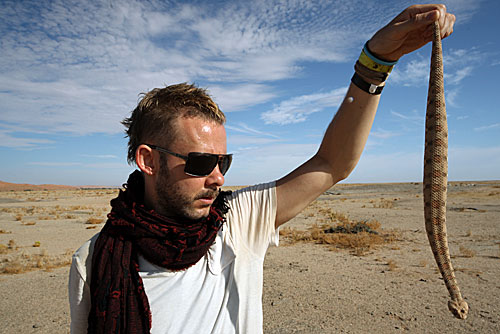 No-one got hit by the snake, but my medic, who’s an ex-military guy and has been in a few combat situations, was stung by a bullet ant when we were in Ecuador, and they’re aptly named, because it’s supposed to feel like you’ve been shot by a bullet – and he spent two days in bed! He got stung about 11am, left that day – he was like, ‘I feel awful, I’m going to have to go and take care of this’ – and we didn’t see him until a day later; so all that day he slept, the next day he was in bed sleeping, and then we saw him the day after that! We were like, ‘Are you ok?’ and he said, ‘Yeah, I spent two days essentially feeling like my thumb was being constantly hit by a hammer, just pounding, pounding…’ And he took a fair amount of anti-inflammatories and anti-histamines, and it didn’t do any good to him!
Q: I’ve never heard of this creature!
DM: The bullet ant! It is a formidable looking ant! It’s big, it’s scary looking – they’ll come at you! I have one on a stick in the Ecuador episode, and they’ll jump as well – so I’m constantly looking at the camera, looking at the ant, looking at the camera, looking at the ant… [laughs]
Q: Here in America, I grew up watching a show called Mutual of Omaha’s Wild Kingdom. And Wild Kingdom was THE thing to watch, when you were a kid in the Seventies; we didn’t have any other nature documentaries. There were no other shows covering the natural world. It was fascinating! Even though they covered the basics – you know, the great mammals of the Serengeti – things that we’ve seen over and over again since then; but it created in me a lifelong fascination and affinity for the beasts and the birds and the natural world. And I think that’s why a lot of us Ringer fans feel so much towards Radagast; as we feel connected to those descriptions of the natural world in the books.
DM: Yeah, you and I have had almost the same journey with our natural history. When I was younger, I was brought up on David Attenborough and Jacques Cousteau – it was the same. There was a very small amount of nature shows being made, and the ones that were being made were high quality – but it was maybe once every couple of months you’d see something. There’s much more around nowadays. The interesting thing about the ‘good guys’ in The Lord of the Rings – certainly the Fellowship, everyone associated with the Fellowship, everyone associated with the alliance against Sauron and Saruman – they’re all connected to the earth. Hobbits are very connected to the earth; men are; wizards are; elves are; dwarves are. Dwarves are probably the least so, but even dwarves have a connection with the rock and the stone and the mountain; elves love forests; humans spend a lot of time … I mean, Aragorn obviously lives in the forest, he’s an outcast. Arwen controls water; the hobbits know where to find stuff in the forest, and how to eat off the land. And obviously, the relationship with Treebeard is significant. So, I think Tolkien saw that there is a real positive, good element to being connected to your world, to knowing about your local environment – you know, the trees and the plants and the animals and the birds, and how it all works.
Q: Fantastic! I wish you huge success with the North American launch of your show.
DM: Oh thank you. Me too!
Q: I’m really excited to see some of the places that are way off the beaten path – as you described – because of the discovery of something new, that you don’t have every day in your life. Many people go through life in the drudgery of the same routine, without ever discovering new things; it is so uplifting, it will raise your consciousness of the world you’re in – and I applaud you on that.
DM: I appreciate that alot. And thanks for giving me your time. I think that, nowadays, it’s very hard to – not necessarily shock people – but to wake people up out of that feeling that they’re in; nothing is that interesting anymore, and nothing is that shocking, because they’ve seen everything on google, and they can access everything so quickly. And I think we’re losing that almost childlike enthusiasm about things that genuinely awesome. You know, we bandy around the word ‘awesome’ a lot – a hotdog is awesome, or my trousers are awesome or my shoes are awesome – but the natural world, the way that our planet works, the way that our universe slots into place so beautifully — that is genuinely awesome. And I’m hoping that if people watch the show, and they explore around, they’ll find things like a spider’s eye awesome; or that fact that a bumblebee can fly. Awesome.
Q: Thank you Dominic. We’ll see you on the show – BBC America, 10pm Eastern, 9pm Central, Tuesday – Wild Things with Dominic Monaghan.
DM: One episode a week for eight weeks – and then we’re in talks right now to do the second season… and I’ll bring Billy Boyd with me for the second season! [laughs] I don’t think we’d get much work done to be honest…
BE SURE TO CHECK OUT — the official BBC America site for Wild Things with Dominic Monaghan.
—————————————————————-
Follow Dominic Monaghan @DomsWildThings
Follow Cliff ‘Quickbeam’ Broadway @Quickbeam2000
Follow TheOneRing.net @theoneringnet
Posted in:
Share: