Part one of this spotlight on Evangeline Lilly and her character Tauriel was published yesterday. Click here to read it.
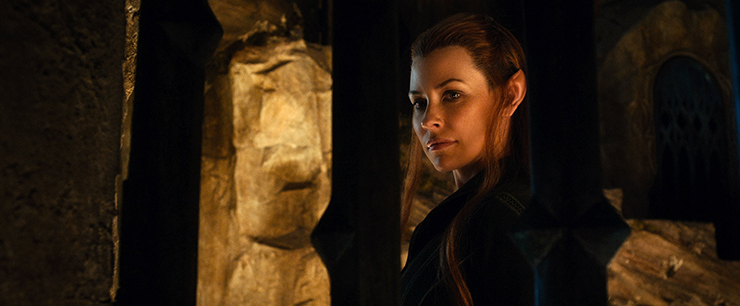
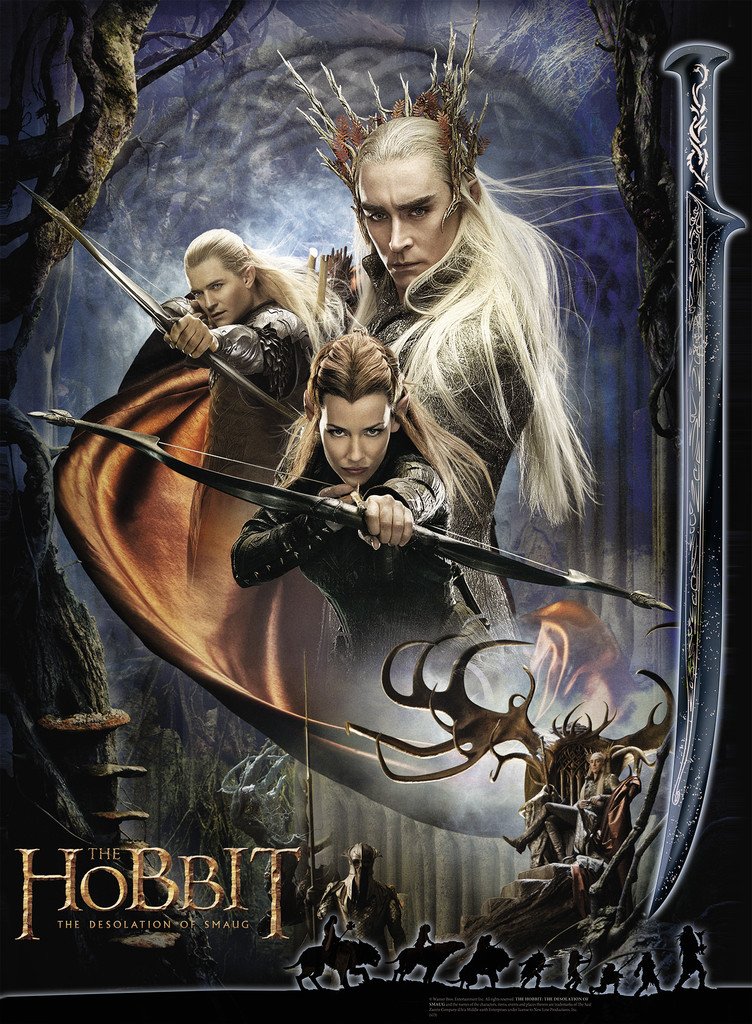
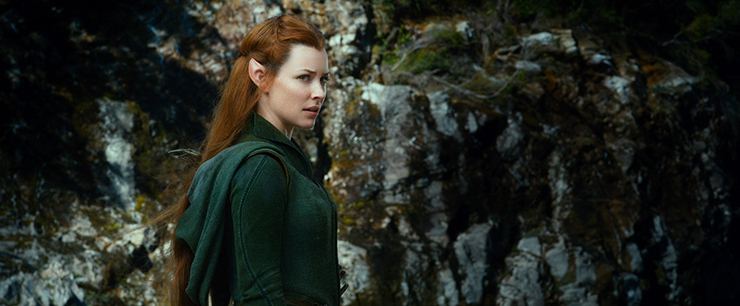
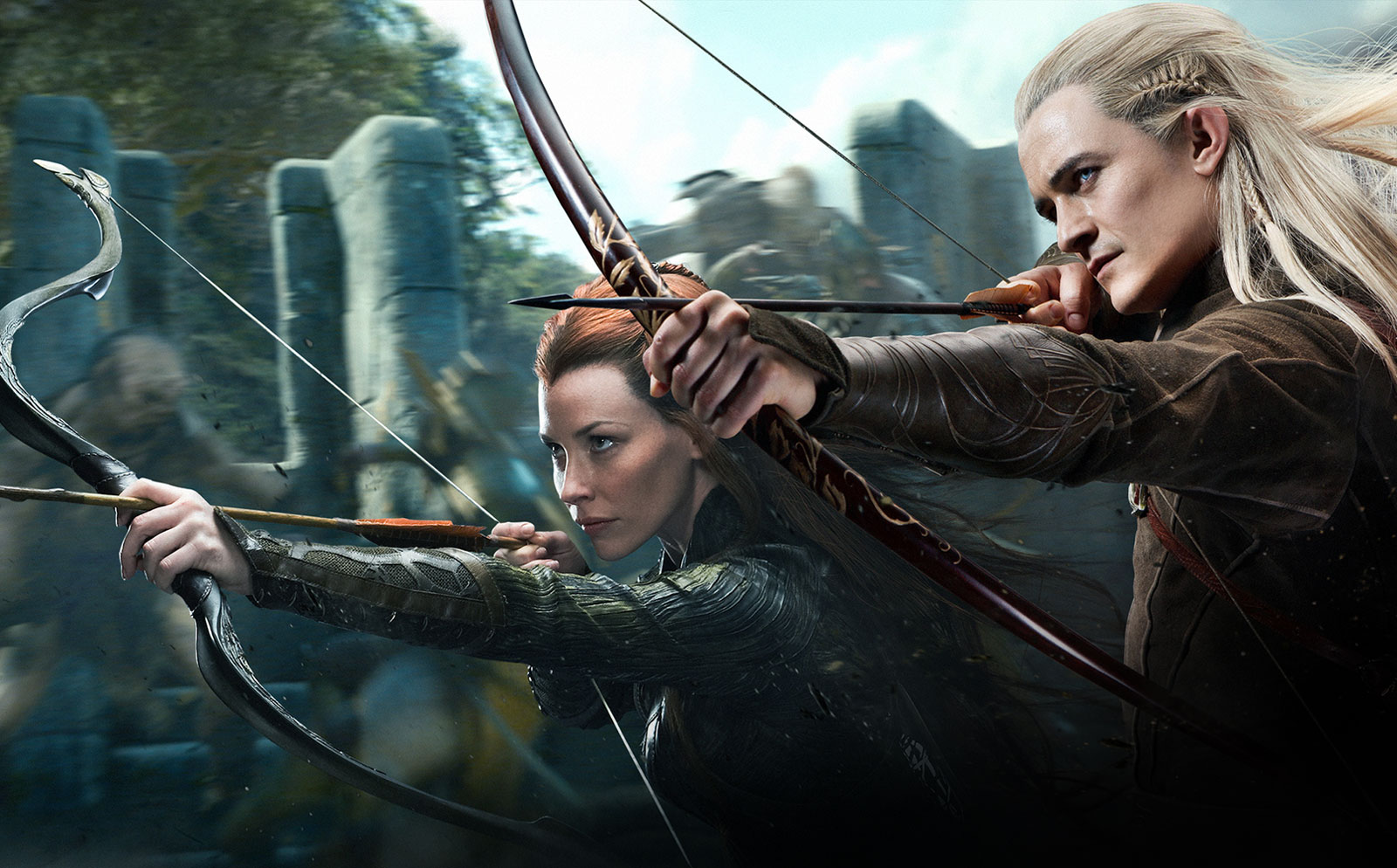
(Evangeline Lilly as Tauriel.)In the first part of this story, Evangeline Lilly discussed her childhood love for “The Hobbit,” and her decision-making process that led her to move her family to New Zealand and work with director Peter Jackson as a character not found in J.R.R. Tolkien’s 75-year-old classic. She plays an elf in the forest kingdom of Thranduil where his son Legolas also lives.
How does an actor differentiate her character in a set of films stuffed full with grand, immortal elves?
“Somebody asked me, ‘Did you study a lot of the other elves? The performances of the elves from Rings to do this role?’ I said distinctly ‘no.’ I intentionally didn’t re-watch the movies because I was afraid of trying to copy someone’s performance and I wanted it to be original.”
“All the other elves you’ve ever seen in these movies are at least twice my age, at least twice Tauriel’s age, so they are very wise and they’re very well established in their power and their understanding of the world. I’ve intentionally tried to demonstrate that she’s not there yet. She’s young, she’s only 600 years old and in elven terms, that is so young. She’s just a baby.”
Lilly is even playing some layers of the role in a way she wants those diehard fans to understand.
“I like the idea of playing with a young elf, how would they behave? How would they be different from the aged elves? And I hope that it doesn’t come across as wrong, you know what I mean? I hope it doesn’t come across to people who really know the world as she’s not quite got it down. Because that’s my goal, to not quite have it.
“She wants to be as wise, she wants to be as much of a presence as all of her elders but she’s not. She’s a kid and there’s a part of her that is always a little too excited about things or maybe a little too engaged in the world, the way kids can get. And I think that was something I wanted to tell the really diehard fans.
WELLINGTON, New Zealand — Those outside of the movie making business often don’t understand what The Producer does on a film. The quickest answer is: They get the movie made. They get things done.
In the case of Zane Weiner on “The Hobbit,” it meant getting in touch with someone nobody was meant to get in touch with.
Evangeline Lilly.
Living in Hawaii, she was a month removed from the birth of her child, email turned off, not taking calls about work and still confined to bed rest.
“So I was still in bed with the baby,” she told TheOneRing.net in full Tauriel outfit and gear during a lunch break on a full day of filming on “The Hobbit.”
This lunch tent, while perhaps not glamorous, is an essential part of Stone Street Studios and making Peter Jackson movies, designed to feed and shelter quite an enormous crowd. Breakfast was served there for anybody wanting to start the day off right. Coffee and tea were available on any sound stage but also in the tent — a first stop for many on a shoot. Continue reading “Evangeline Lilly gets personal with TORn about Tauriel and ‘The Hobbit: The Desolation of Smaug’”
Yes, this story will be riddled with spoilers in it, and some snark.
With less than 2 months to go before The Hobbit: The Desolation of Smaug, we at TheOneRing.net thought you might like a little survival guide if you happen to be Arachnophobic or Drakonophobic. The Lord the Rings: The Return of the King was a little hard on many avowed Arachophobe Tolkien fans, this reporter’s sister being one of them. She watched the entire Shelob sequence from behind her purse every time she saw it on the big screen. It was only when she saw it on DVD that she could watch it unfettered.
Long before Tolkien conceived of Sam fighting off Shelob to try and save Frodo, he placed an entire Colony of giant Spiders in Mirkwood to trap the Company of Dwarves for Bilbo to rescue. This was Bilbo’s first real challenge to help the Company and he rose to the occasion. Here you can see the fear on Bilbo’s face, but he conquers it to save the Dwarves, and you can conquer your Arachnophobia too.
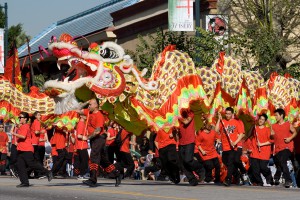
As for Drakonophobia, that may have been made up word, not quite sure, but better safe than sorry. Now, to be fair, there are probably more Arachnophobes than there are Drakonophobes in the world simply because there are more spiders in the world than there are dragons. We have all those Knights in Shining Armor to thank for that. Except in China, where the dragons settled in the Rivers and became good luck symbols and come out every Chinese New Year. Gung Hey Fat Choy!!!!
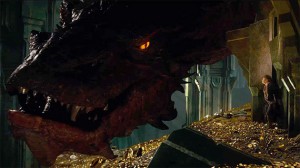
Dragons as seen in Tolkien’s Middle-earth can easily instill Drakonophobia in man and beast alike , and Smaug is the most famous of those dragons. There was fear, mixed with anger and sadness when Thorin told the story of Smaug’s attack on the Lonely mountain, killing so many and driving out the few survivors. Thranduil would not risk his own people to help and Dale was completely destroyed. The entire area around the Lonely Mountain was called the Desolation of Smaug while the Men of Lake-town built their town on stilts over the lake in the hopes of surviving future dragon attacks. Smaug has not been seen in 60 years, and yet Drakonophobia is still affecting the people of Lake-town to this day. But no one is really sure he is still really alive since it’s been so long since he was last seen, at least not until Bilbo makes his fateful first burgal attempt.
So, without further ado, here are a few helpful pointers on how to survive your inner phobias when spiders and dragons appear onscreen.
1) Read The Hobbit before the film opens, familiarity makes it easier to handle shocks of this nature, at least the chapters in Mirkwood through Bilbo entering the Lonely Mountain.
2) Go with a really tall friend and sit behind them. If you have no tall friend, find a tall person in the theater and sit behind them.
3) If you prefer to see the film unfettered, then bring a jacket or purse to put in front of your eyes during the spider or dragon scenes.
4) Failing a jacket or purse, buy a soda or popcorn to raise up, my preference would be popcorn, because if you spill it from fright, it is less messy and certainly not cold or sticky.
5) Bring Litzi (Red Envelope with money or gold in it) purely to use as a Chinese New Year gift/bribe
6) Put on your Ring of Power and hide
7) Hold hands with your best friend, try not to cut off the circulation.
8) Run out of the theater during the scary bits (works for children)
9) If running out of the theater seems to be a waste of money, just close your eyes, but you may need to hold your hands over years ears too, those spiders seem to make some creepy noises. Smaug, on the other hand has a rather awesome voice.
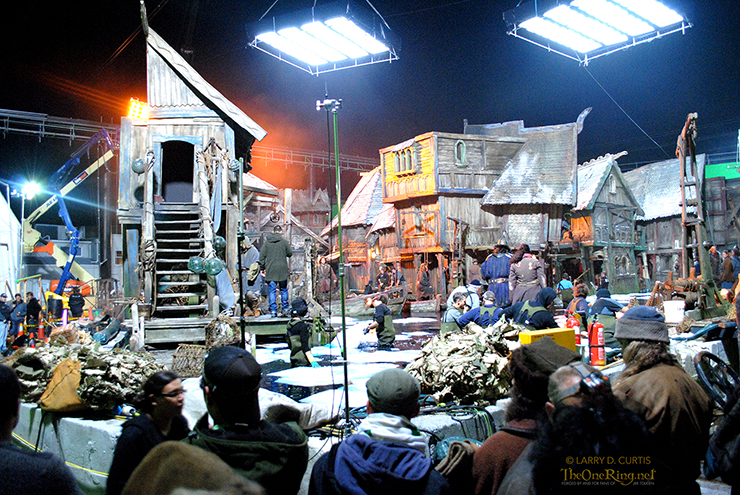
(The outdoor Lake-Town wet set with extras and crew assembled for a night shoot on “The Hobbit.”)
WELLINGTON — The great cities of history have risen up around rivers, lakes and on coasts. Water holds vast and replenishing stores of food, improves transportation of people and goods, encourages trade, and of course keeps a population hydrated. Paris. London. Hong Kong. New York. Tokyo. Moscow. Boston. On and on.
Lake-town benefitted from excellent transportation and presumably a wealth of fish and food and clean, fresh water but it was built on water for a different reason.
Dragons.
One dragon in particular: Smaug The Terrible.
Tolkien’s Lake-town, like real-world Venice, was built on wooden pillars sunk into water. The lake men — with the destruction of Dale seared forever into their memory — built on water for safety. We watched it in the prolog of “The Hobbit: An Unexpected Journey,” while they had to live with the fear of dragon every day. Water-based living provided at least a chance against the great and terrible worm if he ever attacked again.
Long-time friend of TheOneRing.net, Sohaib Awan, has kicked off a new Fictional Frontiers podcast and invited our own MrCere to talk all things Hobbit. Long a radio program, Fictional Frontiers, with Shotglass Digital, is reaching a new audience with a new format that allows for a longer, more in-depth discussion. Awan has championed “The Hobbit: An Unexpected Journey,” and loves both the realms of Tolkien and the work of Peter Jackson. He has used MrCere (Larry D. Curtis) as a frequent guest and in this episode they discuss both the upcoming second installment of the film and the success of the first and Curtis talks big picture about his time in New Zealand. The podcast can be found right here! Awan says MrCere will return in future episodes to talk more Hobbit.
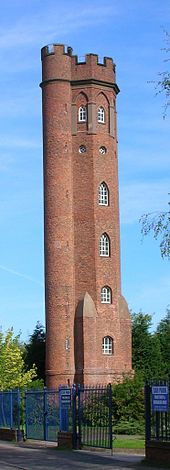
There are many places, stories and events which are said to have been influences on J R R Tolkien in his tales of Middle-earth. One which has long intrigued the Professor’s fans is Perrott’s Folly in the West Midlands, England. This extraordinary tower is located in the Edgbaston area of Birmingham, near where Tolkien lived as a boy. It is a 96 foot tall structure, built by John Perrott in 1758 for some reason which is unknown today – possibly it was simply a status symbol, though the more romantic belief is that he wanted a building from which he could see his wife’s grave 15 miles away (even though she was still alive when first Perrott built the tower; the sceptics say he was in fact using it to spy on her infidelities…)
You can read more about Perrott’s Folly and its supposed influence on Tolkien here. Normally this strange building is not open to the public; visitors on the Tolkien Trail in Birmingham are turned away, disappointed. However, next Saturday, 26th October, the Folly will be open for a ‘Drawing Event’, organized by Trident Reach the People Charity, which manages the building. The occasion will be a family friendly, experimental art event, where mirrors, odd objects and noise will be used to imagine how Perrott’s Folly might look, sound and function in the future.
The day will run from 11am to 5pm, and is free and open to all. You can read more about it here. If you’re in the area, don’t miss this great opportunity to see inside a landmark which would have been very familiar to J R R Tolkien, and which just might have been a seed for one of his ‘Two Towers’.


 “All the other elves you’ve ever seen in these movies are at least twice my age, at least twice Tauriel’s age, so they are very wise and they’re very well established in their power and their understanding of the world. I’ve intentionally tried to demonstrate that she’s not there yet. She’s young, she’s only 600 years old and in elven terms, that is so young. She’s just a baby.”