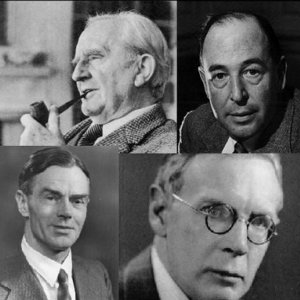
The CBC radio show Ideas ran this interesting two part series on C.S Lewis and the Inklings.
In the first podcast Frank Faulk explores the early life of C.S. Lewis, and the experiences that would shape him on his journey to becoming one of the 20th century’s greatest thinkers and writers on Christianity. In part two Faulk looks at C.S. Lewis’s conversion from atheism to Christianity, and his deep friendship with Tolkien, Barfield and Williams.
EDITOR’S NOTE:This is the first of many set visit reports that will publish weekly from now until the premiere of “The Hobbit: The Desolation of Smaug.” We will update this post with photos from the set visit as soon as possible.
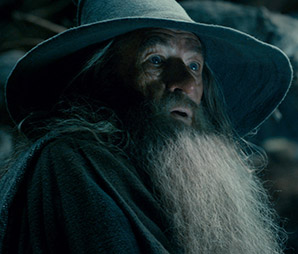
Ian McKellen as Gandalf.
WELLINGTON — Thousands of creative hands will have touched “The Hobbit: The Desolation of Smaug,” by the time it hits movie screens. For those making the film it means long hours, pushing the limits of creativity, people and technology. It is accurate to say every frame is filled with passion, lots of passion.
Despite all the love for the project from every quarter, there is a group that may be the least-heralded, most overlooked, and yet whose passion for the project is surpassed by no man — or woman. They will receive no awards, no fame, no recognition and yet, they loved their work on “The Hobbit,” and legions of fans would have willingly taken their place in a heartbeat.
They are called “extras,” and for these films that meant extra passion, extra time and extra fun.
How would I know? Well, I was one of them!
I am a staffer here at TheOneRing.net (TORn), contributing for over a decade to the all-volunteer, not-for profit website forged by and for fans of J.R.R. Tolkien. In that time I formed a bond of trust and friendship with people on all sides of the production.
Warners Bros. and the production team on “The Hobbit,” invited me, as a representative of TORn, to not only visit the set but to be embedded there as a journalist for five weeks. Every working day for a month and a week in 2012, I woke up and reported to set near Wellington, New Zealand where Peter Jackson and his team of filmmakers were putting together the film adaptation of J.R.R. Tolkien’s beloved children’s book, “The Hobbit.”
I can hardly believe this happened even though I remember it with incredible clarity. It seems surreal now — as it did every day when I arrived, showed my badge to security and walked into the grounds where Middle-earth would be created for audiences world wide. Each day was appreciated.
You might have seen this article when io9 debuted it last year, or you might not have. I missed it but it’s an interesting read. I spent a bit of time researching the Jeffrey Inaba artwork, which is called Skylight. The comparison to the Eye of Sauron (either book, or movie) seems inflated, but there are just a few parallels with the glow of the One Ring.
The author of The Hobbit and The Lord of the Rings casts a massive, sweeping shadow over fantasy literature and entertainment. But J.R.R. Tolkien’s influence spreads much further than that. Everywhere you look, you can see Tolkien’s legacy: in science, in art, in language.
Via the Desolation of Smaug 2014 Calendar and the Annual, check out these interesting new images of Bard and his daughters. As the Annual explains, in Peter Jackson’s adaptation, Bard at the time of the events of The Hobbit has a son, Bain, and two daughters, Sigrid and Tilda. Continue reading “Bard the Bowman, his daughters and their outfits”
Elendil, High King of Arnor and Gondor. Tolkien scholar Michael Martinez examines the question of whether the line of Númenorean kings and queens expired with the destruction of Númenor in the Akallabêth and the vanquishing of Ar-Pharazôn and his great fleet.
If you have a Tolkien/Middle-earth inspired poem you’d like to share, then send it to poetry@theonering.net. One poem per person may be submitted each month. Please make sure to proofread your work before sending it in. TheOneRing.net is not responsible for poems posting with spelling or grammatical errors.
By now you’re undoubtedly aware of the newest edition of The Hobbit, illustrated in gorgeous and whimsical fashion by Jemima Catlin.
She was just 23 when artwork she’d created for a personal project on Tolkien’s short story Rover Random came to the notice of literary giants Harper Collins -– and eventually landed her a contract to illustrate The Hobbit.


 The CBC radio show Ideas ran this interesting two part series on C.S Lewis and the Inklings.
 You might have seen this article when io9 debuted it last year, or you might not have. I missed it but it’s an interesting read. I spent a bit of time researching the Jeffrey Inaba artwork, which is called Skylight. The comparison to the Eye of Sauron (either book, or movie) seems inflated, but there are just a few parallels with the glow of the
  Via the Desolation of Smaug 2014 Calendar and the Annual, check out these interesting new images of Bard and his daughters. As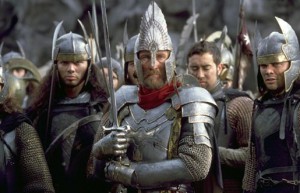
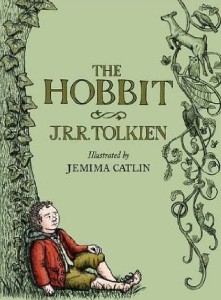 By now you’re undoubtedly aware of the newest edition of The Hobbit, illustrated in gorgeous and whimsical fashion by Jemima Catlin.