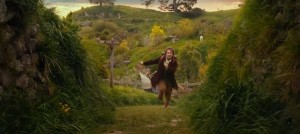
If you’ve ever pondered what a Tom Bombadil sequence might look like on film, this amateur short that adapts Tolkien’s chapter In the House of Tom Bombadil The Fellowship of the Ring offers one interesting perspective. It does take its own textual liberties though.
After the four hobbits; Merry, Pippin, Frodo and Sam leave the Shire for Bree, they encounter some trouble with a Willow Tree, only to be rescued by the mysterious yet whimsical character, Tom Bombadil. As the hobbits linger in Bombadil’s hollow, danger lurks outside the Old Forest, and Frodo begins to question secrets the One Ring may hold. When morning dawns again the hobbits must face an important question; “Who is Tom Bombadil?”
Rare and Unique Items from Greg and Tim Hildebrandt Available Now!
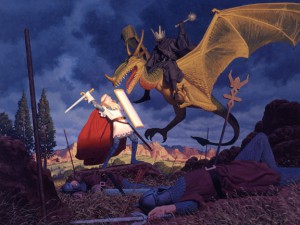
Back in the 1970’s Greg and Tim Hildebrandt created 3 Tolkien themed calendars for Ballantine Books, beginning around the time of the 25th anniversary of the publishing of ‘The Lord of the Rings’. During this resurgence of popularity for Tolkien’s collective works, those calendars provided an entire generation’s vision of Middle-earth and all the characters within. Since the release of those calendars, very few alternative versions of those images have been available outside of the calendars and a few art books. Greg and Tim were always very particular about the quality of how their art was showcased. That is all changing, much of this work is now being released in multiple formats that meet with Greg’s exacting standards. Continue reading “Classic Hildebrandt Artwork Exclusively Available in New Formats”
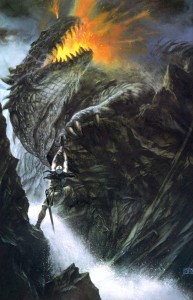
Glaurung the dragon, one of the chief weapons Morogth used to defeat the Eldar in Beleriand. Artwork: John Howe. In this new TORn library piece, guest writer Dr Timothy Furnish explores dragons and dragon-slaying in the Tolkien-verse. Are there reasons why only Men slay dragons in the world of Arda, and not elves or dwarves? Read on and find out!
Why did Tolkien imagine only men killing dragons?
by Dr Timothy Furnish, PhD.
Dragons were very important to J.R.R. Tolkien, who acknowledged that his very first attempt at fiction-writing, when he was seven, centered around a “great green dragon.”[1]
In his seminal work Beowulf: the Monster and the Critics, Tolkien noted that in myth “there are… many heroes but very few good dragons.”[2] And in On Fairy Stories he confessed that he “desired dragons with a profound desire.”[3]Continue reading “Why did Tolkien imagine only Men killing dragons?”
If you have a Tolkien/Middle-earth inspired poem you’d like to share, then send it to poetry@theonering.net. One poem per person may be submitted each month. Please make sure to proofread your work before sending it in. TheOneRing.net is not responsible for poems posting with spelling or grammatical errors.
“I’m going on an adventure!” In our newest TORn Library feature, Gibbelins muses on the unwedded status of the Fellowship during the Quest to destroy the Ring in The Lord of the Rings. Could it be that Middle-earth adventures are only for bachelors? Continue reading “Are Middle-earth adventures only for bachelors?”
If you have a Tolkien/Middle-earth inspired poem you’d like to share, then send it to poetry@theonering.net. One poem per person may be submitted each month. Please make sure to proofread your work before sending it in. TheOneRing.net is not responsible for poems posting with spelling or grammatical errors.
The Sun, the Moon and the Stars of Tolkien’s universe – Eä. Note: As Larsen explains in the article, there is no evidence that Luinil or Nénar correspond to Neptune and Uranus. Sadly the artist got a bit over-enthusiastic. The other day, we posted an essay by Ringer DarkJackal over at Heir of Durin exploring the confusion surrounding exactly when Durin’s Day occurs. But even more widely, star lore — and astronomy — plays a significant role in the shaping of Middle-earth, both figuratively and literally.
In this fantastic essay, first presented at the RingCon Tolkien convention in November 2002, Dr. Kristine Larsen, Professor of Physics and Astronomy at Central Connecticut State University discusses the evolution of Tolkien’s star lore, and its links with our own stars and constellations. It’s a long read, but quite worthwhile.
The astronomy of Middle-earth
One question we might ask ourselves when embarking on a critical study of Tolkien’s work is “are we just reading too much into a story?” Christopher Tolkien argued for the authenticity of such analysis: “Such inquiries are in no way illegitimate in principle; they arise from an acceptance of the imagined world as an object of contemplation or study valid as many other objects of contemplation or study in the all too unimaginary world.” Continue reading “The astronomy of Middle-earth”
If you have a Tolkien/Middle-earth inspired poem you’d like to share, then send it to poetry@theonering.net. One poem per person may be submitted each month. Please make sure to proofread your work before sending it in. TheOneRing.net is not responsible for poems posting with spelling or grammatical errors.
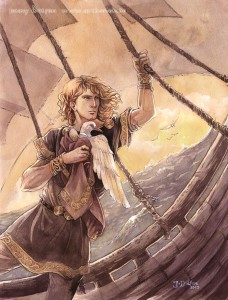
Earendil and Elwing by Jenny Dolfen. In this new TORn Library piece, Gibbelins writes about the deep, yet extraordinarily subtle faith underlying Tolkien’s legendarium, and why it works for readers of all faiths — even those who profess to no faith at all. Continue reading “Why Tolkien works for readers of all faiths”
If you have a Tolkien/Middle-earth inspired poem you’d like to share, then send it to poetry@theonering.net. One poem per person may be submitted each month. Please make sure to proofread your work before sending it in. TheOneRing.net is not responsible for poems posting with spelling or grammatical errors.


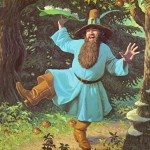 If you’ve ever pondered what a Tom Bombadil sequence might look like on film, this amateur short that adapts Tolkien’s chapter In the House of Tom Bombadil The Fellowship of the Ring offers one interesting perspective. It does take its own textual liberties though.