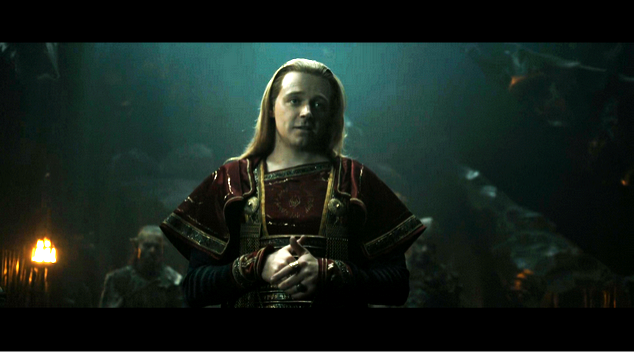
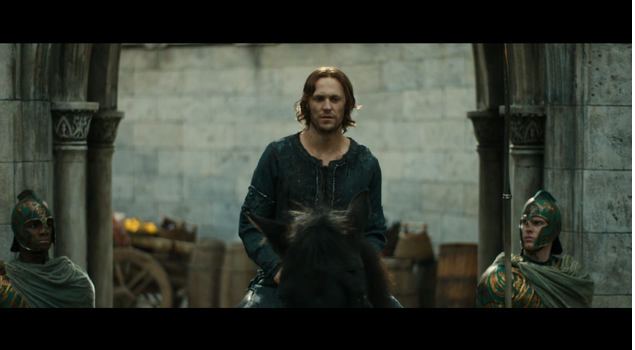
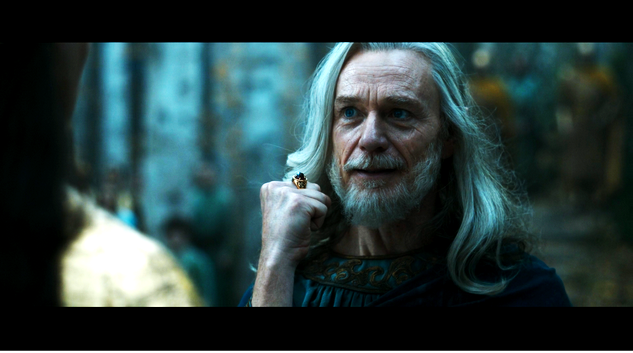
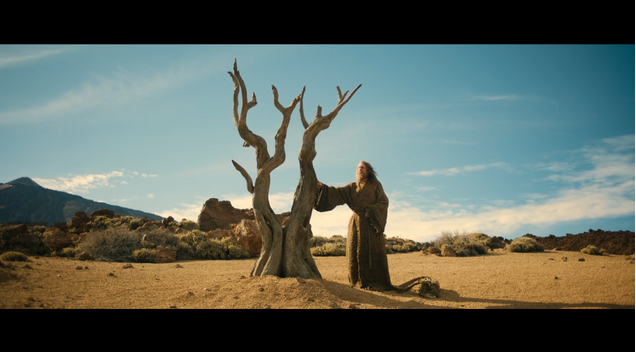
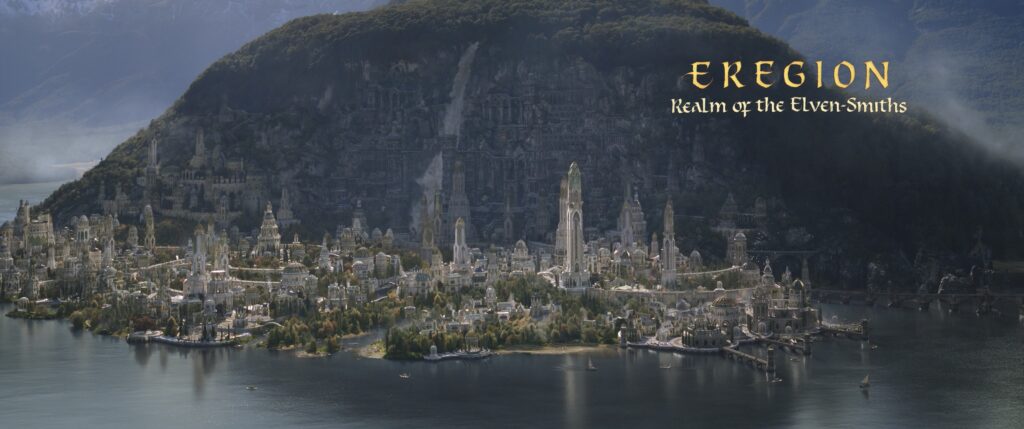
It’s not long at all until Episode 4 of The Lord of the Rings: The Rings of Power airs. If you’re feeling twitchy while waiting, check out this fantastic Episode 1 to Episode 3 recap from TORn Discord moderator Webcrawler.
~ Staffer Demosthenes
Recap: The Rings of Power Episodes 1 to 3
by TORn Discord moderator Webcrawler
The Lord of The Rings: The Rings of Power returned on Amazon Prime last Thursday for it’s second season with a whopping three-episode premiere. Many fans across the USA were also able to attend special screenings of the first two episodes at select theatres, including our very own TORnTuesday hosts, Cliff & Justin
The episodes premiered to some very strong reviews, some quite negative but most extremely upbeat. This highlights big improvements from Season 1: tighter, more-focused storytelling, better pacing between plotlines and episodes, and stronger dialogue. Season 2 of The Rings of Power currently sits at 84% on Rotten Tomatoes, “Certified Fresh”, with 91 Critic Reviews.
There are plenty of reviews and breakdowns already available to view online, including from friend of TORn, Tea with Tolkien; but of course, don’t forget to check out yesterday’s TORnTuesday episode where Cliff and Justin spend over three hours examining the three-episode S2 premiere in great detail!
Season 2, Episode 1
Titled “Elven Kings Under the Sky”, a direct reference to the first line of the Ring Verse.
“Three Rings for the Elven-kings under the sky, Seven for the Dwarf-lords in their halls of stone…”
Synopsis
There are three plots we follow in this episode:
Sauron
A parallel prologue to that of Season 1, Episode 1 “A Shadow of the Past”, where we get answers to some important lingering questions from Season 1: What was Sauron doing after Morgoth’s defeat? Where did he get the sigil of the lost King of the Southlands? And how did Sauron get on a raft in the Sundering Seas?
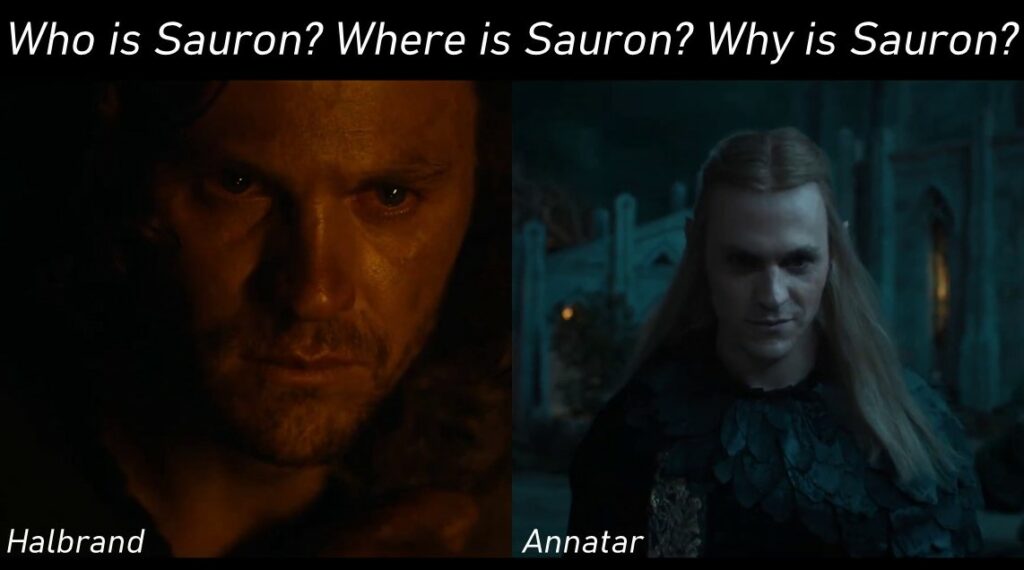
After that we catch up to Sauron in the present day, where he turns himself over to Adar. Using his Halbrand form, he somehow convinces Adar to let him travel to Eregion, where he waits to speak with a reluctant Celebrimbor.
Lindon
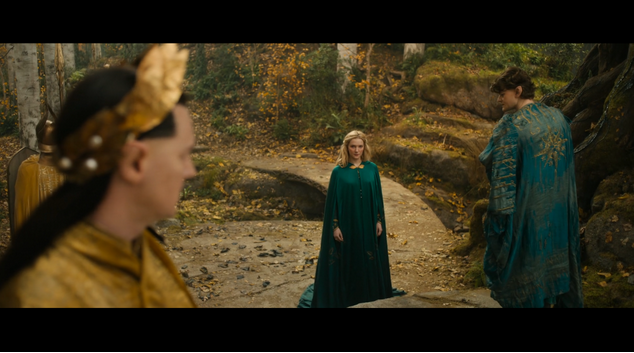
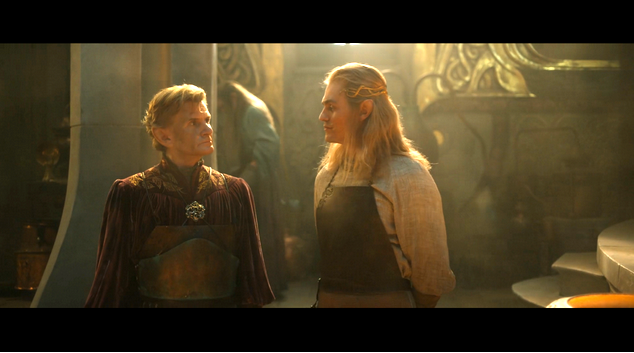
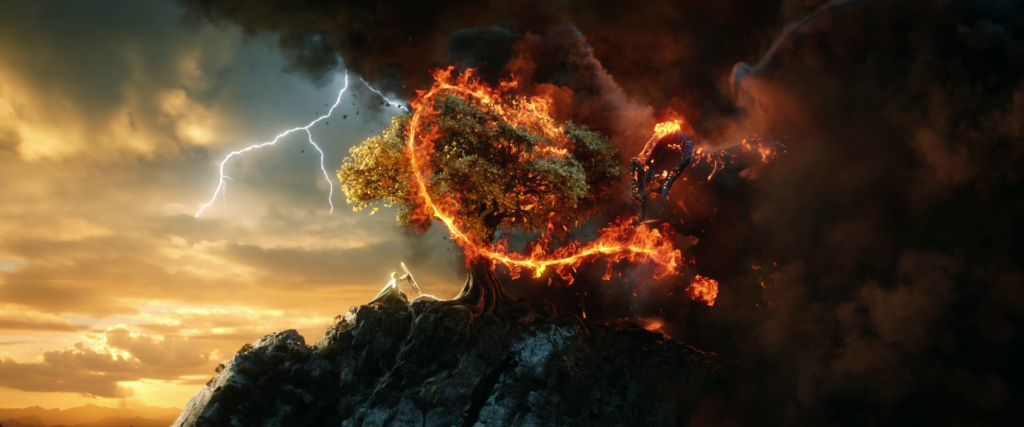
Galadriel and Elrond return to Lindon with the Three Rings made by Celebrimbor. There, the elves, along with Gil-galad (and later Círdan) discuss the merits and dangers of using the Three Rings to heal The Great Tree of Lindon. After some time has passed, and Gil-galad tells the Elves to prepare to leave Lindon, Círdan shows up wearing Narya and convinces Gil-galad to use the rings.
Rhûn
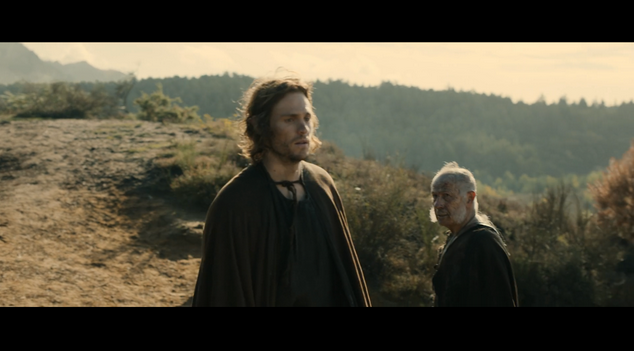
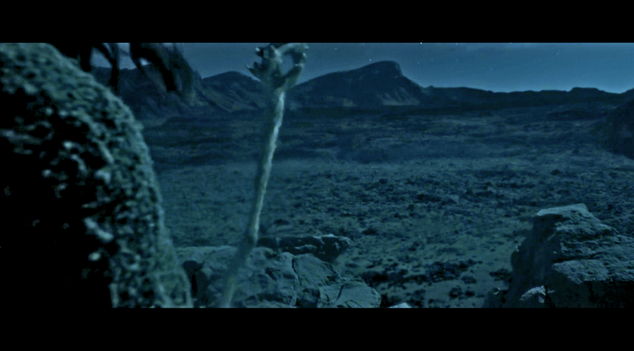
The Stranger has a recurring dream or vision of a staff; he and Nori have been lost in their attempt to get to Rhûn, and find that they are being followed. It turns out Poppy has tracked them down and decided to join in their journey. Poppy, using some of Sadoc’s maps, helps them navigate to Rhûn.
Overall Thoughts on Episode 1
Episode 1 is a very strong start to Season 2. The main plot, following Sauron, presents a compelling journey that asks us to consider whether or not he ever truly repented. One particular scene stands out in this regard, where he talks to a Southlander (played by Nicholas Woodeson), on a ship, about overcoming an evil past; the response reminded me of Gandalf’s comment to Galadriel in The Hobbit: An Unexpected Journey:
Gandalf : I don’t know. Saruman believes that it is only great power that can hold evil in check. But that is not what I have found. I’ve found it is the small things, everyday deeds of ordinary folk that keeps the darkness at bay.
It’s telling that, immediately after this, Sauron leaves the man to die after the ship is attacked by the wyrm in the Sundering Seas (first seen in Season 1, Episode 2), but not before grabbing the sigil that hung around the Southlander’s neck.
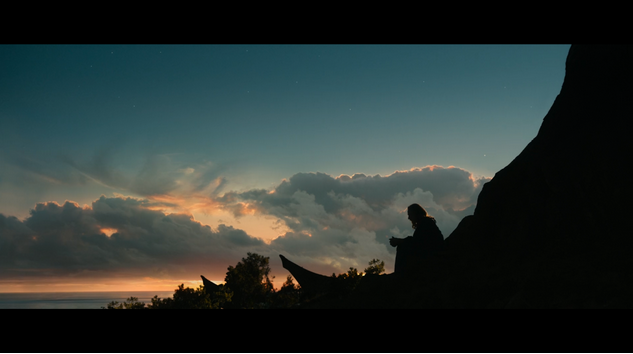
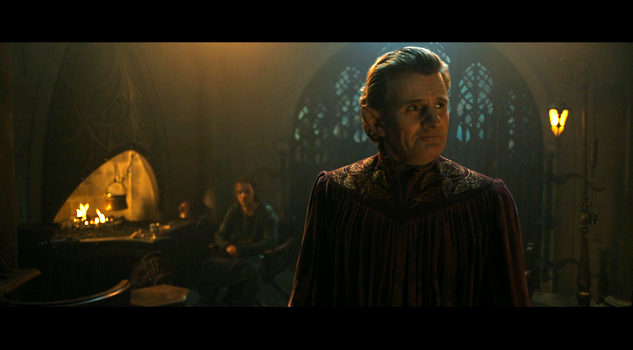
The Lindon plot is also filled with fantastic, Tolkienian moments that show us Season 2 has risen in terms of dialogue and storytelling. Círdan’s introduction is about as close to perfection you can get for a character introduction, as we see him stare out into the seas while a variation of Bear McCreary’s “Valinor Theme” plays, indicating to lore fans that this is the elf who has long awaited the day he shall sail West to Aman.
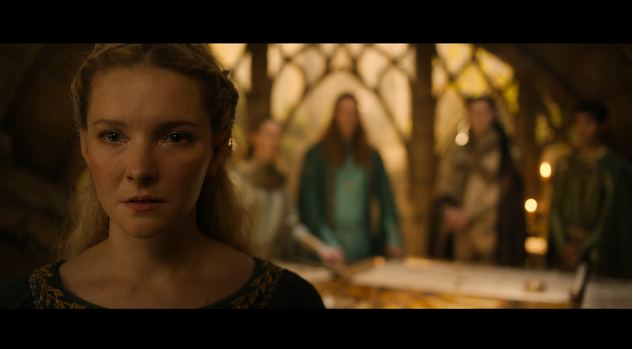
Galadriel, Elrond, and Gil-galad debating whether to use the rings sets up new and interesting dynamics, with slight role reversals for the former two, as it is now Elrond who refuses to obey the High King. (personally, I’m glad they had Galadriel just plainly state that Halbrand is Sauron; good to see they’re not trying to drag things out for drama).
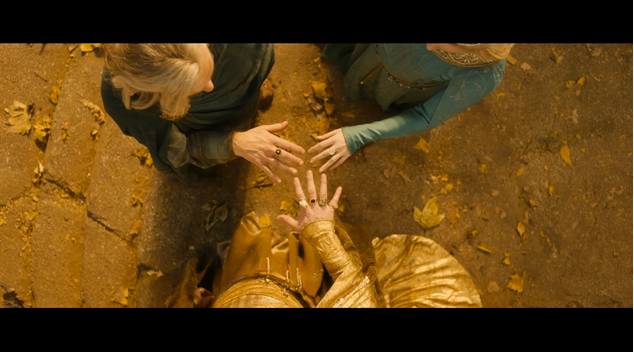
Of course, there is also the scene where The Three Rings are used and The Great Tree is healed; it’s a moment that should stand out as one of the more truly magical moments of a show. It also features a quick call back to the Peter Jackson films, when the Three are shown together in the prologue of The Fellowship of The Ring.
Lastly we come to the Rhûn plot, whose primary interesting moment was The Stranger’s vision: a staff floating and changing forms. The first form was the staff he’s been shown with in some promotional images. But the second form looks much more familiar…
Yes, it’s quite evocative of Gandalf’s staff in The Fellowship of the Ring.
The other significant development in the Rhûn plot was the return of Poppy, and a shorter rendition of “Wandering Day” from S1. This time it sets our three heroes off on a path to discovering the way into Rhûn. It’s a clever bit of storytelling that provides us with some depth to the Harfoots, and hints at future events to come.
Rating: I would give this episode an 8.5/10. The Sauron and Lindon plots were excellent ways to kick-off the story, while the Rhûn plot gives us some mysteries and some heartwarming moments.
Season 2, Episode 2
Titled “Where the Stars are Strange”, a direct reference to a quote from Aragorn…
“I have crossed many mountains and many rivers, and trodden many plains, even into the far countries of Rhûn and Harad where the stars are strange.”
The Fellowship of the Ring. The Council of Elrond
It’s interesting to note that according to Unfinished Tales, the stars were strange, not in Rhûn, but Harad.
This passage is the only evidence that survives for his having extended his travels further South. Aragorn claims to have penetrated “the far countries of Rhûn and Harad where the stars are strange” (The Fellowship of the Ring II 2). 10
10 The “strange stars” apply strictly only to the Harad, and must mean that Aragorn travelled or voyaged some distance into the southern hemisphere. [Author’s note.]
Unfinished Tales Part 4: II: The Istari
Synopsis:
There are four plots we follow in this episode:
Khazad-dûm
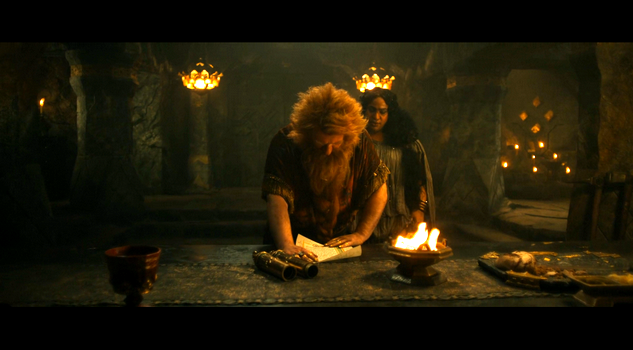
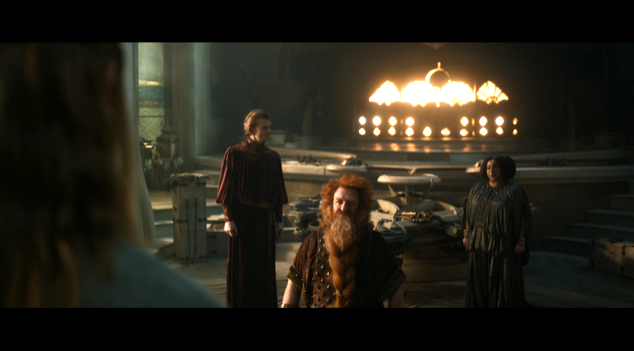
The evil spreading from Mount Doom after it’s eruption has sent shockwaves across Middle-earth; nowhere is that more literal than in Khazad-dûm, where an earthquake destroys the mirrors, removing the dwarves’ ability to get light into the depths of the great city’s caverns. Disa and others attempt to sing to the mountain to find passages through which to repair the damage, but the singers fail to communicate with the mountain, bringing more worry to the dwarven realm.
On a personal level, Durin IV and Disa are struggling to make ends meet, as the two Durin’s are no longer communicating, and Durin IV has been cut off from his inheritance. It all looks dire, until a mysterious letter arrives from Lord Celebrimbor of Eregion, with an invitation for the dwarves to meet with him in Eregion.
Eregion
Halbrand continues to lurk around the gates of Eregion, while Celebrimbor begins to get impatient as he awaits any news from Lindon regarding the Three Rings. As he waits, he continues his work, this time showing a young apprentice his latest creation, Ithildin, which is only visible under moonlight. Finally, Celebrimbor decides to speak with Halbrand, who informs him that the Three Rings did indeed work, and Lindon is healed, the elves are saved, and now Halbrand has returned to ask for Rings of Men.
At first Celebrimbor rejects this aspiration, until Halbrand reveals himself as Annatar, Lord of Gifts.
Lindon
Having worn her ring, Nenya, for some (indeterminate) time now, Galadriel has a vision of Celebrimbor being wrapped in vines and killed, as he recites the first three lines of the Ring Verse in Black Speech. A concerned Galadriel tells Gil-galad, who reveals ominous visions of his own.
Galadriel, convinced that Sauron must be in Eregion, requests Gil-galad’s leave to go and face Sauron herself; but Gil-galad refuses. Elrond supports Gil-galad in this decision, as he doesn’t trust Galadriel because of her role in helping return Sauron to power; nonetheless, after a conversation with the ever-wise Círdan, Elrond decides a small band of elves will attempt to travel to Eregion and speak with Celebrimbor, and he will lead the group, not Galadriel.
Rhûn
As Nori, Poppy and The Stranger make their way through Rhûn, a band of horse riders seem to be tracking them from a distance; they are revealed to be Gaudrim, and they are allied with a mysterious Dark Wizard in Rhûn who is also the leader of the Mystics. The Dark Wizard brings The Dweller, one of the Mystics who we saw in Season 1, back to life. The Dweller provides a report on Sauron’s whereabouts, which he shows keen interest in. The Dark Wizard tasks the Guadrim with capturing The Stranger.
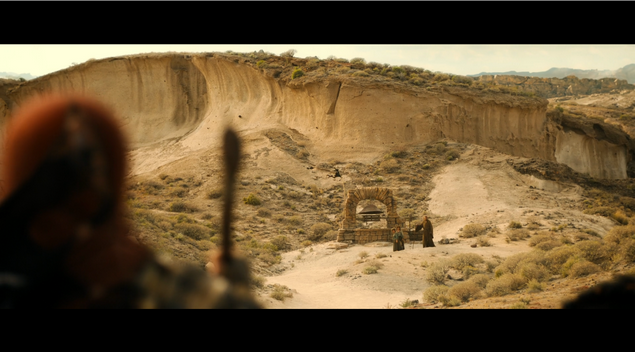
Meanwhile, our trio in Rhûn have found the desert too taxing, and The Stranger collapses from thirst. Nori and Poppy drag him to a nearby well and fetch a pail of water. Unfortunately it has a bell which alerts the nearby Guadrim, and the trio are discovered. The Stranger however has woken up, and sees nearby the staff from his visions. Using the staff he creates a sandstorm to blow away the Gaudrim, but it goes out of control, and leads to Nori and Poppy also being pulled into it and blown away.
Overall Thoughts on Episode 2
Episode 2 was even stronger than Episode 1; it begins with an ominous look at the recently activated Mount Doom, which now continues to spew lava. Then we transition to a map and see its darkness spread, reminding us that this season, things will get worse for the free peoples of Middle-Earth.
This is reiterated with a very surprising scene of Celebrimbor reciting the Ring Verse in Black Speech to Galadriel in a vision; we know from S1 Episode 3, when Galadriel went to Númenor that she can read Black Speech, and so she was able to understand his words. Conveniently, the One Ring portion of the Ring Verse was left out. Galadriel’s connection to Sauron continues to be questioned, and this is thematically related to the question of the influence of Sauron on the Three Rings of the Elves.
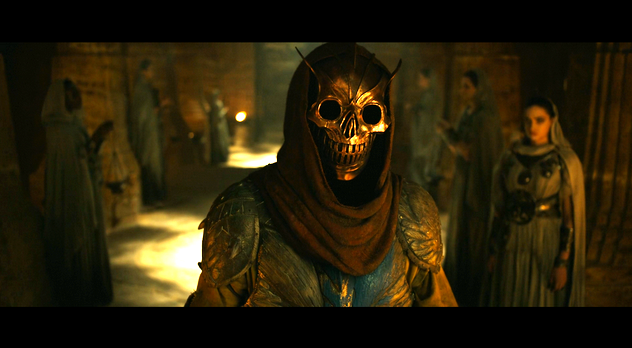
This connection of Sauron is further brought up in Rhûn where we learn the Dark Wizard is keeping track of Sauron through his Mystics. Recall in S1, The Mystics thought The Stranger was Sauron, and sought to bring him to Rhûn. But their purpose remains unclear. The mysteriously masked riders are even more intriguing; one of them tells the Dark Wizard (played by Ciaran Hinds) to remove the “curse of the flesh” from them, but we do not yet learn what that curse is.
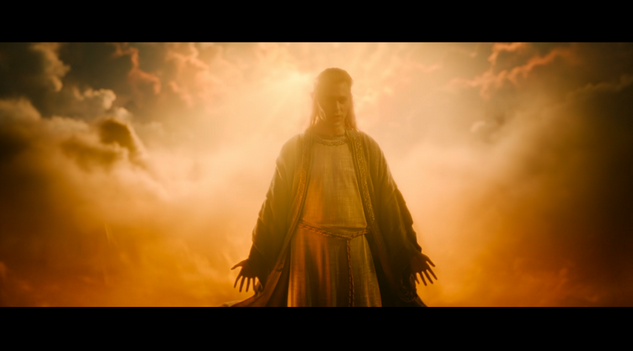
Lastly, but certainly most important, is Halbrand showing Celebrimbor his Annatar form. It’s a moment of pure maximalist fantasy; swirling lights and colors, a flowing white gown as Annatar walks toward Celebrimor and seduces him.
Rating: Overall I give this episode a 9.5/10. All the storylines are paced well, and the moment with Annatar’s reveal should go down in television history. Both Charlies did an incredible job in this scene.
Season 2, Episode 3
Titled “The Eagle and The Sceptre”, two important references to Númenorean lore.
“Thrice only in each year the King spoke, offering prayer for the coming year at the Erukyermë in the first days of spring, praise of Eru Ilúvatar at the Erulaitalë in midsummer, and thanksgiving to him at the Eruhantalë at the end of autumn. At these times the King ascended the mountain on foot followed by a great concourse of the people, clad in white and garlanded, but silent.” [Ed.: emphasis added]
The Fall of Númenor
And…
“It is written that ‘the sceptre was the chief mark of royalty in Númenor’18 from the reign of the First King to that the Twenty-Fifth King and that having survived for 3,287 years it was lost with Ar-Pharazôn at the Downfall.”
The Fall of Númenor
Synopsis:
There are six (!) plots we follow in this episode:
Southlands
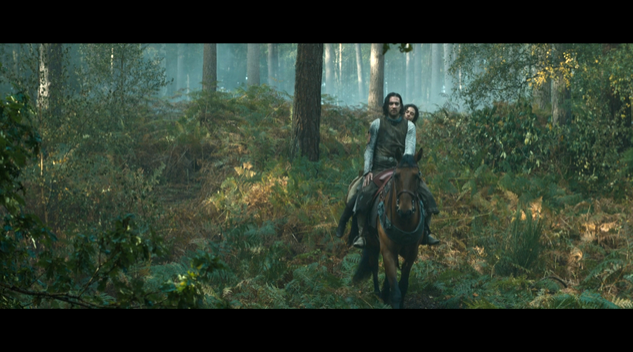
Berek the horse ventures into Mordor, and after having an encounter with orcs, he finds Isildur. Unfortunately, Isildur has been webbed up by Shelob, and a fight ensues before Isildur and Berek can ride to safety. Isildur comes across an attacked caravan. As he is investigating it, he’s stabbed by a Southlander girl, Estrid, who thought he was an orc. Estrid tells Isildur that some of the Southlanders and Númenoreans had set up camp at the abandoned colony of Pelargir, and they make their way there.
Pelargir
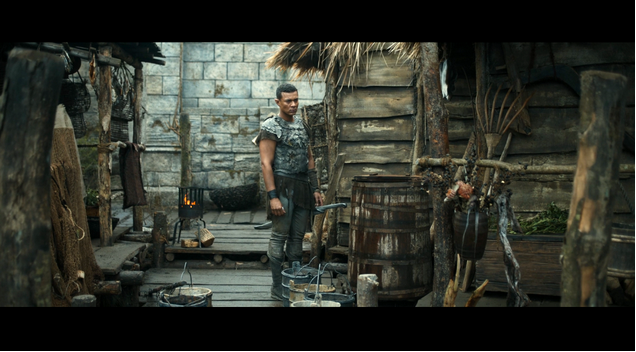
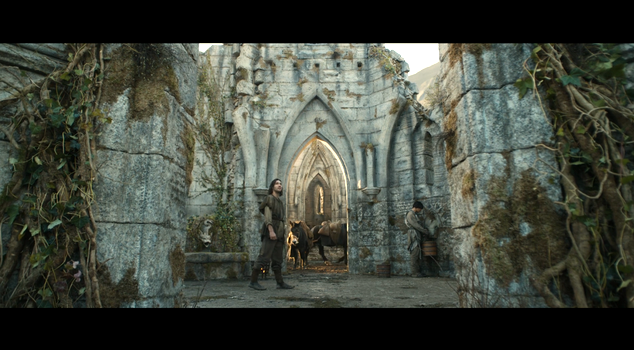
Isildur and Estrid make their way to Pelargir, stopping to help an attacked caravan. It turns out to be a trap, and after a scuffle, Berek is stolen by these Wild Men; luckily Arondir comes in and saves Isildur and Estrid. He takes them to Pelargir, where a funeral pyre has been set up; Bronwyn has died, succumbing to poison from the arrows the orcs shot at her. Theo and Arondir are struggling to deal with this loss and maintain their father-son relationship without Bronwyn to connect them. Isildur talks to Theo about Númenor; Theo tells him he can help him get Berek back.
Estrid and Isildur talk about their mothers, we learn Isildur’s mother died while saving him, which has left him with a sense of profound guilt. After Isildur leaves, Estrid uses a hot knife to burn out a brand that has been put on her, Adar’s brand, indicating at some point she swore fealty to him. Theo and Isildur go to the camp where Berek is being held; they free Berek, but a complication arises as someone or something attacks the Wild Men’s Camp.
Númenor
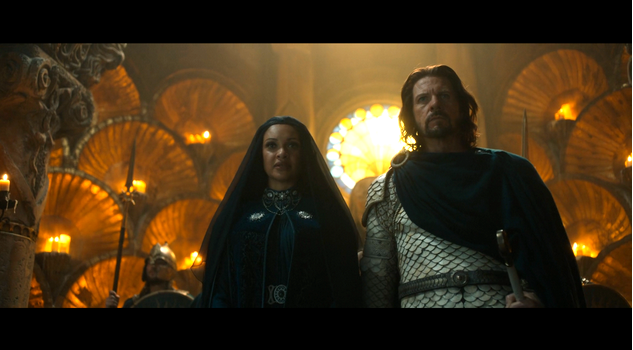
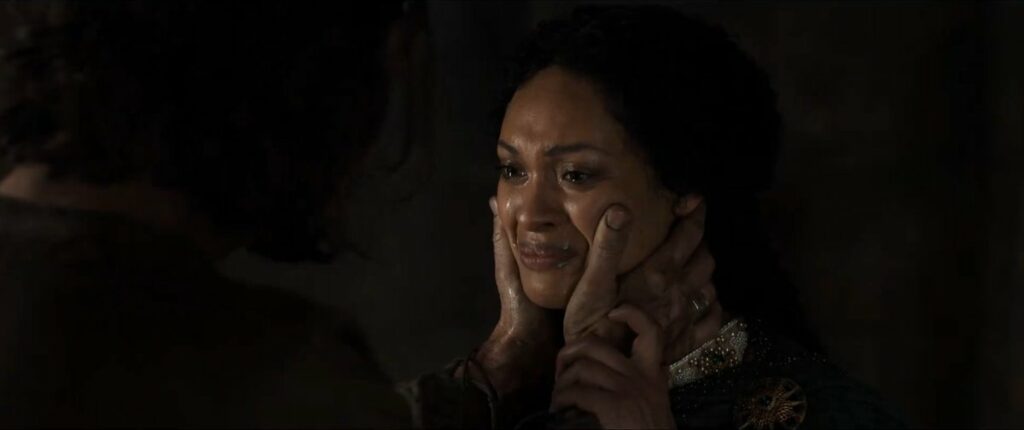
Elendil is paying his respects to the deceased King at his funeral; Eärien tells him that he doesn’t need to blame himself for Isildur’s death, they can blame the Queen. Míriel shows up to her father’s funeral, and is confronted by a woman who lost her son in the expedition to Middle-earth; Miriel comforts her.
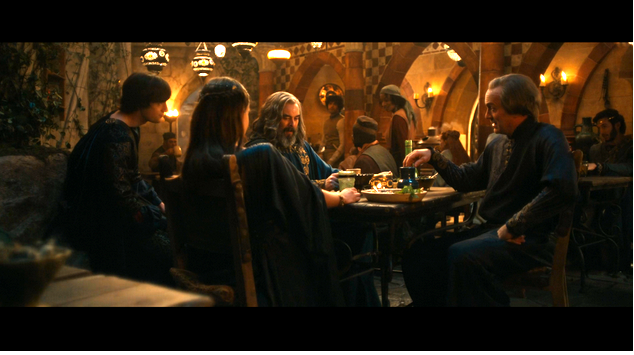
Later, Pharazôn talks to Míriel about her coronation, and hints that she should choose to move Númenor forward, and not backwards in a return to the Faithful ways as her father tried. However, she seems to refuse. Pharazôn, Kemen and Eärien are in a bar talking to Lord Belzagar, a Númenorean lord from the north who dislikes Míriel and thinks Pharazôn should rule.
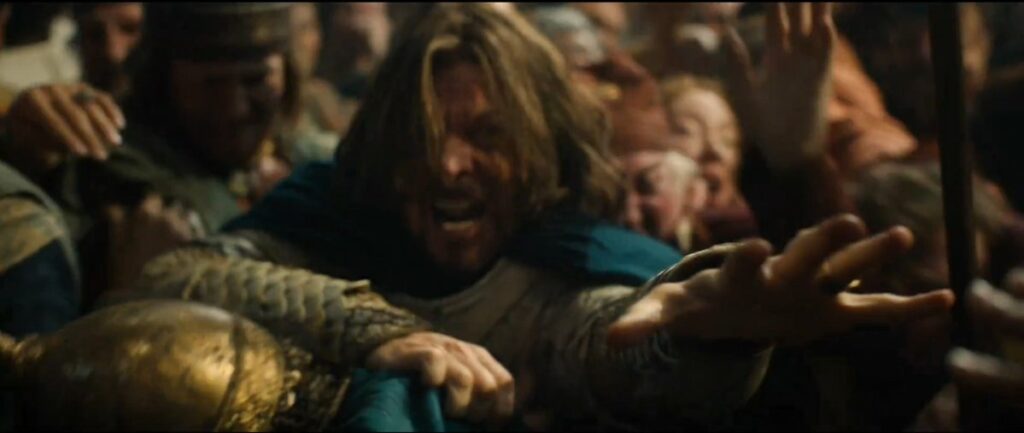
Valandil confronts the table, and makes a clear threat to Kemen. Eärien tells Lord Belzagar about the Palantír. During Míriel’s coronation, Eärien reveals the Palantír to the Númenorean court, inciting the crowd against Míriel. A Great Eagle of Manwë swoops in on the open perch; Pharazôn walks up to it, and Lord Belzagar starts a Pharazôn chant, leading the crowd to join in and proclaim their desire for Pharazôn to be their new ruler.
Khazad-dûm
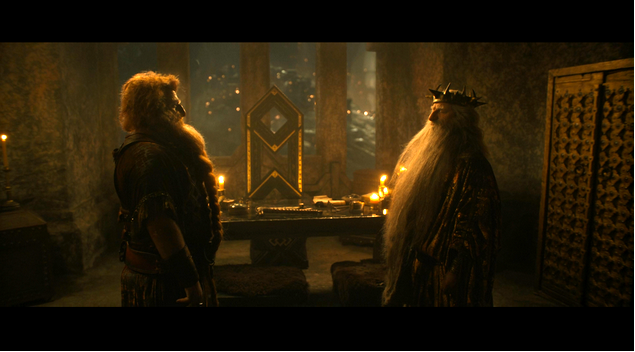
Durin talks to his father about Celebrimbor’s new proposal; he tells King Durin that he’s uncertain about this, and how they had talked previously about the elves trying to cheat death. King Durin brushes off Durin IV’s concerns, as the needs of Khazad-dûm are too great right now.
Eregion
Celebrimbor tells Disa and Durin about the rings, and how he can make more to help them if they provide him with mithril. Durin is a bit more skeptical and explains that he is not on speaking terms with his father, King Durin, and cannot bring a new proposal to him.
Annatar interjects, and after a failed attempt at flattering Durin, tries to convince them they need the rings. Later, Annatar tells Celebrimbor that Gil-galad did not want him to make any more and doesn’t even know that Annatar is in Eregion. Celebrimbor takes offense to this and pens a letter to Gil-galad, lying about closing up shop so that they can let the work continue. Later on, King Durin arrives with mithril, which Celebrimbor and Annatar use to make new rings.
Mordor
The orcs prepare for war, and Glûg talks to Adar about his concerns regarding this new direction; why go to war when they already have a home now? Adar assures him that there will be no peace for orcs unless they make sure Sauron is no more.
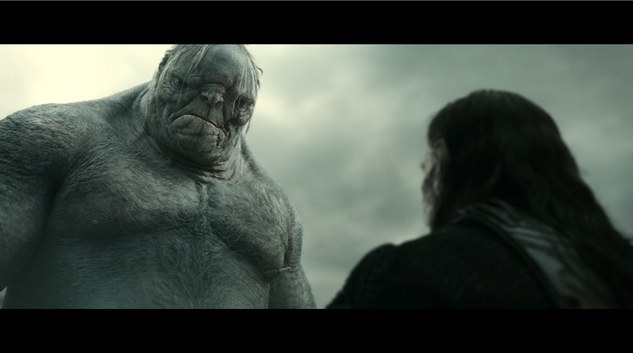
The Hill Troll known as Damrod arrives at Adar’s camp, and asks “Where is Sauron?”
Overall Thoughts on Episode 3
Episode 3 has a lot of plots to juggle and that ends up affecting the pacing. Despite this being the first episode where we see Númenor this season, there’s really only four scenes, and it jumped from the end of last season so that we don’t get to see Míriel’s initial reaction to learning her father died, nor Eärien’s reaction to the loss of Isildur. Instead we are thrown right into the politics of Númenor, which some could argue have not been thoroughly set up to warrant such jumps.
Conversely though, the Pelargir plotline was really well done. We’re introduced via an ambitious five-minute scene from Berek’s point of view, as the horse journeys to find his rider, Isildur. From there we expand to the addition of a new character and then a new location in Pelargir. As this happens we learn more about where the characters are at now, and it feels a lot more natural than Númenor.
But it benefits from having the most screen time of any plot this episode.
We don’t get much of Eregion, Khazad-dûm or Mordor, and we do not see Lindon or Rhûn in this episode. It’s still a gripping episode, particularly the end scene where the Seven Rings are made, but the sheer number of plotlines being followed makes it feel a bit more disjointed compared to the first two.
Rating: Overall I give this episode a 8.0/10. There are some interesting developments (Seven Rings, Great Eagle, Shelob battle, the hint of Ents, Damrod), but it feels a bit like too much to juggle in one episode.
The first three episodes of Season 2 are more cohesive than Season 1. S1 had a two-episode premiere, but both episodes ended with Galadriel stranded in the middle of the ocean, so it felt like we were still getting started.
Season 1 also had a lot more setup to do, whereas with the first three episodes of Season 2 we jump right into the story. Theres also less mystery: Galadriel tells Gil-galad the truth about Halbrand right away, and we follow Sauron around and see his manipulations with Adar and Celebrimbor go into effect. The pacing of the episodes are more favorable too as significant events happened in each of the first three episodes of Season 2: the Great Tree of Lindon is healed, Annatar has arrived, the seven rings are being made, and so on.
About the author: Webcrawler is a full-time data analyst and a part-time Tolkien aficionado and moderator on TheOneRing.net’s Discord Server.When he’s not working or in the discord, Webcrawler is horsing around on Twitter
The Rings of Power S2 is fast approaching. To keep you thinking, TORn Discord moderator Webcrawler’s back today with some more pre-release analysis and some interesting insights into a character who will only become more important as the story unfolds: Elendil the Faithful.
The Rings of Power: analysing Elendil the Faithful
by TORn Discord moderator Webcrawler
The following analysis contains mild plot spoilers from recent news articles and trailers, so avoid if you do not wish to know. I’m going to try to talk about the thematic arc of Elendil in S2, but I’ll start with a recap of Elendil’s actions in S1.
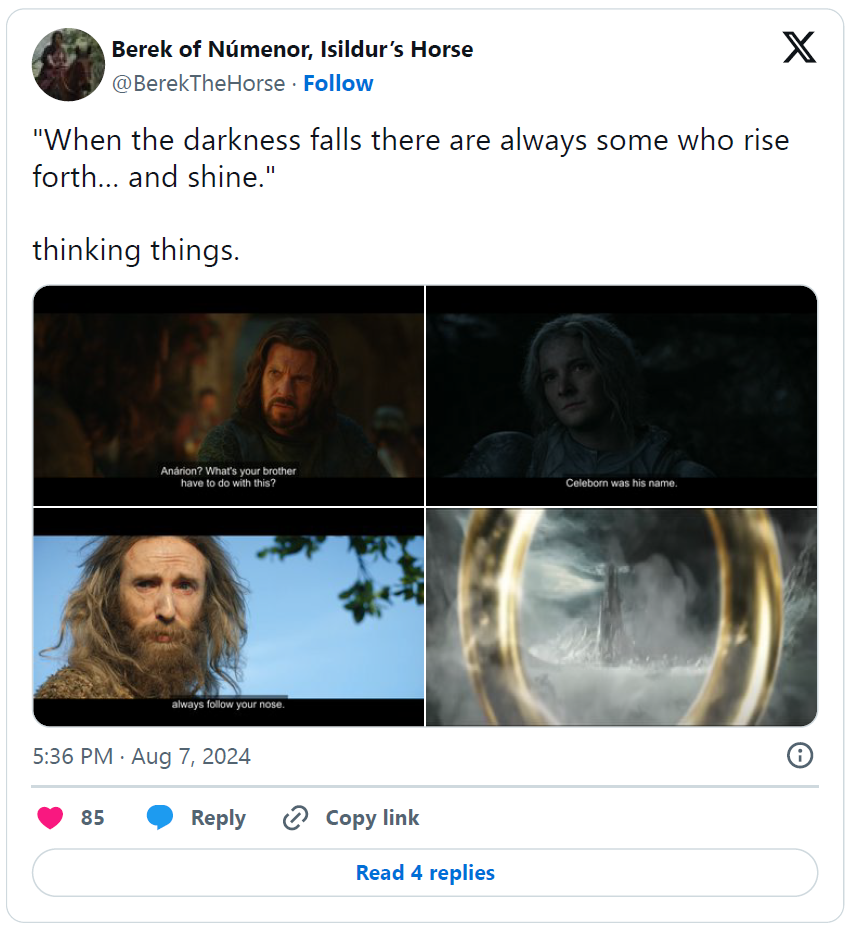
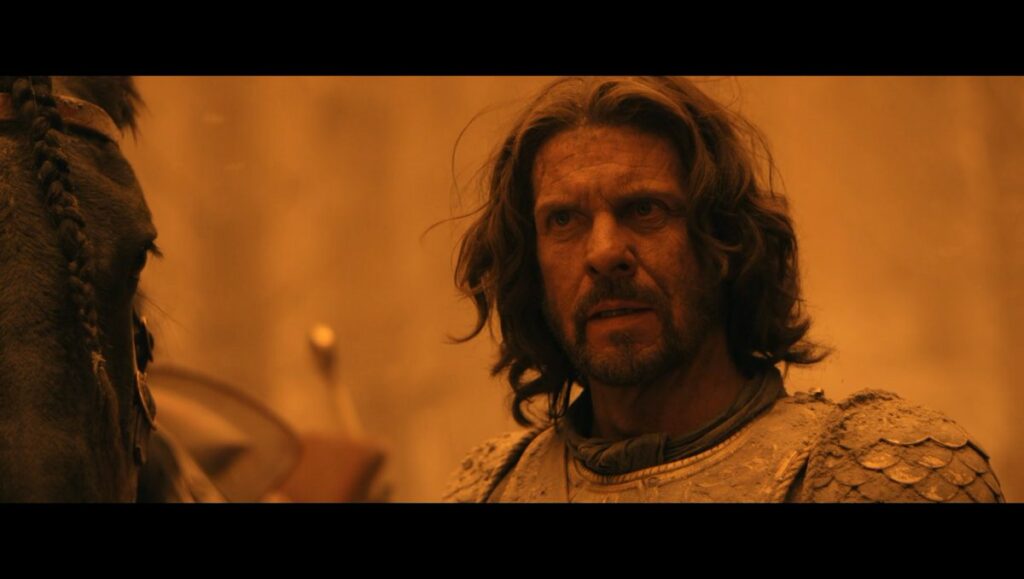
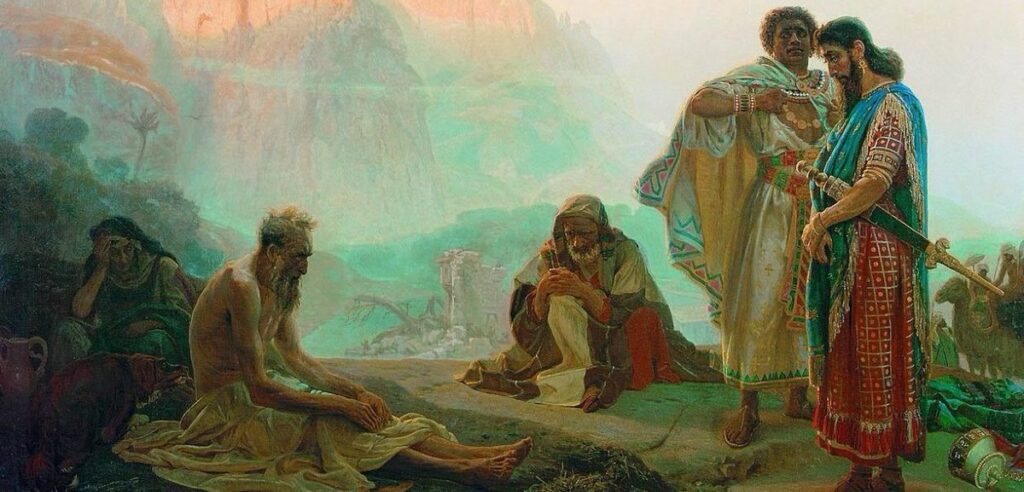
In a S1 interview with Nerd of the Rings, Lloyd Owen mentions The Story of Job from the Bible as a source for understanding Elendil. I thought it was interesting, as Tolkien describes Elendil as a “Noachian figure” in Letter 131 (The Letters of J.R.R. Tolkien). But Job also works.
Job from the Bible (a quick primer)
Job is a righteous man who was blessed with a good life, family, wealth, etc. Job’s faith is then tested and he loses everything. Job however praises God, but is given more trials. He then curses himself for being born, but still does not rebuke God (yet).
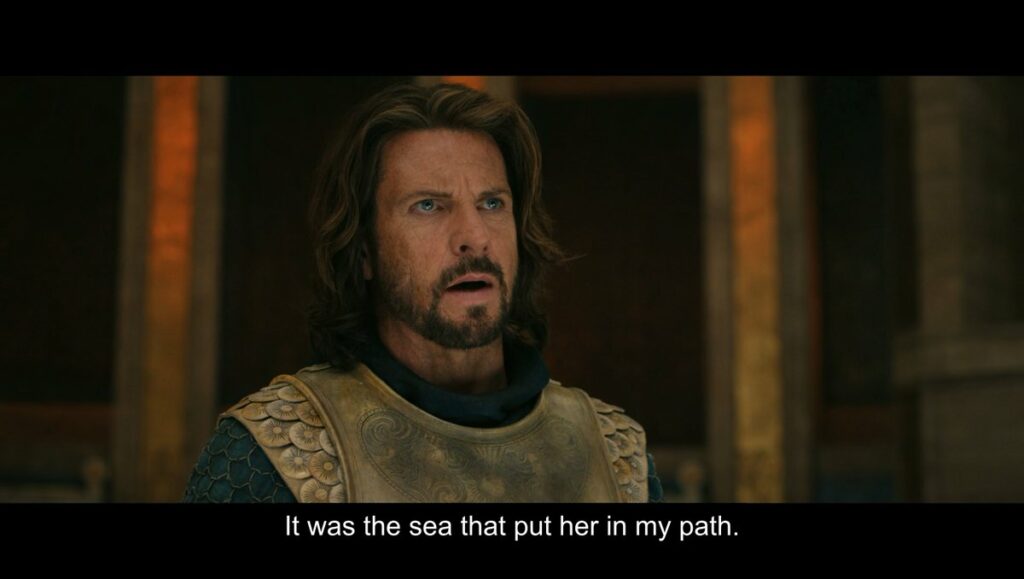
Job is an interesting comparison, because in S1, Elendil is a Faithful. In S1, Ep. 3, he justifies bringing Galadriel to Númenor, telling Miriel “The Sea put her in his path”. Elendil has already lost his wife at this point. But he still retains some level of his faith.
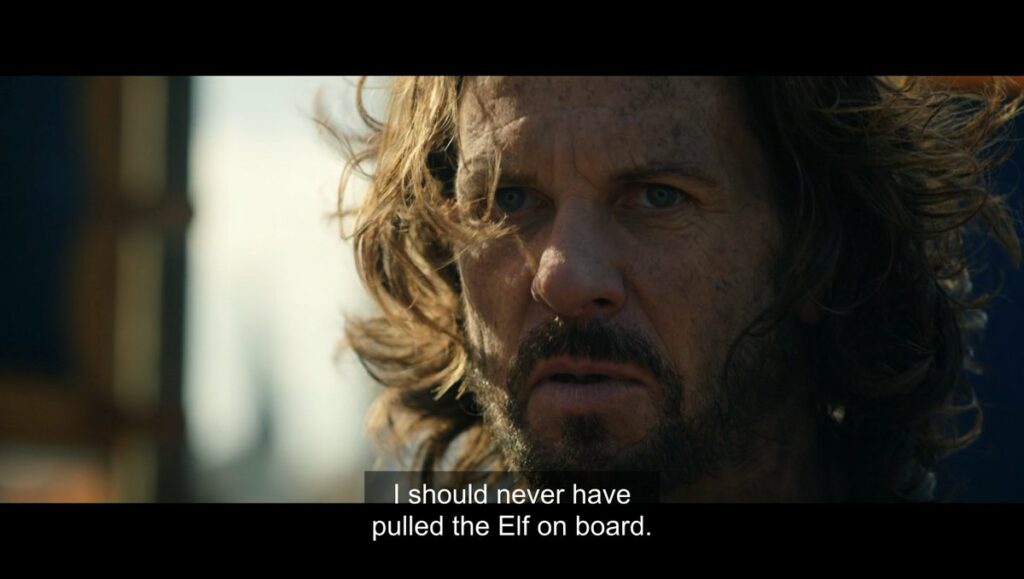
However, by Episode 7, after losing Isildur, Elendil comes close to rebuking his faith: he wishes he never “pulled that Elf on board” his ship. It’s similar to Job cursing himself for being born.
The fault is still not with “The Sea”, his Faith, but rather his own actions.
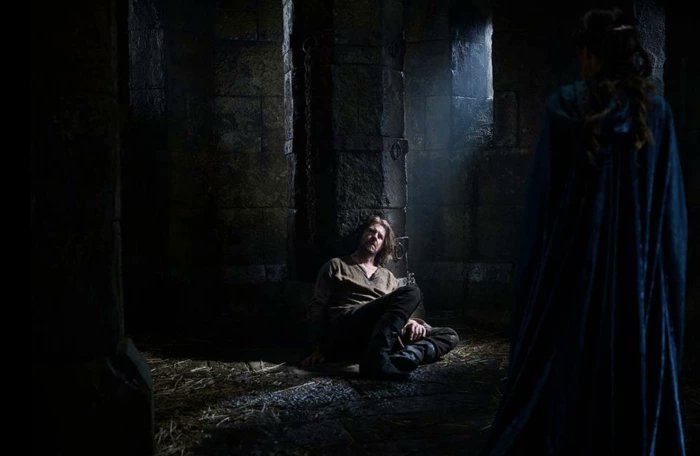
So in S2, I think Elendil will continue a Job-like story arc. We’ve seen from behind-the-scenes footage and promotional material that he’s jailed. We’ve read that Eärien might turn against him to seek justice for the loss of Isildur. He likely will lose his position as Captain; more trials for Elendil.
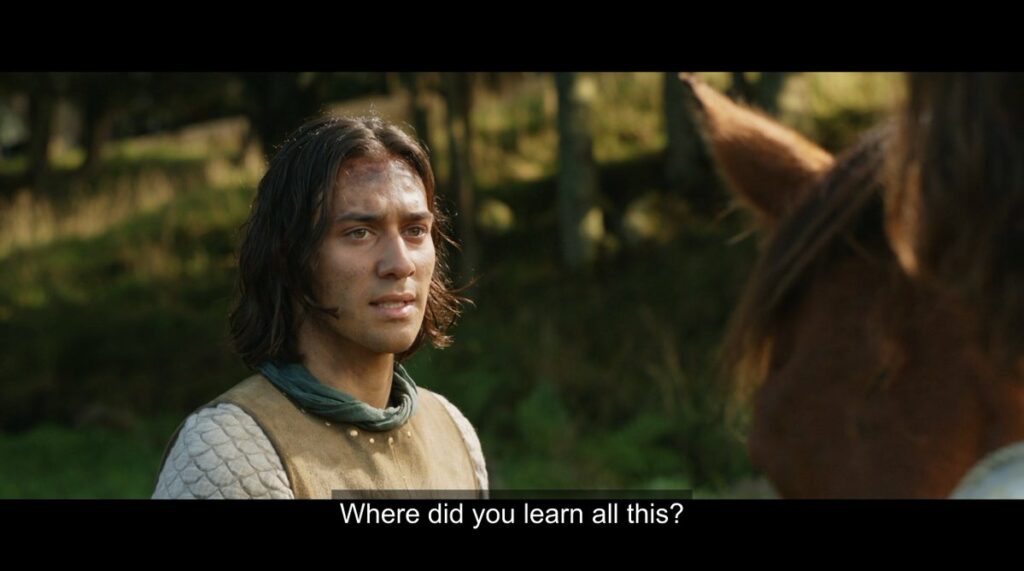
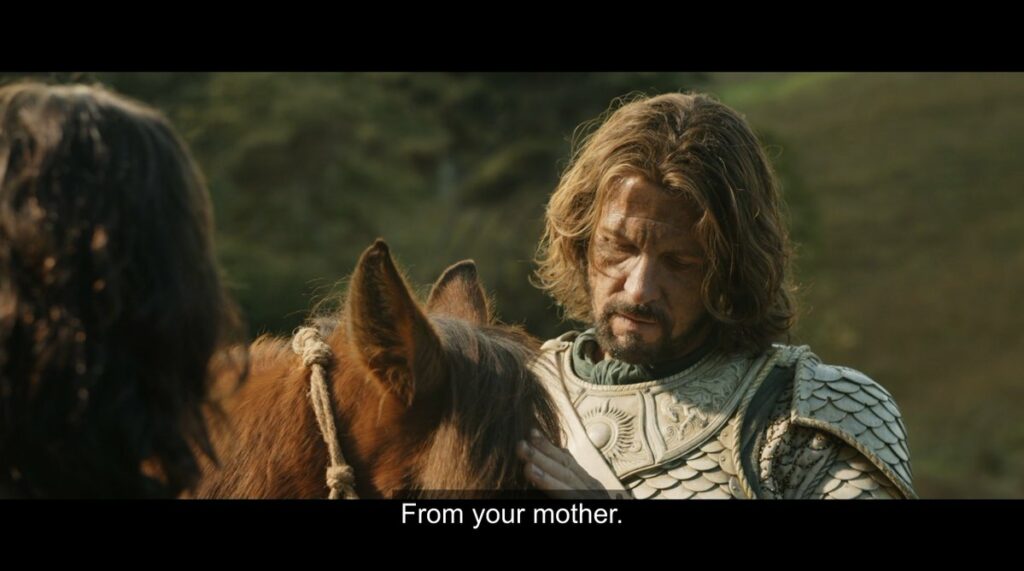
An aside: there’s a moment in S1, Ep. 6 when he talks to Isildur about horses and Númenoreans. He mentions learning it from his wife.
I wonder if she was more Faithful of the two. I imagine her death caused strife within the family; Why Anárion became more devoutly Faithful.
The Parable of the Faithful Son
We’ve established Elendil’s Job-like story arc in S1. Indications are this will continue in S2. But how does it conclude? He can’t just suffer endlessly for no reason. So where does it take him, and why?
In an interview with Black Girl Nerds, Lloyd Owen talks about Elendil’s arc in S2. Lots of good stuff, but at around 27:00 Lloyd says, “And to take that gift with me on my horse and ride with it, super special.”
What is this gift, where does he go?
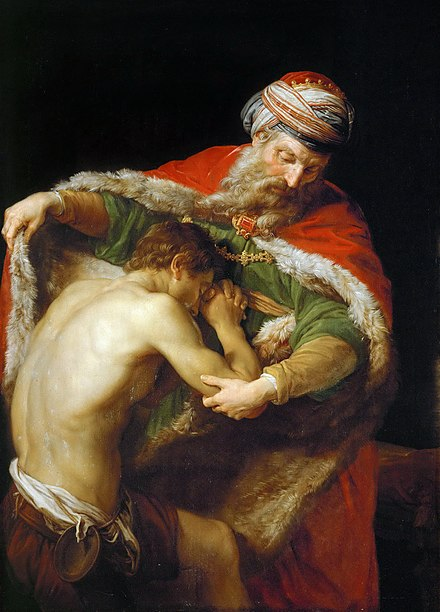
Many have guessed that the gift is Narsil, and he rides west to Andúnië, but I want to ask why and how. Here I bring up another Biblical comparison, which I believe leads to Anárion’s appearance, either at the end of S2 or in S3. And that is the Parable of the Prodigal Son.
This Parable features three characters: A father and two sons. The younger son asks the father for his inheritance, leaves the family, and goes off gallivanting. He spends all the money, becomes destitute, and returns home. And yet, the father welcomes him back with open arms.
The older brother, who stayed dutiful to the father, complains, and then the father says in Luke 15:32, roughly, “But we had to celebrate and be glad, because this brother of yours was dead and is alive again; he was lost and is found.”
The parable is about redemption.
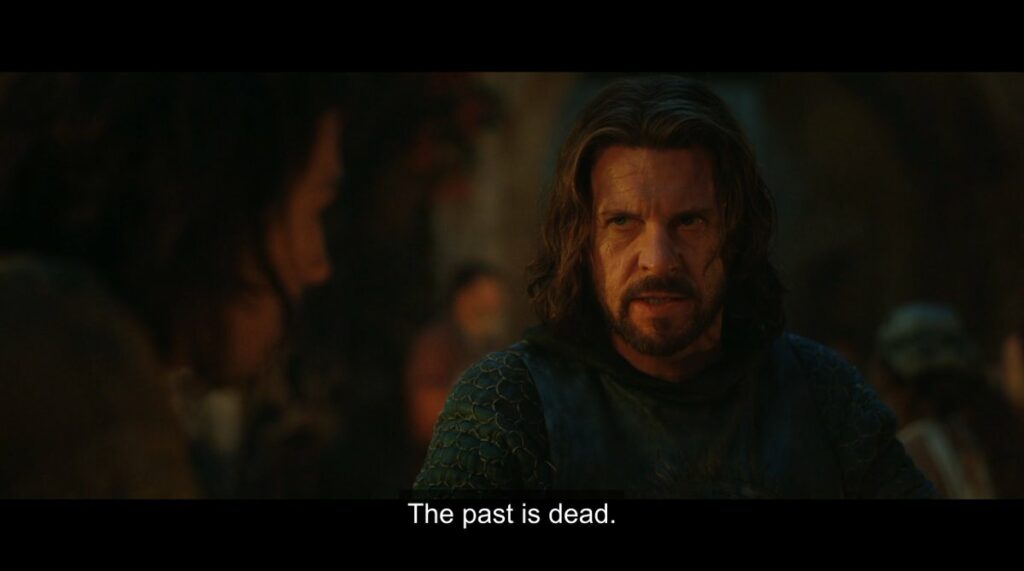
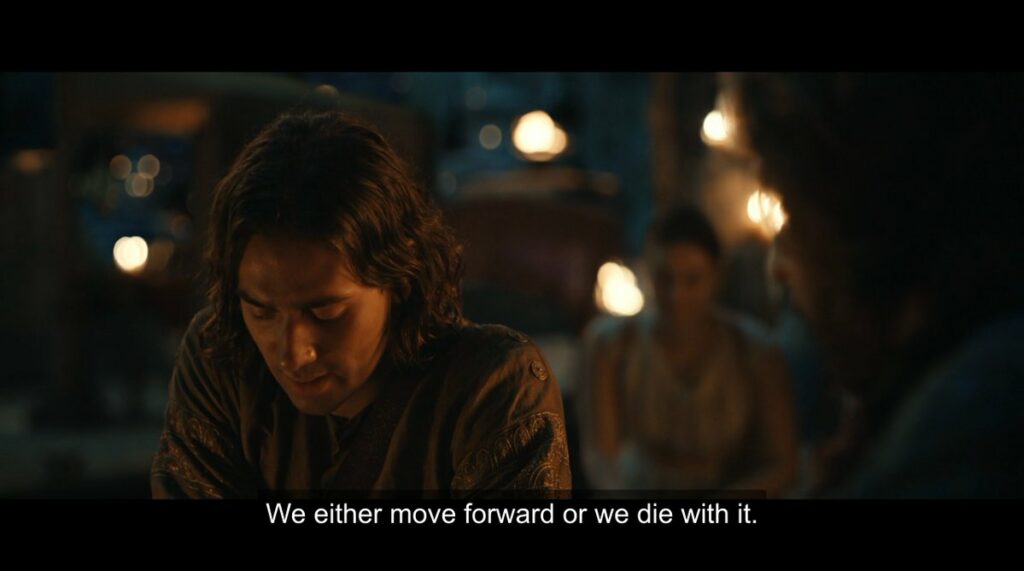
Thje Rings of Power flips this around. You have a son (Anárion) who is Faithful, who leaves his Father and siblings, who choose to be less Faithful in order to fit into Númenorean society. In S1, Ep. 3 Elendil says: “The past is dead. We either move forward or die with it”.
He wants to leave the old ways.
In the Parable the son returns to the father, seeking forgiveness and redemption. However, here it is reversed; I think it’s the father (Elendil) who will return to the son (Anárion), seeking forgiveness and redemption.
This is why I think Elendil rides off at the end of S2.
There’s a setup for this too. In the same dinner scene, Elendil says, “There is nothing for us on our western shores”. Ironically by the end of S2, there might be nothing for Elendil in Armenelos: one son is presumed dead; Eärien hates him; he’s likely no longer Captain.
It’s unclear how things with Míriel are, but likely, she will play the role of appeasing Pharazôn and the King’s Men. In the same interview with Black Girl Nerds, Lloyd mentions that “his leadership qualities are being taught to him” by Miriel. There are also hints of unspoken love.
This scene could be a goodbye scene between them, where Míriel gives Elendil his sword. If so, it’s a variation on Elrond giving Andúril to Aragorn in The Return of the King. Elendil must set aside the Sea Captain, and become who he was born to be.
There are hints in S1 about what Elendil’s lineage might be. I’ve previously discussed how the show is doing Elendil’s lineage from the Lords of Andúnië . I think there’s reason to explore that further in S2, leading to him receiving Narsil.
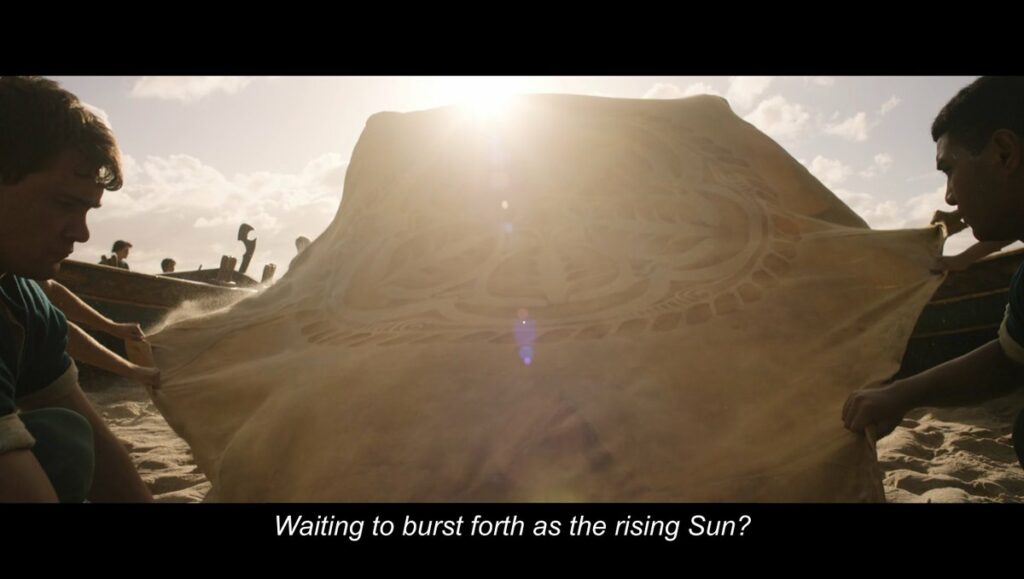
So I think that all of this, Elendil’s suffering, his struggle with Faith in Armenelos, will lead him to going West. Narsil is a Quenya name that symbolically refers to the Sun and the Moon. Anárion means Son of the Sun.
To renew his Faith, Elendil must turn to the Sun.
The Lord of the Rings: The Rings of Power (Season Two: Amazon Original Series Soundtrack)
About the author: Webcrawler is a full-time data analyst and a part-time Tolkien aficionado and moderator on TheOneRing.net’s Discord Server.When he’s not working or in the discord, Webcrawler is horsing around on Twitter.
TORn Discord Moderator DrNosy has the lowdown on what it all could mean.
———-
April showers bring May flowers and, with it, the much-awaited return of the second season of Amazon Prime’s The Rings of Power (TROP). The official marketing has kicked-off with an enticing teaser and a captivating behind-the-scenes look. Brace yourselves, as the series is set to return on August 29th of this year.
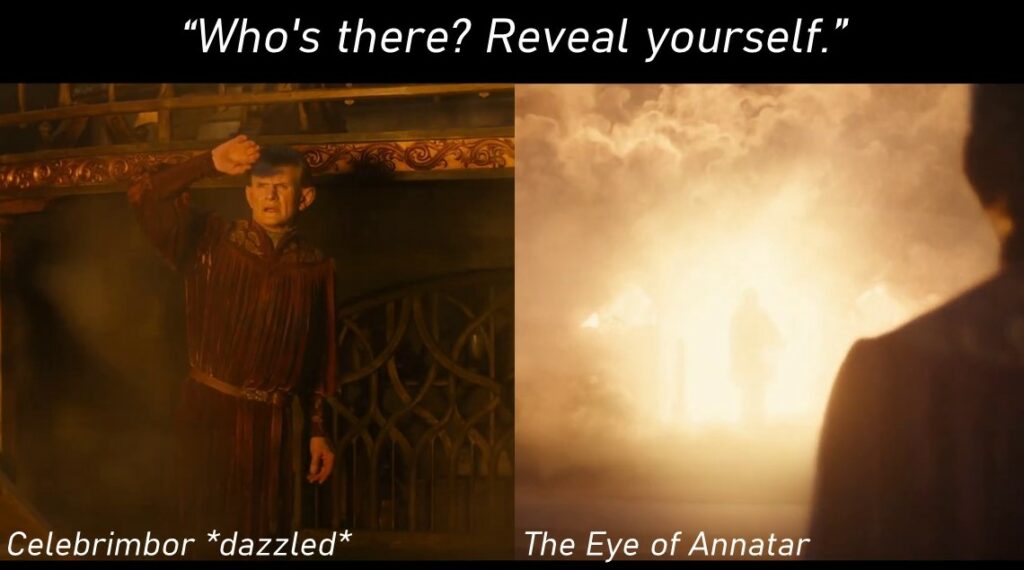
Stealing the spotlight and the most intriguing development is the return of our Lord-and-not-Savior, Sauron, portrayed by the talented Charlie Vickers. Sauron’s appearance in this teaser unveils Vickers in a dual role, as both Halbrand (Sauron disguised as a Man) and a character that die-hard Tolkien fans have long yearned for, the Annatar, where Sauron takes the form of an Elf and infiltrates Eregion.
The arrival of Annatar and his relationship to Celebrimbor is one of Tolkien’s greatest stories, but it was never entirely penned as a literary epic. The little we know of Annatar comes from the Letters of Tolkien, Unfinished Tales, and a short essay in The Silmarillion, “Of the Rings of Power.”
From today’s teaser, the Annatar makes his appearance after the events of “Alloyed” (S1.E8), where Sauron as Halbrand reveals himself to Galadriel. Though this encounter momentarily stifles Galadriel, she and the others proceed with the creation of the three Elven rings: Vilya, Nenya, and Narya.
Following the TROP storyline, Celebrimbor (Charles Edwards), the genius and talented maker of the Elven rings and the others (lesser) that followed, has now become Lord Sauron’s prime target. The threat he faces from Sauron is imminent. Unbeknownst to Celebrimbor, when Sauron comes knocking on your door, he always comes bearing gifts.
Knock, knock. Who’s there? Annatar. Annatar, who? Annatar. I am an emissary of the Valar. I have come bearing gifts.
(If you were expecting a knock-knock joke, I have deceived you. The Annatar on your doorstep is not a laughing matter.)
The siege of Eregion, led by Adar (Sam Hazeldine) and his army of Orcs, will be catastrophic to the city and its vast forests. Will Galadriel, Elrond (Robert Aramayo), and the other Elven warriors be able to defend this Elven kingdom? Will King Durin (Peter Mullan) and the Dwarven warriors of Khazad-dûm come to their aid? Well, those answers probably depend on whether or not the ring the Dwarves have received is already tainted with Sauron’s evil influence. Compared to what I expected the last season, there are now more rings to keep track of than ever before.
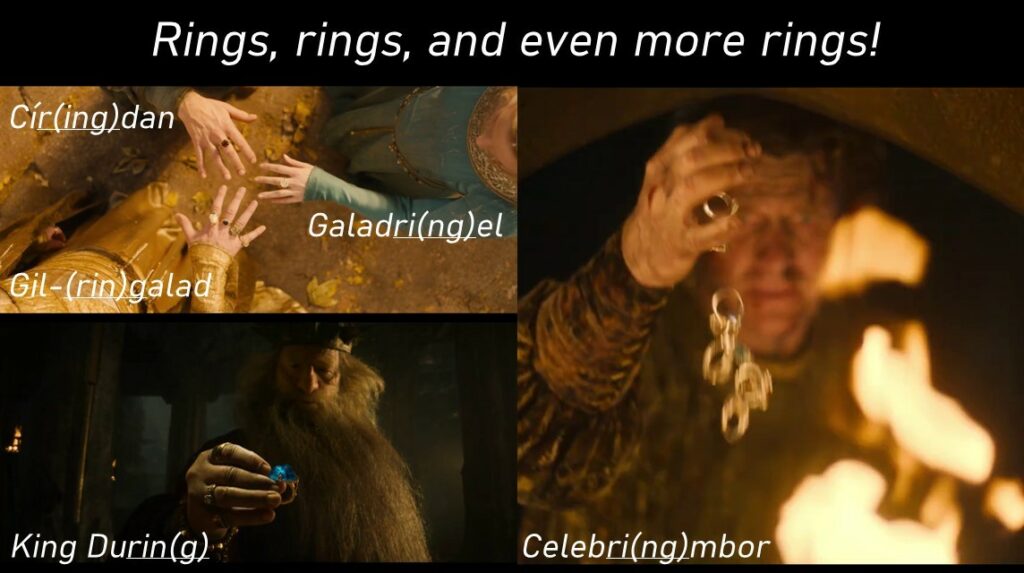
What I find pretty delightful to observe is the three Elven rings that have made their way onto the hands of the first-ever Ring-bearers: the High King of the Elves, Gil-galad (Benjamin Walker), Galadriel as the Commander of the Northern Armies, and the wisest Elf that ever Elfed and his lovely beard we have yet to witness, Círdan (who will be portrayed by Ben Daniels).
We also witness other moments with rings, particularly with King Durin caressing a massive blue-crystal jeweled gold ring that might rival the Arkenstone. Also, what appears to be a consequence of the siege’s mayhem, we are teased with a moment where Celebrimbor seems to be destroying rings in a furnace. We also see him missing a hand. (That probably has many Silmarillion fans wondering if this is something to do with the Silmaril-mithril connection (S1.E5), how Beren lost his hand, and… Alright, alright, I won’t go there!)
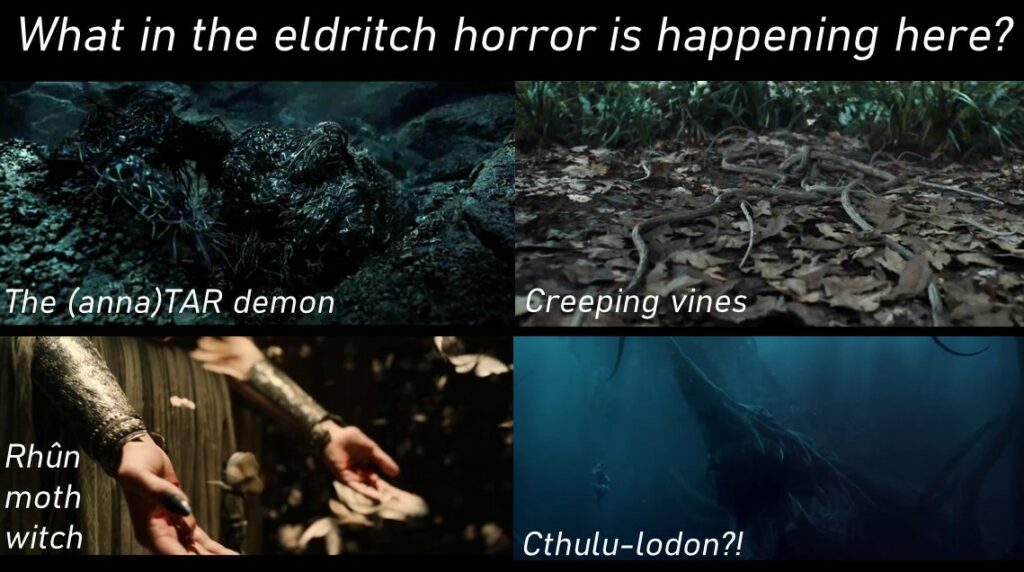
With these rings and the return of Sauron, now comes all the things I find myself scratching my head over. As a horror genre fan, I could not ignore the highly spooky vibes of this teaser. I’ve often said that to understand the eucatastrophe described by Tolkien, you must also (sometimes) recontextualize what he wrote in the framework of existential nihilism. For a Tolkien-inspired television series, this recontextualization can translate to the screen as (seemingly) unrelated horror moments. As far as this teaser goes, I have no Tolkienian clue what is happening with the tar creature, the Rhûn moth witch, the creeping vines, and the horrifying Cthulhu-shark. All I can say is that I’m disturbed, unnerved, and distressed, and this is precisely the feeling I want when Sauron comes to visit.
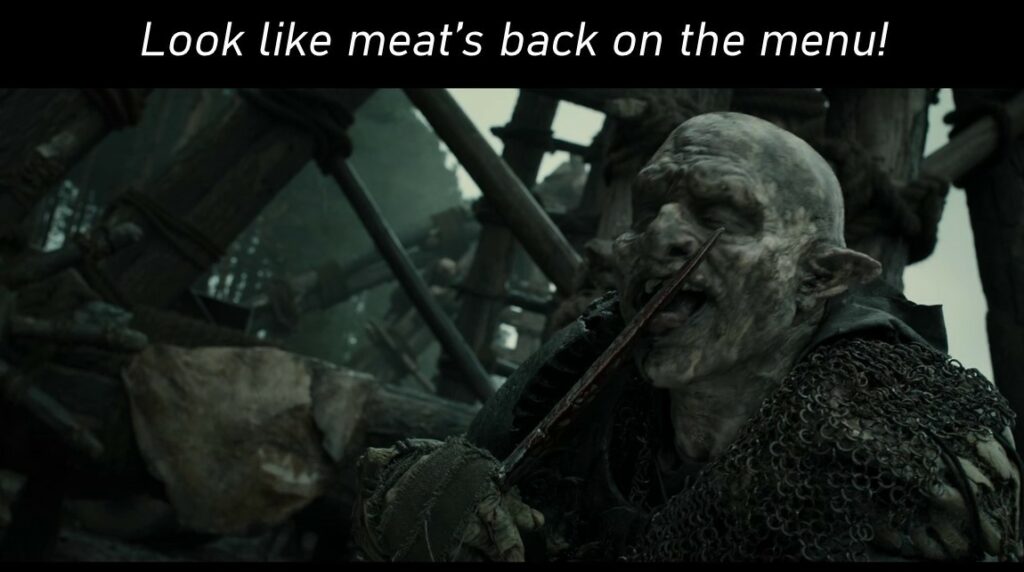
The image of an Orc-licking a blood-soaked dagger… BRING IT ON, HERUMOR! DEAAAAAAATTTTHHHH!
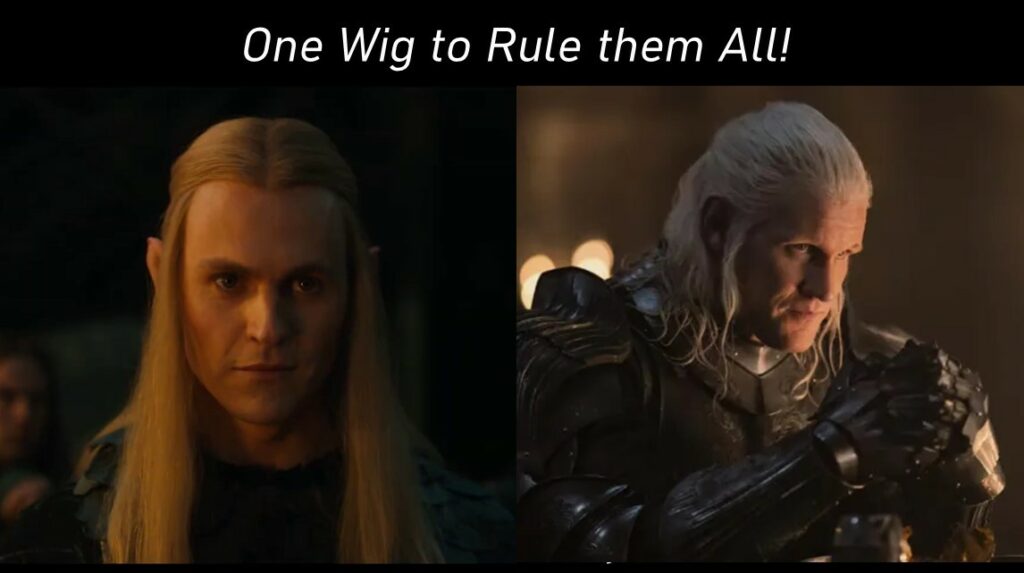
Finally, I would like to make a statement. Fans of fantasy television can debate ad nauseam about which show is better, The Rings of Power or The House of Dragon. Regardless, I would like it settled once and for all that there is only one Lord (of the Wigs), and he does not share fashion power!
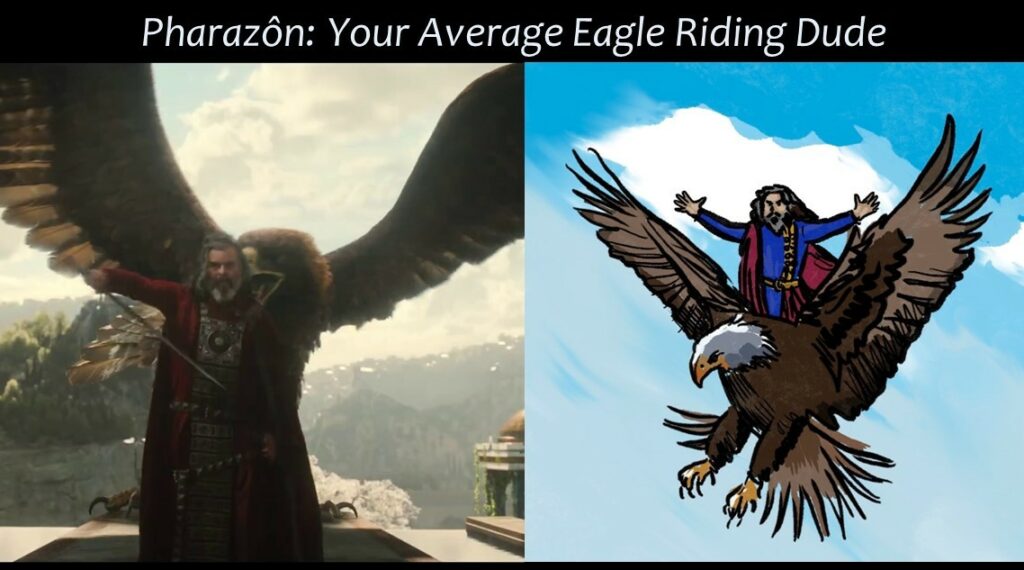
An addendum. For the few who know me and my fondness for Númenor and Pharazôn (Trystan Gravelle). There is much I can speculate about Númenor, but I will not do so. (I’m still sore about Season 1.) What I do offer, however, is one hypothesis that Pharazôn will most definitely be riding an eagle this season. He absolutely has no ill intentions toward any of Manwë’s beloved creatures. Given his beard, I’m sure that makes him look ultra-friendly to the giant birds, who have always loved helping out other bearded dudes in the Third Age.
The artist behind Pharazôn Rides An Eagle is Stickybeebae. You can follow (and tip) her on Instagram.
About the author:
DrNosy is a scientist (physical science), scholar, and Tolkien enthusiast. Her primary interests lie in review and analysis of The Lord of the Rings: The Rings of Power. She is an active contributor and Moderator on TheOneRing.net Discord where she also hosts live open-forum panel discussions on The Rings of Power, The Silmarillion, and a variety of Tolkien-related topics. You can reach her on Instagram.
If you have a Tolkien/Middle-earth inspired poem you’d like to share, then send it to poetry@theonering.net. One poem per person may be submitted each month. Please make sure to proofread your work before sending it in. TheOneRing.net is not responsible for poems posting with spelling or grammatical errors.
What is ‘The Song of the Roots of Hithaeglir’ and where does it fit into Tolkien works? Is Amazon’s The Rings Of Power making up new lore?
In this article, TORn Discord Moderator DrNosy examines the introduction of a new Elven Folklore – ‘The Song of the Roots of Hithaeglir’ – in Season One’s fifth episode as a plot device in The Rings Of Power.
########
What is “The Song of the Roots of Hithaeglir”?
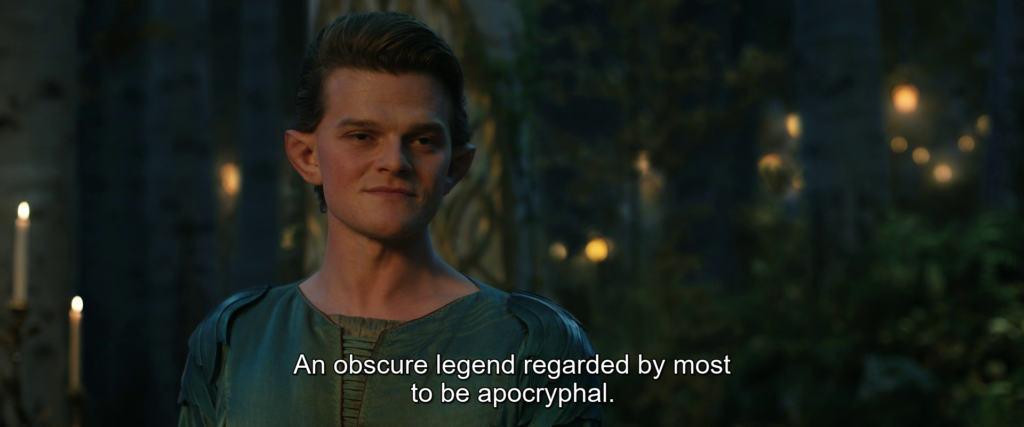
In the words of Elrond himself, ‘The Song of the Roots of Hithaeglir’ is “an obscure legend regarded by most to be apocryphal” [Ed note: emphasis added]. Elrond is underscoring the point that this legend is folklore.
The fantasy works of Tolkien are based in European folklore. Folklore is described as the beliefs, customs, and stories of a community, that might be passed within that community through the generations. Folklore often contains details specific to the beliefs of the community.
Now, this is what makes folklore interesting — their origins are often based in truth. Not literal truths but something akin to parables and fables that hint at a truth. After all, you may have heard it said, “the truth is [more frightening] than fiction”.
For example, in Western folklore, we are familiar with the concept of ‘werewolves’. This lore is entirely fictitious. Yet the lore itself arises from a truth, and has a purpose. That purpose was our ancestors’ way of warning us about metaphorical wolves in our midst, i.e., ‘serial killers’.
Werewolf legends derive from early Nordic folklore. Specifically, The Saga of the Volsungs tells of a tale of a father and son who discover wolf pelts with the power to turn people into wolves. Donning these pelts, the father and son duo embark on a rampage killing many. There is also have a fifteenth-century account of a vicious serial killer in Bedburg, Germany, whose actions were enshrined into local folklore as a man that turned into wolf-like creature at night before his killing spree.
Folklore and fables are essential to human survival. They function as a warning to the listener about the realities of the world without exposure to the brutality of its truths. They are a way to keep us safe.
Nobody goes off-trail and nobody walks alone
Returning to our `apocryphal` origin of mithril, ‘The Song of the Roots of Hithaeglir’ is not based in any Tolkien texts. Within The Rings of Power story, however, it functions as an Elven folklore founded on the nature of mithril and the truth of what else might lie beneath the Misty Mountains.
Note the words of Celeborn, one of the wisest of Tolkien’s Elves, who offers a pertinent reminder to not cheaply discount (their) lore.
‘Then I need say no more,’ said Celeborn. ‘But do not despise the lore that has come down from distant years; for oft it may chance that old wives keep in memory word of things that once were needful for the wise to know.’
Farewell to Lórien, The Fellowship of the Ring
Making mythril
`True creation requires sacrifice`
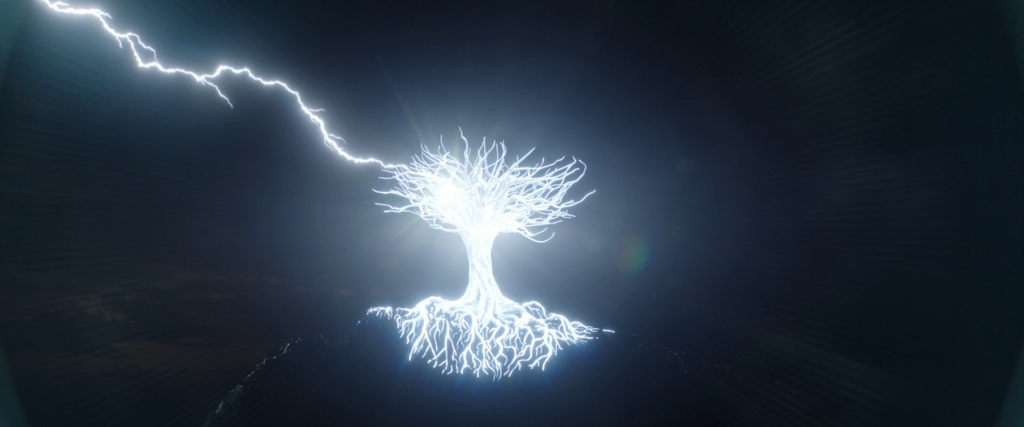
An Elven warrior (`with a heart as pure as Manwë`) and a Balrog (`all his hatred`) poured themselves into a tree bearing the light of Silmarils. One seeking to protect it, the other seeking to destroy it. Lighting (likely from Manwë) struck the tree which resulted in the creation of the tree’s roots… veins of mithril into the mountain.
This sacrifice made by both warrior and Balrog resulted in the subcreation of mithril — a thing of unimpeachable goodness yet also of unsurpassed peril.
`The Song of the Roots of Hithaeglir` is a cautionary fable for all the peoples of Middle-earth. While mithril will bring glory to Dwarves, salvation to the Elves, and riches to Men, it will also bring inevitable Doom upon those who seek it.
In this fashion, Gil-galad’s hope in mithril (as of Episode 5) also mirrors an aspect that Tolkien described in a letter to Milton Waldman:
[But] the problem: this frightful evil can and does arise from an apparently good root, the desire to benefit the world and others.
Letter #131, The Letters of J.R.R. Tolkien
Thus, even though mithril comes from a good root a frightful evil will arise from it.
About the author:
DrNosy is a scientist (physical science), scholar, and Tolkien enthusiast. Her primary interests lie in review and analysis of The Lord of the Rings: The Rings of Power. She is an active contributor and Moderator on TheOneRing.net Discord where she also hosts live open-forum panel discussions on The Rings of Power, The Silmarillion, and a variety of Tolkien-related topics. You can reach her on Twitter.
If you have a Tolkien/Middle-earth inspired poem you’d like to share, then send it to poetry@theonering.net. One poem per person may be submitted each month. Please make sure to proofread your work before sending it in. TheOneRing.net is not responsible for poems posting with spelling or grammatical errors.
The scene above is not an original idea, but is imitative of an essay on fantasy writing that is almost fifty years old.
Lord Celebrimbor, The Rings of Power
In 1973, Ursula K. Le Guin published From Elfland to Poughkeepsie, in which she argued for the importance of style in writing, and especially in the writing of high fantasy. Elfland is the name she used—following Lord Dunsany—for what Tolkien called Faerie: it is Middle-earth, Prydain, and many other locales; as for Poughkeepsie, she offered a comparison to national parks. As these became more popular tourist venues, more people would travel to these parks, fully equipped with enough modern conveniences that they never really go anywhere. They can feel at home, “just as if they were back in Poughkeepsie.”
She lamented that at the time of her writing, too many new fantasy writers were building the equivalents of trailer parks with drive-in movies. “But the point about Elfland is that you are not at home there. It’s not Poughkeepsie. It’s different.” If anything, in this post-Dungeons-and-Dragons and post-video-game world, things have not improved.
She then offered a passage from a then-recent fantasy novel—the sort with twentieth-century people wearing 14th-century clothes and doing magic—and then, by only changing a few names and locations, showed that the same passage would be just as familiar in a modern political thriller, similar to our opening scene above.
“Now, I submit that something has gone wrong. The book from which I first quoted is not fantasy, for all its equipment of heroes and wizards. If it was fantasy, I couldn’t have pulled the dirty trick on it by changing four words. You can’t clip Pegasus’ wings that easily—not if he has wings.”
From Elfland to Poughkeepsie, Ursula K. Le Guin
Le Guin’s argument is that, in fantasy writing, style is not merely an ingredient of a book, something added on, but it is the book. “If you remove the style, all you have left is a synopsis of the plot.” In a cinematic drama1, of course, there is more than verbal style at play. The visual arts—sets, costumes, location photography, props, music, and so on—are very important stylistic components. Still, in another sense they are just illustrations that support, but cannot replace the style of the words. “Merely corroborative detail, intended to give artistic verisimilitude to an otherwise bald and unconvincing narrative,” as Pooh-bah said.
If the script is good, it should be just as good as a radio drama, perhaps with some well-written narration to replace those illustrations. I will refer to “the reader” in this article; this may be considered shorthand for “the reader or audience.”
Tolkien himself had much to say about the craft of transporting the reader to Faerie in his important essay On Fairy-stories. He proposed that any good story (of any genre) must be capable of creating actual belief in the world it creates, not merely suspension of disbelief:
What really happens is that the story-maker proves a successful “sub-creator.” He makes a Secondary World which your mind can enter. Inside it, what he relates is “true”: it accords with the laws of that world. You therefore believe it, while you are, as it were, inside. The moment disbelief arises, the spell is broken; the magic, or rather art, has failed. You are then out in the Primary World again, looking at the little abortive Secondary World from outside.
On Fairy-stories, J.R.R. Tolkien
He then discussed Fantasy, the creation of images of a world unlike ours, with things that cannot be found in our world at all. He gave an example, saying that the fantastic device of language lets us say things like, “the green sun,” but that:
To make a Secondary World inside which the green sun will be credible, commanding Secondary Belief, will probably require labour and thought, and will certainly demand a special skill, a kind of elvish craft.
On Fairy-stories, J.R.R. Tolkien
But what is the realm of Elfland, and why does it take such extraordinary artistry to bring a reader into that world? Tolkien tells us:
The realm of fairy-story is wide and deep and high and filled with many things: all manner of beasts and birds are found there; shoreless seas and stars uncounted; beauty that is an enchantment, and an ever-present peril; both joy and sorrow as sharp as swords. In that realm a man may, perhaps, count himself fortunate to have wandered, but its very richness and strangeness tie the tongue of a traveler who would report them.
On Fairy-stories, J.R.R. Tolkien
Tolkien portrayed this idea in his poem The Sea-bell and in his last book, Smith of Wootton Major; do read these. Le Guin said much the same thing but takes it a step further:
It is a different approach to reality, an alternative technique for apprehending and coping with existence. It is not antirational but pararational; not realistic, but surrealistic, superrealistic, a heightening of reality. In Freud’s terminology, it employs primary, not secondary process thinking. It employs archetypes, which, Jung warned us, are dangerous things. Dragons are more dangerous, and a good deal commoner, than bears. Fantasy is nearer to poetry, to mysticism, and to insanity than naturalistic fiction is. It is a real wilderness, and those who go there should not feel too safe. And their guides, the writers of fantasy, should take their responsibilities seriously.
From Elfland to Poughkeepsie, Ursula K. Le Guin
Thus, if we are to avoid leaving the reader in the Primary World, the language itself, that “fantastic device”, must act as the cicerone for this dream journey. Le Guin gave examples of appropriate prose: from Eddison‘s The Worm Ouroboros with its carefully-crafted Elizabethan prose; Kenneth Morris, with his less ornate but still mannered dialogue in Book of the Three Dragons; and Tolkien.
“Who can tell?” said Aragorn, “But we will put it to the test one day.” “May the day not be too long delayed,” said Boromir. “For though I do not ask for aid, we need it. It would comfort us to know that others fought also with all the means that they have.” “Then be comforted,” said Elrond.
The Lord of the Rings, J.R.R. Tolkien
It is important to notice that Tolkien does not use especially archaic speech here. Le Guin described the speech as, “a less extraordinary English; or rather an English extraordinary for its simple timelessness…it is the language of men of character.” She did not argue for archaic speech, but for speech that is appropriate to the subject matter, and indicative of the character of the speakers, who should not think like accountants and video-gamers.
Tolkien had much to say on this link between language, thought, and character. In a letter to Hugh Brogan (Letter #171, The Letters of J.R.R. Tolkien) he responded to that reader’s criticisms of the archaic narration in The Two Towers, which Brogan had described as “tushery”.
This letter is worth reading in its entirety, but Tolkien addressed “tushery” as the “bogus ‘medieval’ stuff with … expletives, such as tush, pish, zounds, marry, and the like,” and observes that real archaic English is more concise than “our slack and often frivolous idiom”.
In doing so, he examined the specific case of Théoden’s conversation with Gandalf (“Nay, Gandalf! You do not know your own skill in healing” et seq.).
First pointing out that it is actually “moderated or watered archaism” compared to a more authentically antique diction (“Nay, thou n’wost not thine own skill in healing,”2), he then added that even though much of the speech could be translated to a modern idiom, “Not at all my dear Gandalf…” the thought that ends it , “Thus shall I sleep better,” would not translate well to the modern idiom because a king who speaks in a modern idiom would simply not think in terms of sleeping quietly in his grave.
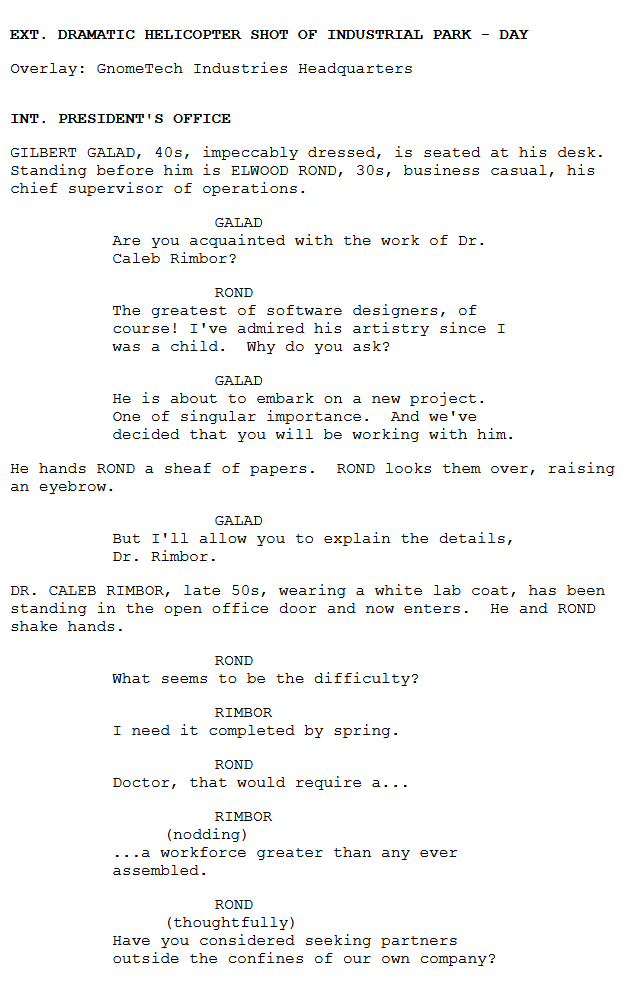
We see a similar disconnect in the Rings of Power speech with which we began.
Lords of Elfland do not think of expanding work-forces and project deadlines, and for them to speak of such matters is a disunity of language and character. The spell has broken, and the art has failed: we are back in Poughkeepsie. There are many examples of modernisms that have crept into the dialogue: hobbits who say, “Okay,” “It means, like, what we do,” and, “That’s not who we are.” Númenoreans who say, “Nah,” and, “Míriel has her up for tea?” Elves who say “conflicted”. Dwarves who say, “Yeah.” Even grade-school grammatical errors, “Your people have no king, for you are him,” (a sentence that was walking along just fine before it fell on its face at the last word).
There are almost too many examples to count, and they pop up at random in the midst of more timeless speech. Some are more jarring than others—especially the name-calling like “Elf-lover!”—but none of them belong in a tale of the fantastic, except perhaps as Orc-talk.
Overcompensating for modernism is, of course, an equally dangerous trap. Le Guin and Tolkien both objected to “tushery” and pseudo-archaic speech. Imitating the elevated register of dialogue from Tolkien’s writing is perilous.
Le Guin noted that young fantasy writers sense that their language must distance the tale from the ordinary, but don’t know how to do it, fumbling with “thee” and “thou” and overusing words like “mayhap”. To their credit, the writers of The Rings of Power, do not fall into this trap.
Instead, however, these Elves too frequently lapse into High Aphorism. “It is said the wine of victory is sweetest for those in whose bitter trials it has fermented.” You have to read that twice to figure out what it is saying. “Most wounds to our bodies heal of their own accord, so, it is their labor instead to render hidden truths as works of beauty. For beauty has great power to heal the soul.” All right, if you say so; but it doesn’t sound helpful for a broken leg. And of course:
Do you know why a ship floats and a stone cannot? Because the stone sees only downward. The darkness of the water is vast and irresistible. The ship feels the darkness as well, striving moment by moment to master her and pull her under. But the ship has a secret. For unlike the stone, her gaze is not downward but up. Fixed upon the light that guides her, whispering of grander things than darkness ever knew.
The Rings of Power, Amazon Studios
Young Galadriel with Finrod, The Rings of Power.
Not only is this pretentious and sententious (if lovely), but it forgets that the Noldor know more about the natural world, about the forces of gravity and buoyancy and density and displacement, than we do. Their “magic” comes from this deeper understanding. Instead of knowledge (which is what the word Noldor means!) we get fortune-cookie philosophy that sounds like we just need better-trained stones.
Compare:
‘Are these magic cloaks?’ asked Pippin, looking at them with wonder.
‘I do not know what you mean by that,’ answered the leader of the Elves. ‘They are fair garments, and the web is good, for it was made in this land. They are Elvish robes certainly, if that is what you mean. Leaf and branch, water and stone: they have the hue and beauty of all these things under the twilight of Lórien that we love; for we put the thought of all that we love into all that we make. Yet they are garments, not armour, and they will not turn shaft or blade.’
The Lord of the Rings, J.R.R. Tolkien
There is a fine line between elegant speech and pretentiousness. The Rings of Power stumbles across that line too often; and perhaps without knowing exactly why, we are jerked back to the Primary World, because we know, somehow, that Elves don’t really talk like that.
Such considerations, of course, apply to any genre, such as real-world historical stories—at least, those taking place in a setting in which fairly modern English is spoken.
If I were writing a novel or screenplay taking place at, say, a New England boys’ prep school in 1905, I would not only have to take into account things like clothing, music, technology, or the rules for football, but I would have to give the boys speech appropriate to the time, with usages like “kick” for “complain”, “bully” for approval, or, “You make me tired!” for disapproval. And I would also have to assiduously avoid letting the boys say anachronistic things like, “epic”, “iconic”, “I’m still processing this”, “cool”, or… “That’s not who we are.”
If I were particularly careful, I would research then-new usages like, “Okay,” “Yeah,” or “Wow,” before putting them into the mouths of my characters.
It takes real work to get such things right. Without that work, even a non-specialist reader might sense that something is off-pitch, without knowing why, and will not believe in the story.
But such a story is not required to transport us to Elfland; only to (historical) Poughkeepsie. Elfland is a far more perilous realm, with deeper delights and dangers for both the reader and writer. Surely, then, a well-paid script editor can be employed to apply at least as meticulous a reading to the dialogue of a drama taking place in such a well-known and well-loved corner of Elfland as Middle-earth?
FOOTNOTES
[1]: It is not at all clear that there is any longer a useful distinction between “movies” and “television” and “streaming” in such discussions.
[2]: Incidentally, this is very similar to the writing of early fantasist William Morris.
Editor’s note:
In the above essay, Staffer Ostadan references a number of key early fantasists whose works pre-date and influenced Tolkien. Some of these works now exist freely in the Public Domain. Interested readers who might care to explore these works further can find and enjoy them as free downloads on Project Gutenburg.
Kenneth Morris’s Book of the Three Dragons was published in 1930 and is not yet available in the Public Domain. Lloyd Alexander’s Chronicles of Prydain series was published between 1964 and 1968. Ursula K. Le Guin’s essay From Elfland to Poughkeepsie seems to be available through Amazon in limited quantities, but it is very expensive.
If you have a Tolkien/Middle-earth inspired poem you’d like to share, then send it to poetry@theonering.net. One poem per person may be submitted each month. Please make sure to proofread your work before sending it in. TheOneRing.net is not responsible for poems posting with spelling or grammatical errors.
Ringquisition — our little segment that takes a slice of The Rings of Power and puts it under the microscope — returns. One this occasion yours truly (Staffer Demosthenes) and TORn Discord Moderator DrNosy turn the lens on the goings-on of the Noldor in the opening two episodes of The Rings of Power.
Editor’s note: this is an edited summary of a live discussion hosted last weekend on our Discord.
Is there truly no evil in the beginning?
DrNosy muses…
Let’s consider Galadriel’s statement that opens the series and its context.
`Nothing is evil in the beginning. And there was time when the world was so young there had not yet been a sunrise. But even then there was light.`
Galadriel, The Rings of Power: S1.E1
A few key observations upon this theme:
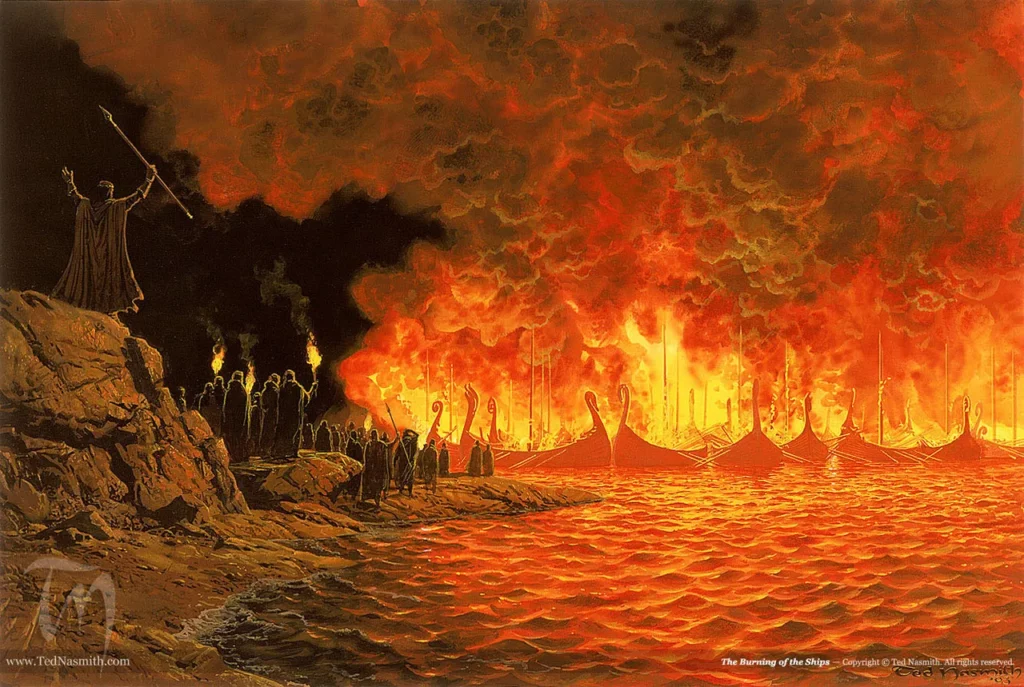
A young Galadriel sets sail to an origami Swan Boat in Valinor. This opening scene foreshadows the journey of the Elves from Aman (Valinor) to Middle-earth in the Swan Boats of the Teleri, which were subsequently destroyed.
The Burning of the Ships by Ted Nasmith.
Even in paradise (Valinor), there is discord amongst the children (the innocent) — is there truly no evil in the beginning? This concept is an undercurrent in Tolkienian writings. Arda had been marred by evil (by the actions of Melkor, also named Morgoth (‘Black Foe of the World’) after Manwë cursed him) even before the awakening of the Children of Illuvatar.
The strife among the Elven children is a reminder that ‘evil’ is an inherent aspect of the Children. Therefore, Illuvatar’s decree of the fate of Men and Elves (the acceptance of death and facing the judgment of Mandos) is a personal and spiritual decision made by nearly every character in Arda. (Of the Beginning of Days, The Silmarillion)
“Don’t you dare sink my battleship.”
Another place this appears is in her dialogue with Elrond:
And in the West, do you think my fate would be better? Where song would mock the cries of battle in my ears? You say I have won victory over all the horrors of Middle-earth. Yet you would leave them alive in me? To take with me? Undying, unchanging, unbreaking, into the land of winterless spring?
Galadriel, The Rings of Power: S1.E1
This dialogue implies that if Galadriel returns to the Far West, the evil within her will live on forever. Yet I feel this dialogue is a slight oversimplification in light of Tolkien’s texts. Specifically:
Death was a concept that existed from before the arrival of the Children of Illuvatar. The Elves are immortal, but this does not mean they are eternal beings (`Of the Beginning of Days`,The Silmarillion).
Fading, for the Elves, is a process that occurs slowly in Aman, and rapidly in Middle-earth (‘Difficulties in Chronology’,The Nature of Middle-earth). The purpose of the Elven rings (`artificer`) was to slow the effects of fading on Middle-earth.
Galadriel, as a bearer of such a ring, is protector of Lothlórien and her continued presence on Middle-earth also meant her inability to accept death and accumulate power to help resist the fading.
With this perspective, it is interesting to read these words from The Fellowship of the Ring:‘I pass the test,’ she said. ‘I will diminish, and go into the West, and remain Galadriel.’ (The Mirror of Galadriel’, The Lord of the Rings).
Why does Finrod make a vow to pursue Sauron?
Demosthenes explores…
In The Silmarillion, Finrod does make an oath — and remember that oaths are not lightly sworn in the “Tolkienverse”! — but it’s an oath to Barahir. Barahir, of course, saves him from an evil fate during The Battle of Sudden Flame.
Thus Felagund escaped, and returned to his deep fortress of Nargothrond; but he swore an oath of abiding friendship and aid in every need to Barahir and all his kin, and in token of his vow he gave to Barahir his ring. Barahir was now by right lord of the house of Bëor, and he returned to Dorthonion; but most of his people fled from their homes and took refuge in the fastness of Hithlum.
Of the Ruin of Beleriand and the Fall of Fingolfin, The Silmarillion
In the Episode 1 prologue, Galadriel’s voice-over tells us that “My brother vowed to seek [Sauron] out and destroy him.” The conflation of dialogue and visuals suggests that’s what we’re seeing in this particular flashback. That — despite superficial appearances — it’s not the Oath of Feanor made in Tirion (as Finrod takes no part in that). Instead, it’s something else; somewhere else.
What might fit is a rough adaptation of Finrod making good on his promise to Barahir. Yet, frankly, this is still not a vow to pursue Sauron. Not even close!
Felagund seeing that he was forsaken took from his head the silver crown of Nargothrond and cast it at his feet, saying: ‘Your oaths of faith to me you may break, but I must hold my bond. Yet if there be any on whom the shadow of out curse has not yet fallen, I should find at least a few to follow me, and should not go hence as a beggar that is thrust from the gates.’ There were ten that stood by him; and the chief of them, who was named Edrahil, stooping lifted the crown and asked that it be given to a steward until Felagund’s return. ‘for you remain my king, and theirs,’ he said, ‘whatever betide.’
Of Beren and Luthien, The Silmarillion
The other point of contention around this whole vows affair, I think, is the choice of the showrunners for Galadriel to take it up. I would ask: is our book-driven understanding that she is the sort of person to take oaths? I think that this suggests no:
Galadriel, the only woman of the Noldor to stand that day tall and valiant among the contending princes, was eager to be gone. No oaths she swore, but the words of Fëanor concerning Middle-earth had kindled in her heart…
Of the Flight of the Noldor, The Silmarillion
Is Galadriel deceiving us by saying it’s a vow? Is she deceiving herself? Is she reliable on this point? I think that Halbrand says something very interesting — and, potentially, very insightful, on the matter:
If you want to murder orcs to settle a score, that’s your affair. But don’t dress it up as heroism.
Halbrand, The Rings of Power: S1.E2.
A simple vendetta isn’t an oath in Middle-earth.
Why did the showrunners make Galadriel Commander of the Northern Armies?
Demosthenes observes…
There’s an interesting section of the History of Galadriel and Celeborn that outlines one scenario for Galadriel’s story. Simply titled “Concerning Galadriel and Celeborn”, it describes how they “did not go West at the Downfall of Melkor, but crossed Ered Lindon… into Eriador … and for a while dwelt in the country about Lake Nenuial (Evendim, north of the Shire)”.
Galadriel as Commander of the Northern Armies, might be an instance of the showrunners cribbing from that concept. She doesn’t merely lead the army (comprised, seemingly, of nine fellow-Noldor). Instead, she serves as a protector for that entire northern area of Eriador. Of course, it also serves as natural way to push her north into Forodwaith on the great Sauron-hunt. It’s her patch; she’s taking care of it.
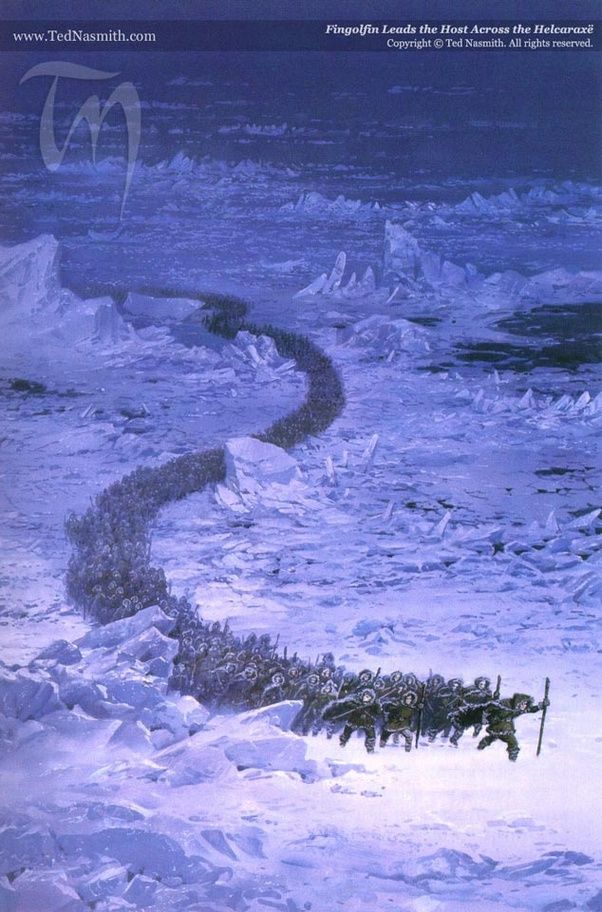
It also provides an opportunity to evoke a short, but gripping, scene from The Silmarillion (I ask that readers excuse my rather inferior screencap).
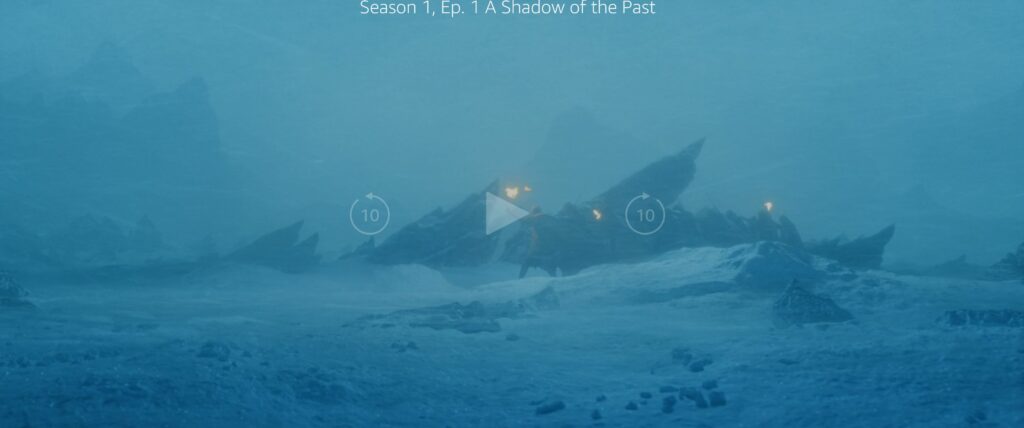
Into a blizzard while crossing the Forodwaith. Rings of Power Episode 1.
We’re crossing the grinding ice. In miniature. I think that’s pretty neat. (Aside: Nasmith is underappreciated as a Tolkien artist.)
Fingolfin leads the Host across the Helcaraxe by Ted Nasmith.
The crossing of the Grinding Ice by the Noldor was a rough trip! But The Silmarillion also dispenses with this arduous journey in little more than a paragraph.
The fire of their hearts was young, and led by Fingolfin and his sons, and by Finrod and Galadriel, they dared to pass into the bitterest North; and finding no other way they endured at last the terror of the Helcaraxë and the cruel hills of ice. Few of the deeds of the Noldor thereafter surpassed that desperate crossing in hardihood or woe. There Elenwë the wife of Turgon was lost, and many others perished also…
Of the Flight of the Noldor, The Silmarillion
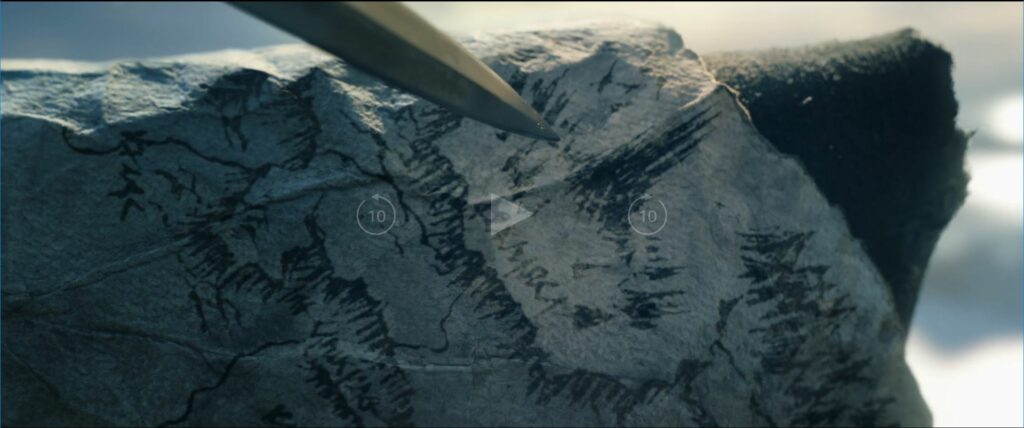
Galadriel’s journey’s end-point in The Rings of Power is undoubtedly less hospitable than that of the crossing of the Grinding Ice. But at least she has a map to point the way this time!
Why it’s necessary to use a dagger to point at the map I’ll never understand.
And it’s bloody cold! Why? Utumno’s ruins are basically here (probably under the ice-bay of Forochel though there is plenty of debate on that matter) and they continue to exert a localised chilling effect on the climate.
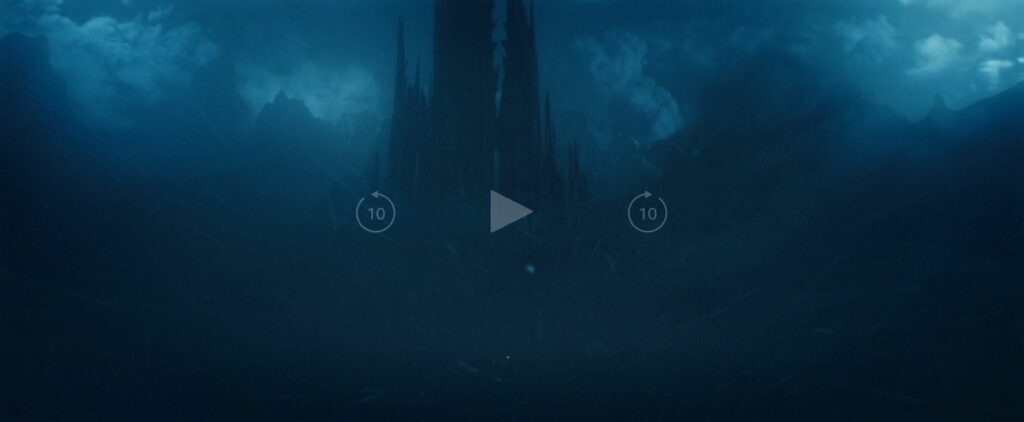
Finally, that mountainous location from the trailer — it’s not Thangorodrim after all. It’s just an evil Disney castle. Bit of a disappointment — who wouldn’t have wanted to see a visualisation of The War of Wrath?
Not!Thangorodrim. We are all sad.
What did the elves (other than Galadriel) think had actually happened to Sauron?
Demosthenes ponders the matter…
This is a key point, since the conflict about the fate of Sauron drives the story.
Galadriel believes he’s alive, out there and doing nefarious things. She states in Episode 1: “Evil does not sleep, Elrond. It waits.” That’s a definite crib from The New Shadow, by the way.
‘Deep indeed run the roots of Evil,’ said Borlas, ‘and the black sap is strong in them. . That tree will never be slain. Let men hew it as often as they may, it will thrust up shoots again as soon as they turn aside…’
The New Shadow, The History of Middle-earth
In fact, the attitude of Borlas is more or less Galadriel’s! That is, unceasing vigilance is required.
On the other hand, Elrond’s opinion is much more lackadaisical in The Rings of Power. He states that “The evil is gone”. This continues to puzzle me on a couple of counts.
Does he mean he believes Sauron is dead? That’s possible in the sense that a Maia can be completely and irrevocably severed from any physical form and unable to assume a bodily shape any longer. We see this both with Sauron and Saruman at the conclusion of The Lord of the Rings.
To the dismay of those that stood by, about the body of Saruman a grey mist gathered, and rising slowly to a great height like smoke from a fire, as a pale shrouded figure it loomed over the Hill. For a moment it wavered, looking to the West; but out of the West came a cold wind, and it bent away, and with a sigh dissolved into nothing.
The Scouring of the Shire, The Lord of the Rings
It seems likely that this was the fate of the Balrogs that Glorfindel and Ecthelion slew at the Fall of Gondolin.
Returning to The Rings of Power, if that had happened to Sauron you would think that such an event would be both marked and known? Or could it just be lost in the general chaos of the War of Wrath? I guess at least one Balrog escaped, so… perhaps.
Once the mark on the anvil at the Evil Disney Castle proves Sauron escaped and still exists in this, the Second Age, they (Elrond and Gil-galad) ought to be rethinking their assumptions. Elrond kinda pushes it with Gil-galad: “Then the shadow she sought… You believe it does exist?” But he also seems unwilling to be truly forceful about it!
What are the Elves up to?
DrNosy analyses…
Elrond: `Galadriel was so certain her search should continue.`
Gil-galad: `We foresaw that if it had, she might have inadvertently kept alive the very evil she sought to defeat. For the same wind that seeks to blow out a fire may also cause its spread.`
Elrond: `Then the shadow she sought, you believe it does exist.`
Gil-galad: `Set your mind at peace about it. What you did was right. For Galadriel and for Middle-earth.`
Elrond: `It is hard to see what is right. When friendship and duty are mingled.`
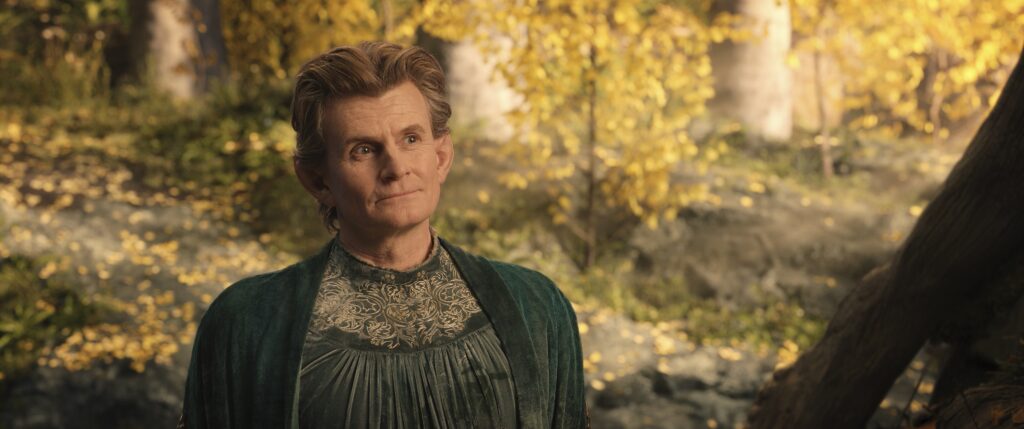
Gil-galad: `Such is the burden of those who lead and those who would seek to. Galadriel sails to the sunset. You and I must look to the new sunrise. To that end, are you acquainted with the work of Lord Celebrimbor?`
Elrond: `The greatest of the Elven-smiths, of course. I’ve admired his artistry since I was a child. Why do you ask?`
Gil-galad: `He is about to embark on a new project. One of singular importance. And we’ve decided that you will be working with him. But I’ll allow you to explain the details, Lord Celebrimbor.`
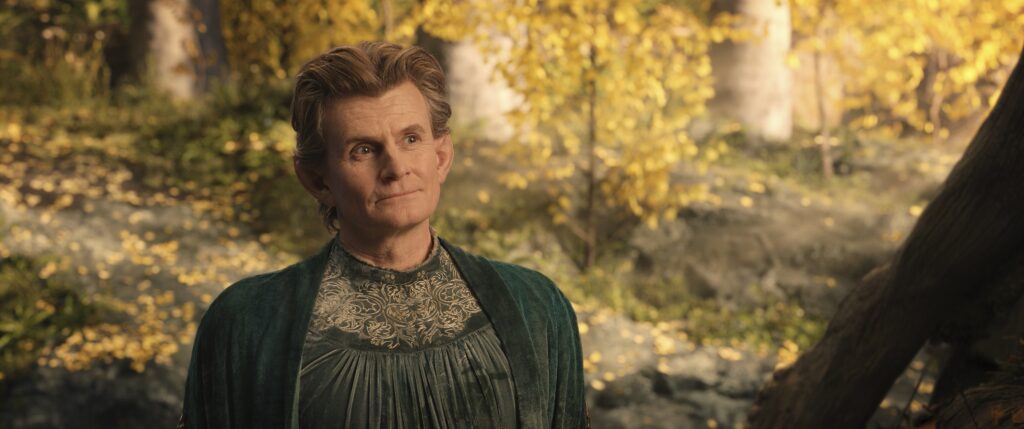
Lord Celebrimbor appears from out of the bushes to surprise Elrond in Lindon.
Reading into Gil-galad’s use of “we”, it appears that political decisions in Lindon often involves Gil-galad and a council of other Elven Lords of the realms. We are introduced to Lord Celebrimbor of Eregion. We are yet to be introduced to the other Elven Lords, most notably Círdan of the Grey Havens, Celeborn of Lothlórien (lore: Amdir/Amroth for Lorien), and Elvenking Thranduil of Mirkwood (lore: Oropher as King of the Woodland Realm).
Gil-galad is likely using “we” as a royal we’ but it doesn’t negate the point of an Elven council.
Gil-galad and the Council had determined that Galadriel’s concerns were accurate. Elrond is obviously unaware of the Council’s plans. It could be that the Council has determined that the solution isn’t pursuing an invisible enemy to banish evil.
Instead, it might involve the work of `artificers`, a concept that Arondir explains.
`Most wounds to our bodies heal of their own accord, so, it is their labor instead to render hidden truths as works of beauty. For beauty has great power to heal the soul.`
Arondir, The Rings of Power: S1.E1
Tolkien mentions the term ‘artificer’ in a letter to Milton Waldman.
But the chief artificer of the Elves (Fëanor) had imprisoned the Light of Valinor in the three supreme jewels, the Silmarilli, before the Trees were sullied or slain.
Letter #131, The Letters of J.R.R. Tolkien
Considering this show is about the Second Age, Celebrimbor, the greatest artificer of that Age, will play a significant role in the creation of the titular Rings of Power. It seems, therefore, that the tactic of pursuing war and battle with the enemy isn’t one that’s viable. Especially since Galadriel has now returned empty-handed from the last known stronghold of Sauron.
Actually called Ost-in-Edhil? Rights issues may get in the way.
Consequently, the Elves are more interested in returning to their old ways of smithing and fashioning objects that create great beauty and help slow-down the effects of death and fading on Middle-earth itself. While the pursuit and creation of powerful objects imbue deathlessness into the world around them, it is simply that much evil can also result from things that have a `good root` (Letter #131).
We shall see what is ahead in future episodes.
Our chat participants
DrNosy is a scientist (physical science), scholar, and Tolkien enthusiast. Her primary interests lie in review and analysis of The Lord of the Rings: The Rings of Power. She is an active contributor and Moderator on TheOneRing.net Discord where she also hosts live open-forum panel discussions on The Rings of Power, The Silmarillion, and a variety of Tolkien-related topics. You can reach her on Twitter.
Staffer Demosthenes has been involved with TheOneRing.net since 2001, serving first as an Associate News Editor, then as Chief News Editor during the making of the Hobbit films. Now he focuses on features and analysis. The opinions in this article are his own and do not necessarily represent those of TheOneRing.net and other staff.
If you have a Tolkien/Middle-earth inspired poem you’d like to share, then send it to poetry@theonering.net. One poem per person may be submitted each month. Please make sure to proofread your work before sending it in. TheOneRing.net is not responsible for poems posting with spelling or grammatical errors.