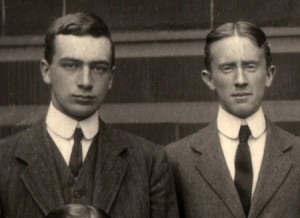
Robert Quilter Gilson (left) and Tolkien in 1910 or 1911. Photo courtesy of Julia Margretts. John Garth, writer, researcher and author of Tolkien and the Great War recently published online for the first time — with previously unseen photographs — a paper first published in Tolkien Studies 7 in 2010 (Tolkien Studies: An Annual Scholarly Review is an annual journal of scholarship on J.R.R. Tolkien and his works).
If you have a Tolkien/Middle-earth inspired poem you’d like to share, then send it to poetry@theonering.net. One poem per person may be submitted each month. Please make sure to proofread your work before sending it in. TheOneRing.net is not responsible for poems posting with spelling or grammatical errors.
One for Anglo-saxonists and lovers of poetry: BBC Radio 4 is set to air a recording of the late Irish poet Seamus Heaney reading his translation of Beowulf next week in 10 separate 15-minute installments. The first episode of 10 is set to air on BBC Radio 4 on Monday at 09:45 BST.
What do Game of Thrones’ Dothraki, Avatar’s Na’vi, Star Trek’s Klingon and LOTR’s Elvish have in common? They are all fantasy constructed languages, or conlangs.
Conlangs have all the delicious complexities of real languages: a high volume of words, grammar rules, and room for messiness and evolution. In this TED Talk, John McWhorter explains why these invented languages captivate fans long past the rolling credits. Continue reading “Are Elvish, Klingon, Dothraki and Na’vi real languages?”
In this new TORn Library piece, our newest feature writer Gibbelins examines the difference between skill and knowledge and whether the former has an unjustly sullied reputation in Middle-earth as a result of the rash and self-seeking acts of craftsmen such as Saruman and Fëanor.
Two paths of Wisdom
by Gibbelins
The concepts I wish to discuss are best expressed with the Quenya roots ‘curu-‘ and ‘nolo-‘, but I will try not to subject you to the Elvish for the entire essay. Both of these roots have at times been translated as ‘wisdom’, and yet they represent different sides of wisdom and different inclinations. I’ll use the English glosses ‘skill’ and ‘knowledge’ as reasonable approximations. The contrast between the two ideas is, I think, fundamental to Tolkien’s understanding of how to live righteously. Continue reading “On Tolkien’s two paths of wisdom”
If you have a Tolkien/Middle-earth inspired poem you’d like to share, then send it to poetry@theonering.net. One poem per person may be submitted each month. Please make sure to proofread your work before sending it in. TheOneRing.net is not responsible for poems posting with spelling or grammatical errors.
The folks of the TORn messageboard Reading Room, the section of our forums devoted to discussion of Tolkien’s literary works, have just put out for a call for papers for the second TORn Amateur Symposium (also known as TAS2).
The first TORn Amateur Symposium earlier this year published 13 essays on topics as varied as The Physics of The Hobbit, The Corrupting Nature of The One Ring and Concepts of Healing in Middle-earth.
Ringer Marthe has sent us this interesting and thought-provoking article outlining comparisons of the Elven-king Thranduil with the legends of The Fisher King and Oberon, based on comments Lee Pace made in the August copy of Empire Magazine.



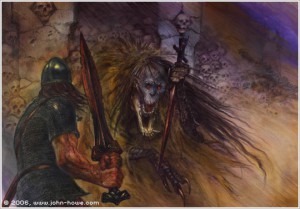 One for Anglo-saxonists and lovers of poetry: BBC Radio 4 is set to air a recording of the late Irish poet Seamus Heaney reading his translation of Beowulf next week in 10 separate 15-minute installments. The first episode of 10 is set to air on BBC Radio 4 on Monday at 09:45 BST.
 What do Game of Thrones’ Dothraki, Avatar’s Na’vi, Star Trek’s Klingon and LOTR’s Elvish have in common? They are all fantasy constructed languages, or conlangs.
 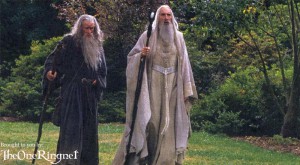 In this new TORn Library piece, our newest feature writer Gibbelins examines the difference between skill and knowledge and whether the former has an unjustly sullied reputation in Middle-earth as a result of the rash and self-seeking acts of craftsmen such as Saruman and Fëanor.
 Ringer Marthe has sent us this interesting and thought-provoking article outlining comparisons of the Elven-king Thranduil with the legends of The Fisher King and Oberon, based on comments Lee Pace made in the August copy of Empire Magazine.