Middle-earth March Madness Round 2 is here! With 1000+ votes for each match-up, some of our first round match-ups came down to just 5 votes!
In the Beauty Bracket, and with the biggest upset of the tournament so far, (1) Goldberry was beaten by the (16) Feanor! In the Brains Bracket, (6) Gwaihir managed to hold off (11) Turgon. In the Brawn Bracket, the battle of the dwarves was won by (11) Gimli when he took down (7) Dwalin. And in the Baddies Bracket, (3) Smaug decimated (14) Lurtz.
Round 2 has its share of interesting match-ups – what are your favorites?
Voting in Round 2 will remain open until March 26th at 10pm ET. At that point, we’ll calculate the winners and post the next round on March 27th. Follow after the break for a complete bracket image (download it), and to vote on all of our Round 2 match-ups! [Round 2 Bracket] [Round 1 Bracket]
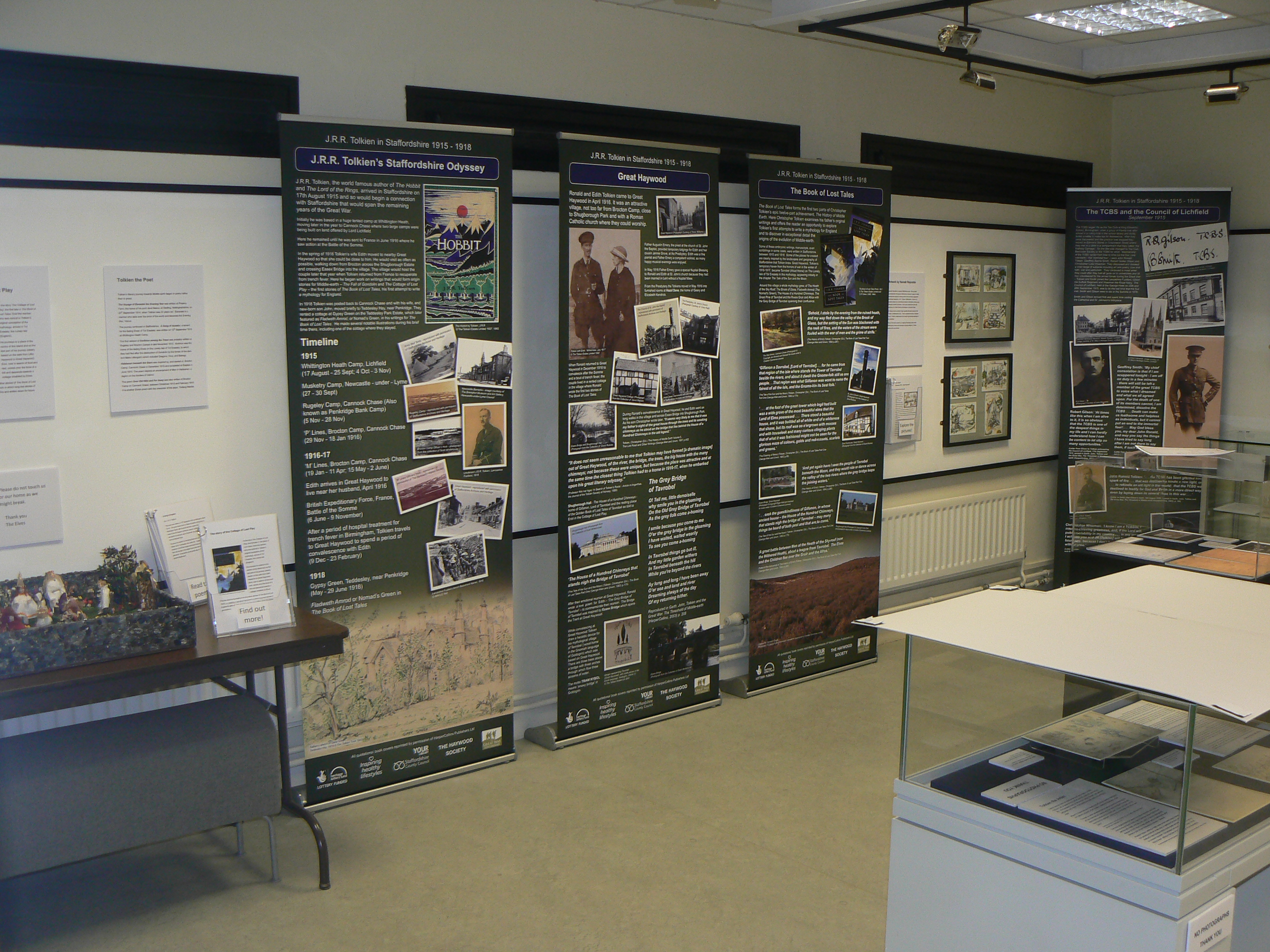
The Haywood Society’s touring exhibition, ‘J.R.R. Tolkien – Soldier recruitment and Myth Maker’ launches at the Museum of Cannock Chase in Staffordshire, UK, March 7th to April 24th.
This fascinating exhibition focuses on Tolkien’s time in Staffordshire during the First World War. It will include ‘Original artwork, of domestic scenes and landscapes, which has not returned to Staffordshire since it left with Tolkien in 1918 … [as well as] photographs specially loaned by The Tolkien Estate and Bodleian Library.’
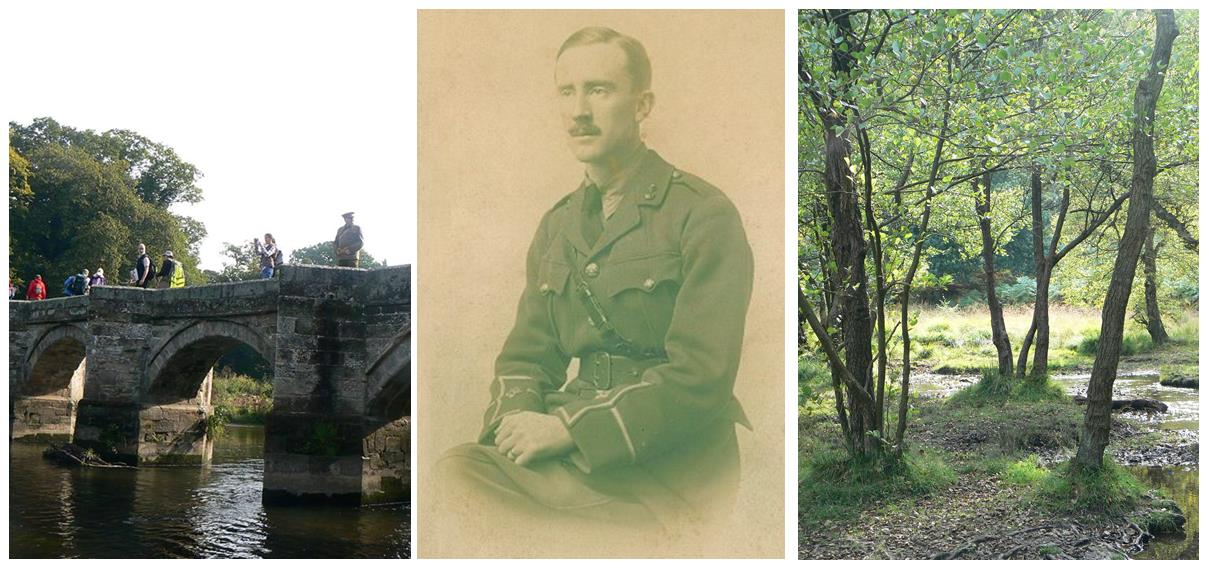
‘During the Great War Second Lieutenant J. R. R. Tolkien of the Lancashire Fusiliers was stationed in Staffordshire, first at Whittington Heath, near Lichfield, next at a musketry camp at Newcastle-under-Lyme, then at Rugeley and Brocton Camps on Cannock Chase. After his marriage in March 1916 Tolkien’s wife came to live in Great Haywood so that she could be close to him. Tolkien regularly visited Edith in the village until he was posted to France in June 1916.
Tolkien returned to Great Haywood in early December 1916 to recover from his traumatic experiences at the Somme. He lived with Edith in a cottage there until late February 1917 and during this time created his first mythological stories, in part inspired by Staffordshire landscapes and experiences.
After a brief posting to East Yorkshire, Tolkien returned to Staffordshire in 1918 and lived in a cottage at Gipsy Green, Teddesley Park, near Penkridge, where other important work was undertaken.’
Find out more about the exhibition here. Be sure to let us know if you’re able to go along – we’d love to hear more about the exhibition!
Welcome to our latest Library feature, in which Benita J Prins discusses the belief that Tolkien characters are either totally good, or totally bad, and therefore his characterizations are two-dimensional. She shows that Tolkien did, in fact, write characters that aren’t good, but aren’t entirely bad, and they appear in all of his works.
If you have a Tolkien/Middle-earth inspired poem you’d like to share, then send it to poetry@theonering.net. One poem per person may be submitted each month. Please make sure to proofread your work before sending it in. TheOneRing.net is not responsible for poems posting with spelling or grammatical errors.
Have you finished all of your Christmas shopping yet? Or are you yet to start? If you’re like us, you’ll definitely have a few more things on your list and what better way to complete the task than buying some Tolkienesque presents. TORn’s staffers deej, Elessar, Earl, Altaira and Kelvarhin scoured the internet to find the perfect presents to celebrate the holidays and we were astounded by how many wonderful choices there are. So, without further ado, here are some lovely gift suggestions for your favourite Tolkien fan (even if that happens to be you). All prices are in U.S. dollars.
The long-awaited second installment of the article about Tolkien’s special hidden realms has arrived! In Part One, which you can read here, C.E High explored the hidden realms of the First Age. In Part Two, he continues on to consider hidden realms of the Second and Third Ages. Enjoy!
In the second and third ages the devices that Tolkien uses with his realms blossom into more complex symbolism with a diversity of outcomes. As men grow and diversify, this creates new problems for the other races of Middle-earth leading to a variety of realms that grow out of need and out of want. There is also that pesky Sauron, Morgoth’s second in command in the elder days, and in the absence of his master he arguably surpasses him in malice and evil deeds in the land of Mordor.
No longer do we have three hidden elven kingdoms of a similar making, we now have a variety. Eregion and Lothlorien are, at first, settlements of the displaced Noldor, which quickly become refuges against the evil now located in the east of Middle-earth. Rivendell, and the Woodland Realm to the north of Eregion and Lothlorien, round out the retreats of elves from battles with Sauron. Last, but not least, we have the newest and most intriguing hidden realm of them all: The Shire, a realm founded in the third age.
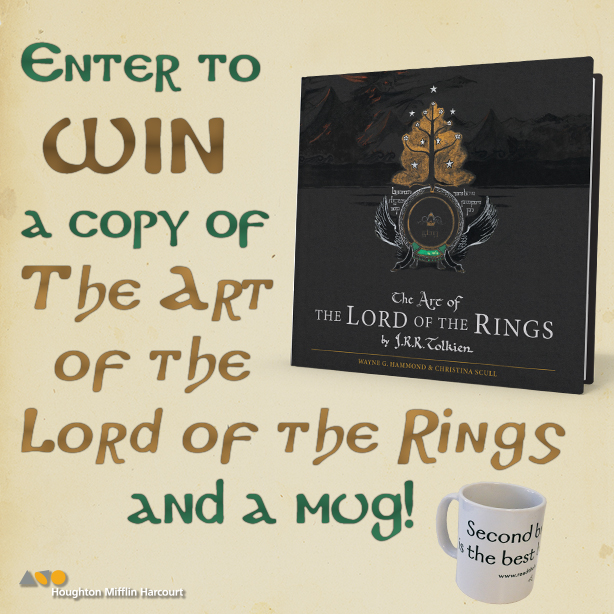
Today sees the release of an exciting new publication from Houghton Mifflin Harcourt. It’s a beautiful book of Tolkien’s art: The Art of The Lord of the Rings by J R R Tolkien, with text by well-known scholars Wayne G Hammond and Christina Scull.
All of the art in this amazing book is by Tolkien himself, and more than half of it has never been published before. Included are maps, inscriptions, plans and sketches, all printed in colour. Through rough drafts and early ‘jottings’, we see the development of designs such as the inscription on Balin’s tomb, and the wonderful Doors of Durin. It is fascinating to see, for example, an early idea for Dunharrow become a beautiful ‘finished’ illustration – on the back of which, as his ideas changed yet again, Tolkien wrote, ‘no longer fits story’.
There is so much to see and learn in this edition – it is crammed with riches! At the very end of the book, for instance, is an Air Raid Warden’s Report Form, on which Tolkien has sketched some kind of contour. It wasn’t only exam papers which the Professor used for notes and ideas!
This gorgeous publication, filled with details and insights, is a must for any Tolkien collection. It is available for purchase online; but thanks to our friends at HMH, you can WIN a copy! The publishers are giving one lucky winner a copy of the book, and a mug which reads ‘Second Breakfast is the Best Breakfast’. Just click here to enter.
(Sorry, everyone outside the US – this competition is for US mailing addresses only. You must be 18 or older to enter.)


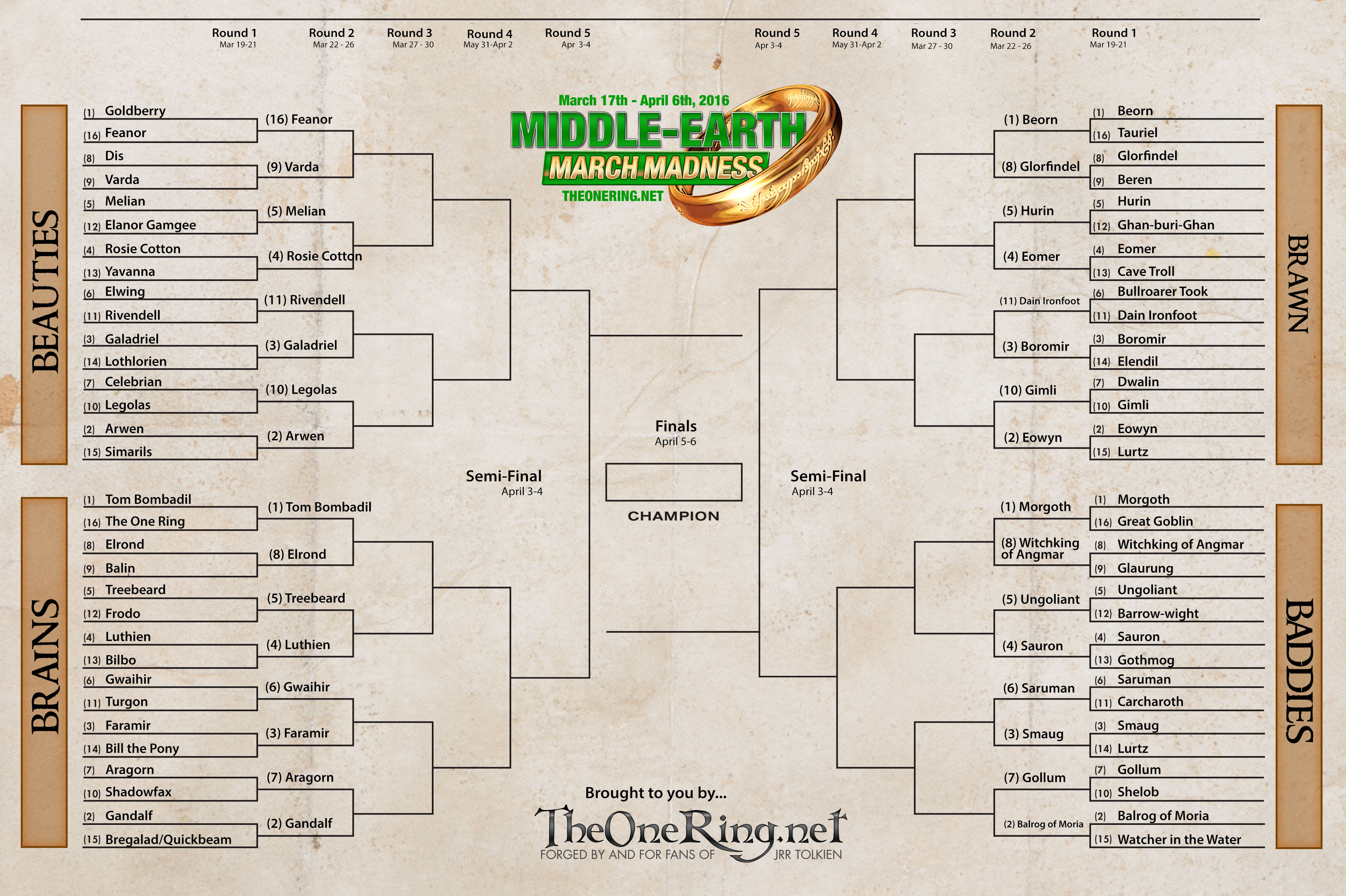 Middle-earth March Madness Round 2 is here! With 1000+ votes for each match-up, some of our first round match-ups came down to just 5 votes!
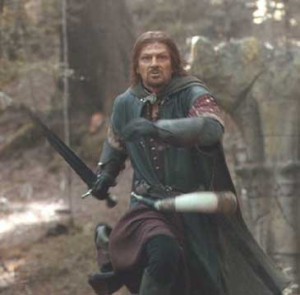 Welcome to our latest Library feature, in which Benita J Prins discusses the belief that Tolkien characters are either totally good, or totally bad, and therefore his characterizations are two-dimensional. She shows that Tolkien did, in fact, write characters that aren’t good, but aren’t entirely bad, and they appear in all of his works.
 Have you finished all of your Christmas shopping yet? Or are you yet to start? If you’re like us, you’ll definitely have a few more things on your list and what better way to complete the task than buying some Tolkienesque presents. TORn’s staffers deej, Elessar, Earl, Altaira and Kelvarhin scoured the internet to find the perfect presents to celebrate the holidays and we were astounded by how many wonderful choices there are. So, without further ado, here are some lovely gift suggestions for your favourite Tolkien fan (even if that happens to be you). All prices are in U.S. dollars.