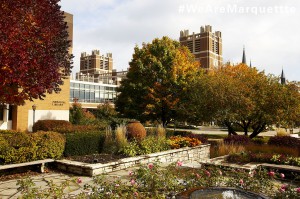
Raynor Memorial Library at Marquette University. Credit: Marquette University. Creative Commons. The Raynor Memorial Library at Marquette University in Milwaukee is home to original manuscripts and working drafts for three of the J.R.R. Tolkien’s most celebrated works: The Hobbit, Farmer Giles of Ham, and The Lord of the Rings. It also holds the original copy of the children’s book Mr. Bliss and has, over the years, grown to become one of the largest repositories of secondary works on Tolkien and his writing.
If you have a Tolkien/Middle-earth inspired poem you’d like to share, then send it to poetry@theonering.net. One poem per person may be submitted each month. Please make sure to proofread your work before sending it in. TheOneRing.net is not responsible for poems posting with spelling or grammatical errors.
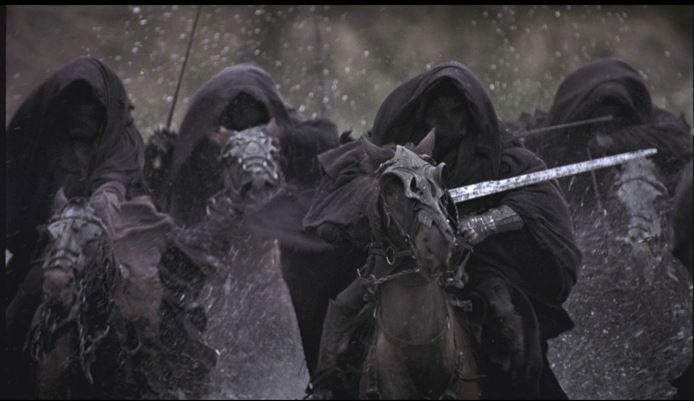
TORN’s latest library piece tries to uncover the origins of the Ringwraiths.
Some of Tolkien’s most mysterious and alluring characters in Middle-earth, the Nazgûl have remained in the shadows (no pun intended) ever since their appearance in The Lord of the Rings.
If you have a Tolkien/Middle-earth inspired poem you’d like to share, then send it to poetry@theonering.net. One poem per person may be submitted each month. Please make sure to proofread your work before sending it in. TheOneRing.net is not responsible for poems posting with spelling or grammatical errors.
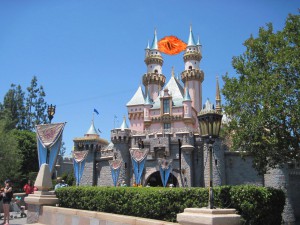
Calling all Dwarves, Elves, Hobbits and Wizards, you are hereby invited to ‘Ringers take Disneyland’ on Saturday, March 1 as part of the Oscar weekend festivities for fans of Middle-earth. Disneyland has been the site for Star Wars days, Potter Days, Browncoat Days and more, so why not fans of Middle-earth?
Here at TORn headquarters, we began to wonder what else we could do on Oscar weekend apart from our “One Dragon, One Party” that would be fun for locals and out-of-towners alike. LA and Hollywood are a popular tourist destination for dozens of reasons, but we needed a place that everyone wants to go to at least once in their lifetime, and is also family friendly and super fun. Disneyland fits the bill in oh so many ways, not the least of which is the fact that it has Dwarves, a Wizard and Mines, as well as many other Middle-earth-like realms and magical folk. Continue reading “Ringers take Disneyland on March 1, 2014”
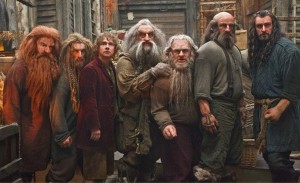
In this piece, Matt Lebovic of The Times of Israel explores the eternally fascinating question of the parallels between Tolkien’s dwarves and the Jewish people. Allegory is almost certainly too strong a word for the relationship, the quotes that Lebovic draws from Letters of J.R.R. Tolkien and various interviews make clear Tolkien’s dislike of the allegorical style (although Leaf by Niggle makes one wonder and Letters #241 and #153 provide conflicting evidence there), and his sincere admiration of the Jewish people.
Edit to quote from Letter #153:
…I might say in my myth I have used ‘subcreation’ in a special way (not the same as ‘subcreation’ as a term in criticism in art, though I tried allegorically [emphasis mine] how that might come to be taken up into Creation in some plane in my ‘purgatorial’ story Leaf by Niggle (Dublin Review 1945))…
Couple of quick points of nit-picking: the Company has 13 dwarves, not 12, it’s Middle-earth not Middle Earth, and arguably Khazad-dûm (Moria) is more accurately the spiritual home of the Dwarves (especially of the Longbeards of Durin’s line) rather than Erebor. As a point of trivia, the Dwarves eventually reclaim Khazad-dum under Durin VII sometime in the Fourth Age. As for the Arkenstone, some people hold that, within the Legendarium, it might have been a Silmaril, but that seems unlikely to this writer. Continue reading “Are Tolkien’s dwarves an allegory for the Jewish people?”
If you have a Tolkien/Middle-earth inspired poem you’d like to share, then send it to poetry@theonering.net. One poem per person may be submitted each month. Please make sure to proofread your work before sending it in. TheOneRing.net is not responsible for poems posting with spelling or grammatical errors.
This is a very cool, very interesting Middle-earth history lesson wrapped into a list of its seven greatest architectural wonders. I find myself hard-pressed to disagree with any of the author’s choices. The ancient Dwarven cities of Nogrod and Belegost — and even Erebor — paled in comparison to Khazad-dûm’s lost glory.
Perhaps, at its peak, Osgiliath’s grandeur might have outstripped that of Minas Anor, but it lacked Minas Anor’s mountainous, physics-defying scale. The strange Pukel Men of Dunharrow might offer another option. And what of Thangorodrim and Angband, Morgoth’s fortresses from the First age and earlier? Would they have been mightier than Barad-dûr?
Anyway, have a read and add your thoughts in the comments. I’d encourage you to follow the links and read the full (and very extensive) entries on each wonder!
If you have a Tolkien/Middle-earth inspired poem you’d like to share, then send it to poetry@theonering.net. One poem per person may be submitted each month. Please make sure to proofread your work before sending it in. TheOneRing.net is not responsible for poems posting with spelling or grammatical errors.
If you’ve ever pondered what a Tom Bombadil sequence might look like on film, this amateur short that adapts Tolkien’s chapter In the House of Tom Bombadil The Fellowship of the Ring offers one interesting perspective. It does take its own textual liberties though.
After the four hobbits; Merry, Pippin, Frodo and Sam leave the Shire for Bree, they encounter some trouble with a Willow Tree, only to be rescued by the mysterious yet whimsical character, Tom Bombadil. As the hobbits linger in Bombadil’s hollow, danger lurks outside the Old Forest, and Frodo begins to question secrets the One Ring may hold. When morning dawns again the hobbits must face an important question; “Who is Tom Bombadil?”



 In this piece, Matt Lebovic of The Times of Israel explores the eternally fascinating question of the parallels between Tolkien’s dwarves and the Jewish people. Allegory is almost certainly too strong a word for the relationship, the quotes that Lebovic draws from Letters of J.R.R. Tolkien and various interviews make clear Tolkien’s dislike of the allegorical style (although Leaf by Niggle makes one wonder and Letters #241 and #153 provide conflicting evidence there), and his sincere admiration of the Jewish people.
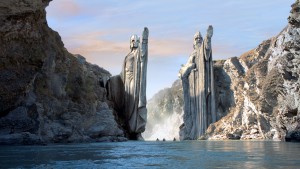 This is a very cool, very interesting Middle-earth history lesson wrapped into a list of its seven greatest architectural wonders. I find myself hard-pressed to disagree with any of the author’s choices. The ancient Dwarven cities of Nogrod and Belegost — and even Erebor — paled in comparison to Khazad-dûm’s lost glory.
 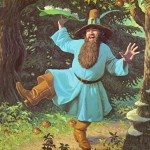 If you’ve ever pondered what a Tom Bombadil sequence might look like on film, this amateur short that adapts Tolkien’s chapter In the House of Tom Bombadil The Fellowship of the Ring offers one interesting perspective. It does take its own textual liberties though.