The rest of the world is perfectly free to walk (or run) to the cinema and watch The Adventures of Tintin directed by the legendary Steven Spielberg. But for once, the tables are turned on movie lovers in the U.S. and we must wait until December to see the motion capture film of the beloved comic strip character produced by Peter Jackson.
However, those who are anticipating Belgian writer and cartoonist Hergé’s collection of grand adventure stories put on screen can content themselves with The Art of The Adventures of Tintin book from special effects studio Weta and HarperCollins. Continue reading “Review: The Art of the Adventures of Tintin”
Parting is such sweet sorrow (there will be spoilers for the last few Harry Potter films)
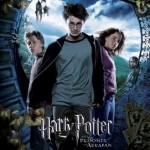
Harry Potter and the Prisoner of Azkaban was a wonderfully creative film with a more unique look due to a new director. But the film franchise always had the same set of Producers, and thank goodness for that. They were the real shepherds to make sure Rowling’s story stayed the course. After all, this series of stories was turning into an epic tale of good versus evil, and there were character arcs to maintain, bits that had to be dropped in to earlier films so that they could pay off in later films. When Dobby first showed up, didn’t you wonder if he was just going to be another Jar Jar Binks? Who knew that he’d be so important to the story later on, or that you’d cry at the end of Deathly Hallows part 1 when he dies? But we also had to have knowledge of the basis of the Horcruxes and the qualities of the Sword of Gryffindor and learn about Polyjuice potion and dueling and the Room of Requirement too. So Prisoner of Azkaban was followed by the Goblet of Fire, and we get our first death and our first indication of the seriousness of this epic battle in the making. We were now getting the type of high drama we’d gotten in the Lord of the Rings. This was followed by Order of the Phoenix, and another high profile death, coupled with a really spectacular duel between Dumbledore and Voldemort.
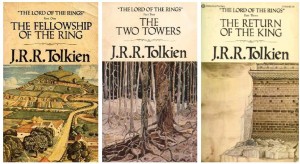
This symbiosis actually began before either film debuted. Kids were reading the existing Harry Potter books in droves, and had created quite a buzz about the books, which is what lead to it being optioned for a film in the first place. But since the series was still being written, when the kids were done with the existing books, they began looking at other books in the same section at the bookstore, and they found there were shelves and shelves of stories to explore. They could read other books on magic, or meet dragons and unicorns, discover time travel and go on as many adventures as they wanted. But there was always the series of books that started it all, the series that was also being turned into a film. So thank you to J.K. Rowling for enticing more and more children to read, because it helped so many other authors, including Tolkien, to increase their readership as well.
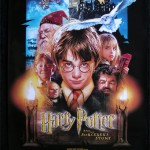
Once Upon a Time, in a Galaxy Far Far Away, there were two book-to-film adaptations based on two massively popular Fantasy literature series. The year was 2001, and at the time, only Fantasy fans were excited by the proposition of either film coming out and doing well, no one else really took them very seriously. A decade later, both of these film franchises have changed the face of the Fantasy film genre and its place in Hollywood. This is a little bit history, but mostly a very fond farewell to our constant companion at Hogwarts.
Ginia Bellafante, in a review of HBO’s “A Game of Thrones,” that makes its television debut this weekend and stars LOTR’s Sean Bean, insinuates that women, or at least women in book clubs, aren’t passionate about “The Hobbit,” the beloved book by J.R.R. Tolkien. With over 10 years of experiences with fans of Middle-earth, and the many women that are passionate about it, Ms. Bellafante might be missing something. She said:
While I do not doubt that there are women in the world who read books like Mr. Martin’s, I can honestly say that I have never met a single woman who has stood up in indignation at her book club and refused to read the latest from Lorrie Moore unless everyone agreed to “The Hobbit” first. “Game of Thrones” is boy fiction patronizingly turned out to reach the population’s other half.
Readers of the interwebs, especially the females, are a bit miffed at the writer and there are several good female-authored blogs and responses, (read after the break for a list of some of the more notable responses) but most are from the perspective of “Game of Thrones,” readers. So, Tolkienites, do you agree or disagree with the above statement and the full review? Continue reading “Do women love ‘The Hobbit’? NYTimes says no”
Every December an envelope bearing a stamp from the North Pole would arrive for J.R.R. Tolkien’s children. Inside would be a letter in a strange, spidery handwriting and a beautiful colored drawing or painting. The letters were from Father Christmas.
They told wonderful tales of life at the North Pole: how the reindeer got loose and scattered presents all over the place; how the accident-prone North Polar Bear climbed the North Pole and fell through the roof of Father Christmas’s house into the dining room; how he broke the Moon into four pieces and made the Man in it fall into the back garden; how there were wars with the troublesome horde of goblins who lived in the caves beneath the house, and many more.
No reader, young or old, can fail to be charmed by Tolkien’s inventiveness in this classic holiday treat.


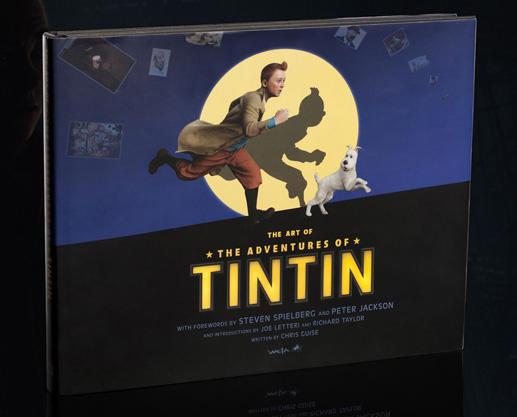 The rest of the world is perfectly free to walk (or run) to the cinema and watch The Adventures of Tintin directed by the legendary Steven Spielberg. But for once, the tables are turned on movie lovers in the U.S. and we must wait until December to see the motion capture film of the beloved comic strip character produced by Peter Jackson.