

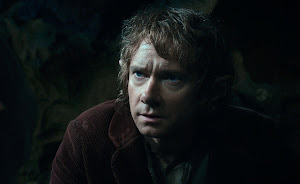
 Entertainment Weekly revealed one of four ‘collector’s edition covers’ of their upcoming December 14 issue today. The cover features a prominent picture of Martin Freeman (Bilbo Baggins), and also has a little teaser about a first look at the next film. No details yet on how extensive the ‘first look’ will be. The edition hits news stands on Friday, December 7th, so we don’t have to wait long to find out! Read more…
Category: Production

 In amongst all the excitement and celebration of the new Hobbit movie, tonight the very sad news has broken that Eileen Moran, an Executive Producer at Weta Digital, died in New Zealand on Monday this week. Moran worked extensively with Peter Jackson and the Weta team, including on The Lord of the Rings movies and The Hobbit movies. She missed the Hobbit premiere last week because she was in hospital. You can read more here. Everyone in the TORn community would like to extend deepest sympathies to her family, her loved ones, her friends and her colleagues.
 TheOneRing.net staffer Garfeimao and long-time TORn friend Nancy Steinman were able to secure tickets to the World Premiere of The Hobbit: An Unexpected Journey. Here are Garfeimao’s largely spoiler-free thoughts on what she saw. Continue reading “Staffer Garfemaio reviews The Hobbit: An Unexpected Journey”
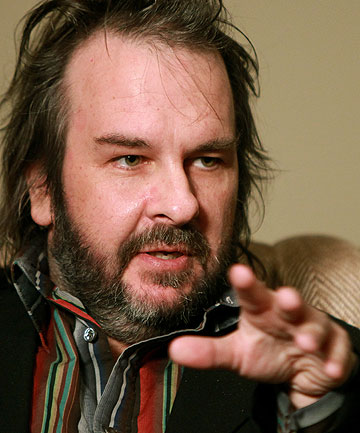 Peter Jackson’s grand experiment with 48-frames-per-second digital footage is just the latest in a long line of filmmakers pushing the technological envelope in Hollywood.
There’s been plenty of buzz about the upcoming film The Hobbit: An Unexpected Journey, but it’s not just about the movie itself. It’s also about the format the director Peter Jackson has decided to use, which he just defended in detail in a Facebook post yesterday. Normally, films are shot at 24 frames per second (fps), and have been for roughly 80 years. American television is broadcast at 29.97 fps, while European television is broadcast at 25 fps. Each of these have a unique look to which we’ve all grown accustomed. Continue reading “PCmag explains what 48fps means and how it works”
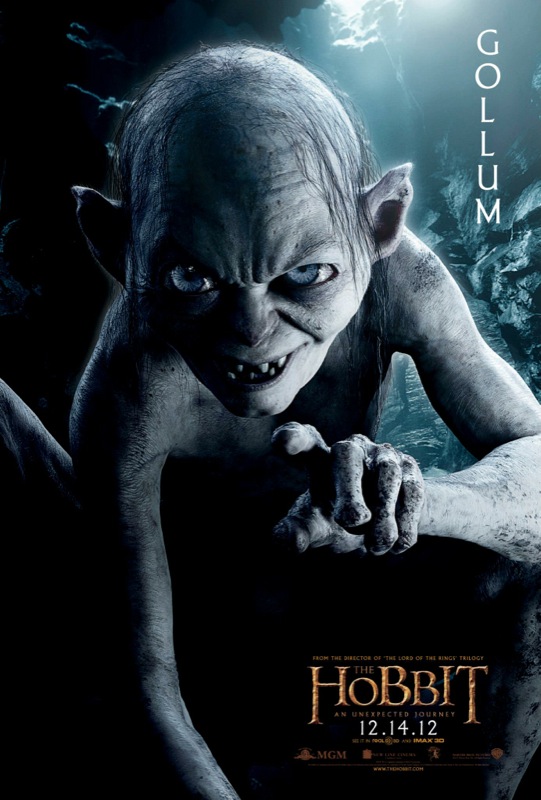
“It’s changed almost completely,” Letteri says. “On the outside, you want Gollum to look like the same character, but he’s completely different” underneath.
The biggest change from the first set of films is the way that actor Andy Serkis’ performance is captured and analyzed in order to create the digital character, according to visual-effects supervisor Eric Saindon. “Our facial capture has progressed leaps and bounds,” he says. “Now we actually capture all of Andy’s performance, when he’s acting with Martin (Freeman) in Gollum’s cage on set. We have a small camera attached in front of his face that captures his exact facial performance. Rather than an animator going in and doing it frame-by-frame, the computer analyzes Andy’s performance and then fires Gollum’s muscles to do the exact same thing. So the first half of the animation, which is the raw mo-cap data, is really Andy.”
“We know so much more about how the face works,” Letteri adds. “When people communicate face to face there are so many things that are going on that you really have to study now and put into the characters. We hope that people recognize that there’s this extra layer of depth.”
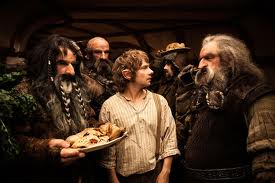 The NZ Herald reports that Hobbit fans in New Zealand for early screenings of the film claim its high frame rate made them feel sick. Continue reading “The Hobbit: some viewers complain of dizzy spells, nausea”