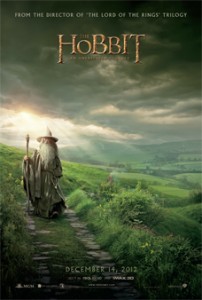
 For most folks, this is it: this is the week when we finally get to go back to Middle-earth, and experience Peter Jackson’s first Hobbit movie, The Hobbit: An Unexpected Journey. Some of us, however, have had the great good fortune of seeing the film already, at press events around the globe. I was one such lucky viewer – and I present here my more-or-less spoiler-free review of what I saw.
Walking through the morning commuting crowds, heading to the cinema, it was slightly bewildering to think that I was finally going to see this movie. It’s been YEARS – hoping since The Return of the King that we would get to go ‘back again’; handing out ‘Make the Hobbit Happen!’ buttons at conventions; watching the ‘snakes and ladders’ game of waiting for that greenlight; eagerly taking in every moment of Peter Jackson’s production diaries… And now, at last, here it is. Would the anticipation prove too much? Would I be disappointed?
As the opening credits came up, I knew immediately that the answer, whatever was in store, would be NO. I was revisiting old friends – and what a great pleasure it was. I wanted to cry, as Frodo does in The Fellowship of the Ring, ‘It’s wonderful to see you Gandalf!’ What a treat to be back in the Shire, and to delight again in its green beauty. What fun to explore Bag End some more, and to see Ian Holm and Elijah Wood back where they belong – in furry feet!
Continue reading “‘The Long Expected Movie’ – another TORn staffer Hobbit review”
Posted in:
Share:

 Continuing our series of reviews of The Hobbit: An Unexpected Journey, TORn staffer Arwen chimes in with this SPOILER-HEAVY review of the action. I suggest that if you don’t want to know about how the story plays out, what the key plot points are, and what happens at the end of the movie, then this review is probably not for you! On the other hand, if you’re not afraid of reading all those things, dive on in! Continue reading “TORn staffer Arwen reviews The Hobbit: An Unexpected Journey”
Posted in:
Share:
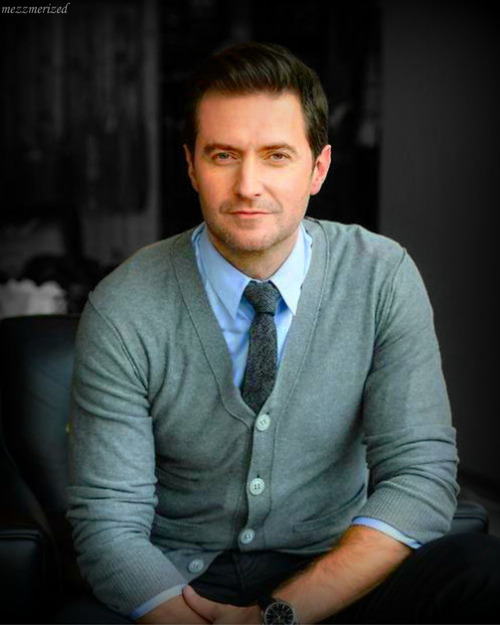
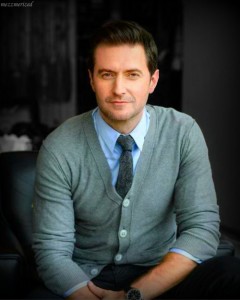 Richard Armitage is a lucky boy; or so he says. I think those of us who had the chance to hear what he had to say at interviews this week were the lucky ones; there are few interviewees who are as erudite and as interesting as this thoughtful actor. I already posted my ‘one on one’ interview with him, which you can read here; below is the longer, ‘round table’ group interview which took place later that afternoon. Once again, Armitage was charm itself, giving each questioner his undivided attention, and each comment his full consideration. The half hour chat was filled with fascinating insights – revealing more about how he works; what it’s like to act with Sir Ian McKellen; how they came up with the design of the oakenshield; where we might see a glimpse of Guillermo del Toro’s influence in The Hobbit movie; and even when Armitage himself thinks he looks his best!
I’ve indicated the questions your TORn interviewer asked with ‘GD’ – the rest were asked by my colleagues at the session. The interview contains a minor spoiler. Enjoy!
Continue reading “Richard the Second – Part II of TheOneRing.net’s time with Richard Armitage”
Posted in:
Share:
MORE THAN 100,000 REGAL ENTERTAINMENT GROUP PATRONS ALREADY SECURED TICKETS FOR ‘THE HOBBIT’
Many Dedicated Fans Will Also Attend Saturday’s ‘Lord of the Rings’ Trilogy Marathon
KNOXVILLE, Tenn.–(BUSINESS WIRE)–Dec. 6, 2012– Regal Entertainment Group (NYSE: RGC), a leading motion picture exhibitor owning and operating the largest theater circuit in the United States, announced that advance ticket sales for The Hobbit: An Unexpected Journey crossed a milestone. Since going on sale November 7, Regal moviegoers have purchased more than 100,000 tickets for the Peter Jackson film opening December 14.
“Tolkien fans are back in force at Regal Entertainment Group theatres with extremely strong advance ticket sales for The Hobbit: An Unexpected Journey. Only a handful of films this year will sell this many advance tickets and we are still a week away from the opening,” stated Ken Thewes, Chief Marketing Officer of Regal Entertainment Group. “Regal is excited to offer fans of Peter Jacksonmany additional ways to celebrate the film’s arrival including an all-day marathon of Lord of the Rings movies and an online trivia contest with a prize to visit the Warner Bros. Studio.”
Fans can test their knowledge with 6 questions in Regal’s trivia sweepstakes. For each question answered correctly, receive one sweepstakes entry for a Hobbit prize specific to each question. A correct answer also enters players into the Grand Prize drawing including airfare for two, two nights’ accommodation and two tickets to the Warner Bros. Studio Tour. The sweepstakes is open through December 27, 2012. There are three ways to enter the sweepstakes and to view official rules:
Mobile Phones – Text the word BILBO to the short code 66937
Facebook – http://regmovi.es/HobbitQuestFacebook
REGmovies.com – www.REGmovies.com/thehobbitquest
Tickets are still available for Regal’s Lord of the Rings Trilogy Marathon. The marathon begins at 11:15 AM on Saturday, December 8. Members of the Regal Crown Club can purchase tickets at the box office for only $25 for all three movies. And with each $25 ticket sold, members receive a coupon good for a medium popcorn and medium drink for only $5.
Regal is also offering The Hobbit: An Unexpected Journey in an unprecedented selection of formats including: IMAX 3D, RPX 3D,RealD 3D, traditional 2D presentations and in a special High Frame Rate (HFR) 3D presentation at 48 frames per second. HFR 3D is available at 100 Regal Entertainment Group theatres. And for the ultimate fan, Regal is selling a Hobbit movie gift card just in time for the holidays.
Regal’s website has a wealth of information for Tolkien fans.
The Hobbit, Opening Dec. 14: http://regmovi.es/Hobbit
The Hobbit High Frame Rate 3D: http://regmovi.es/Hobbit48
LOTR Trilogy Marathon Dec. 8: http://regmovi.es/LOTRmarathon
About Regal Entertainment Group:
Regal Entertainment Group (NYSE: RGC) operates the largest and most geographically diverse theatre circuit in the United States, consisting of 6,899 screens in 544 locations in 38 states and the District of Columbia as of November 30, 2012. The Company operates theatres in 43 of the top 50 U.S. designated market areas. We believe that the size, reach and quality of the Company’s theatre circuit not only provide its patrons with a convenient and enjoyable movie-going experience, but is also an exceptional platform to realize economies of scale in theatre operations.
Additional information is available on the Company’s Web site at www.REGmovies.com.
[Read Full Release]
Posted in:
Share:
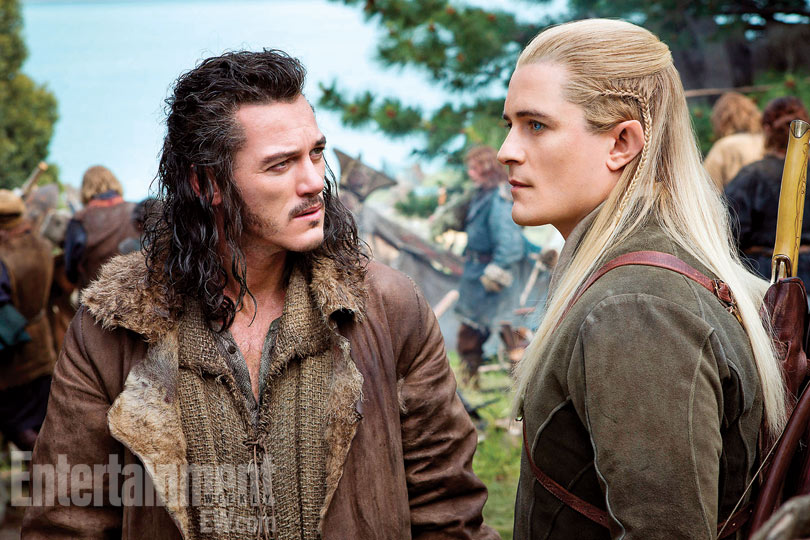
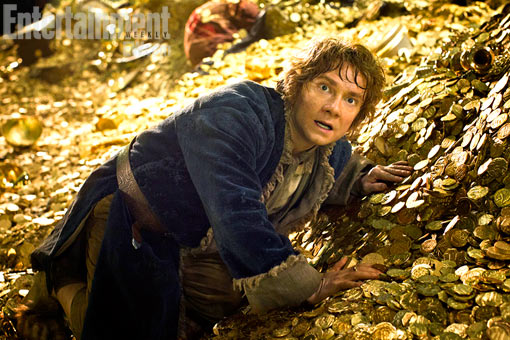
SPOILERS! Just a week before the worldwide release ‘The Hobbit: An Unexpected Journey,’ EW.com has acquired some amazing new images from both ‘The Hobbit: The Desolation of Smaug‘ (Dec 13 2013) and ‘The Hobbit: There and Back Again’ (July 18th 2014). The first pic showcases Luke Evans as Bard the Bowman and Orlando Bloom reprising his role as Legolas taken from what looks to be a battle prep scene in ‘There and Back Again.’ Check out the EW.com article for some insights into the photo from Peter Jackson himself. [here] The second image features Martin Freeman as Bilbo Baggins in ‘The Desolation of Smaug‘ climbing on a great pile of gold. If you look closely, it looks like he is wearing The One Ring – but it could also just be a gold piece covering his hand. Jump over to EW.com for more details about the pic and talk of how The Hobbit is not just about a quest to regain gold from Smaug. [EW.com]
Posted in:
Share:
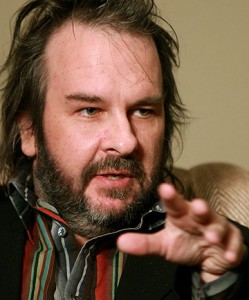 Many fans are eagerly anticipating a return to the fictional world of Middle-earth with next week’s general release of the first movie in “The Hobbit” trilogy. Director Peter Jackson and the film’s stars speak to The Associated Press about making “The Hobbit: An Unexpected Journey”.
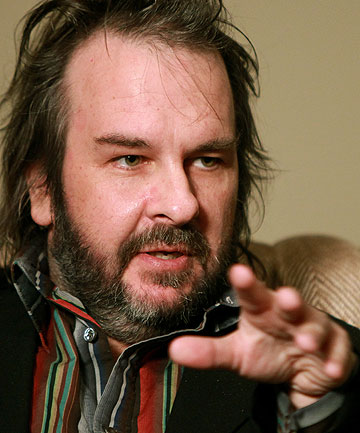
Jackson on shooting at 48 frames per second instead of the standard 24: “We’ve seen the arrival of iPhones and iPads and now there’s a generation of kids – the worry that I have is that they seem to think it’s OK to wait for the film to come out on DVD or be available for download. And I don’t want kids to see `The Hobbit’ on their iPads, really. Not for the first time. So as a filmmaker, I feel the responsibility to say, `This is the technology we have now, and it’s different … How can we raise the bar? Why do we have to stick with 24 frames? …'”
“The world has to move on and change. And I want to get people back into the cinema. I want to play my little tiny role in encouraging that beautiful, magical, mysterious experience of going into a dark room full of strangers, and being transported into a piece of escapism.”
Martin Freeman (Bilbo Baggins) on shooting some scenes without other actors around: “I must admit I found the green screen and all that easier than I thought I would. … I found the technical aspect of it quite doable. Some of it’s difficult, but it’s quite enjoyable, actually. It taps into when I used to play `war’ as a 6-year-old. And the Germans were all imaginary. Because I was playing a British person. So yeah, I was on the right side. …”
On marrying his performance to that of Ian Holm, who played an older Bilbo Baggins in the “Lord of the Rings” trilogy: “I knew I couldn’t be a slave to it. Because as truly fantastic as Ian Holm is in everything, and certainly as Bilbo, I can’t just go and do an impression of Ian Holm for a year and a half. Because it’s my turn. But it was very useful for me to watch and listen to stuff he did, vocal ticks or physical ticks, that I can use but not feel hamstrung by.”
[Read More]
Posted in:
Share:


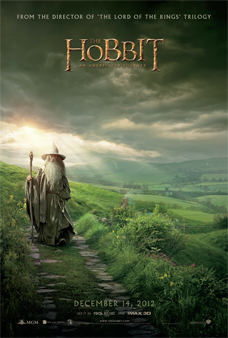 For most folks, this is it: this is the week when we finally get to go back to Middle-earth, and experience Peter Jackson’s first Hobbit movie, The Hobbit: An Unexpected Journey. Some of us, however, have had the great good fortune of seeing the film already, at press events around the globe. I was one such lucky viewer – and I present here my more-or-less spoiler-free review of what I saw.