Just a few days ago, we posted an opportunity for our friends in Canada to win tickets to see ‘The Hobbit: An Unexpected Journey!‘ We are happy to announce the winners!
Darryl S – Winnipeg Jamie O – Vancouver Connor M – Toronto Marcel L – Ottawa Stéphane P – Montreal (French) Daniel G – Montreal (English) Peter M – Halifax Ivanna S – Edmonton Kathleen D – Calgary
Winners will contacted via email and receive their tickets in the mail. All screenings will start at 6pm on Dec 12th except for the Montreal (French) screening which will begin at 7pm. We’d like to thank our friends at Warner Bros. Pictures Canada for sponsoring this giveaway! And of course, if you weren’t one of the lucky winners, don’t miss ‘The Hobbit: An Unexpected Journey‘ in theaters December 14th! Visit the official website, The Hobbit facebook page, and Twitter: follow @wbpictures!
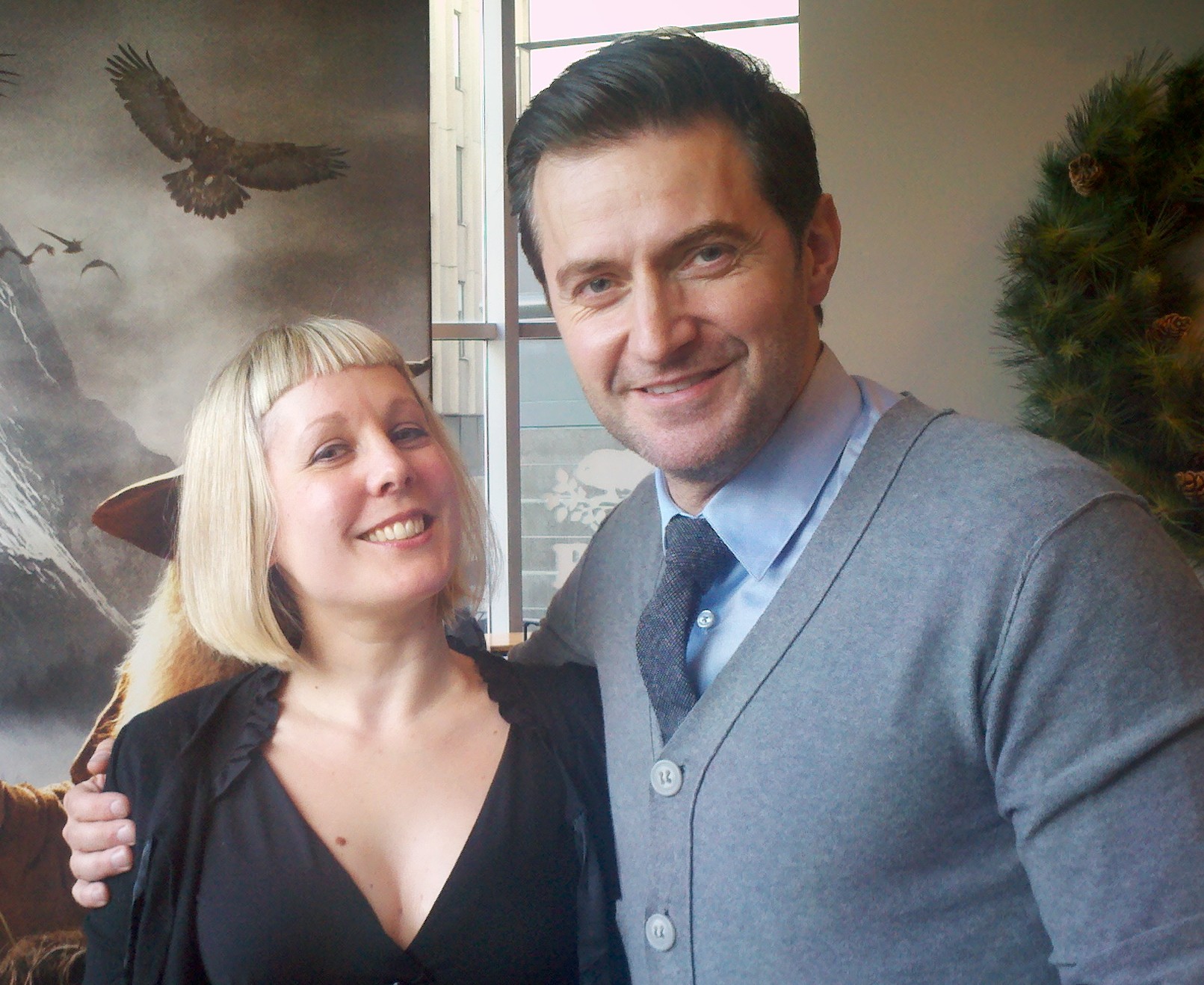
On Monday 3rd December, TORn staffer greendragon (‘tis I!) was lucky enough to have a sit down with The Hobbit’s Thorin Oakenshield, actor Richard Armitage. A fascinating, erudite and humble man, he spilled the beans on his thoughts on bringing Thorin to life, shed some light on Peter Jackson as a true actors’ director and not just a technical wizard, and even dropped some hints about dwarf women and what lies in store for Thorin!
Let me start by answering the question which I know will be on the minds of many readers… Yes, he really is that handsome. Yes, he really is that charming; he has the ability to make you feel, as he talks to you, that you are the only person who matters. This skill in focusing and being ‘in the moment’ is an important part of the intensity he brings to his acting; and it gives him that reputation for making interviewers go weak at the knees. (I’m pleased to report that my knees were reliable throughout the interview!) And yes, he really was wearing black, leather trousers – Guy of Gisborne lives on!
Do you live in Canada and simply can’t wait until December 14th to see ‘The Hobbit: An Unexpected Journey?’ TheOneRing.net is privileged to team up with Warner Bros. Pictures Canada to giveaway 9 pair of tickets to screenings across Canadian taking place on Dec 12th! The screenings will take place in the following cities, and we have two tickets for each: Toronto, Montreal (English), Montreal (French), Vancouver, Ottawa, Winnipeg, Calgary, Edmonton, Halifax. All screenings will start at 6pm on Dec 12th except for the Montreal (French) screening which will begin at 7pm. How do you enter? Just fill out the form below and make sure to choose which screening you want to see. We will be choosing our winners on Dec 6th – yes, that is tomorrow!! Tickets will be mailed to you before the event. Good luck to all you Canadian Ringers out there! And of course, if you aren’t one of the lucky winners, don’t miss ‘The Hobbit: An Unexpected Journey’ in theaters December 14th! Visit the official website, The Hobbit facebook page, and Twitter: follow @wbpictures!
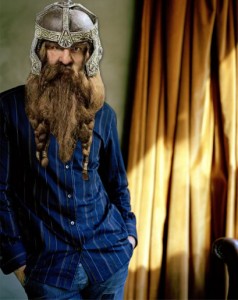
Two years ago I wrote a story asking the question, “To be Hot or Not? That is the Dwarf Question.”
While essentially a joke — one which spread like wildfire – a real concern for some fans prior to casting “The Hobbit” was whether or not a film featuring a supporting cast of 13 short hairy men would be interesting to studios and audiences unless those short hairy men were transformed into attractive short-statured hunks, the likes of which would send diehards into fits of horror.
The question was, would the filmmakers be forced to go that route, and also – did we want them to? Should there be Hot Dwarves?
(From here on this will contain minor spoilers, so those of you who wish to remain “pure,” turn back now.)
++++++++++
With the casting of Richard Armitage as Thorin, the leader of the dwarves, we couldn’t help but admit that we were conflicted. Supremely talented actor. But could he look dwarflike? Did he have to? Wait, yes, he has to. But should he? Head said yes, hormones said no. Shut up hormones.
As the other actors were added, fans’ questions grew. And as stills of costumed dwarves began rolling out, the discussions raged on in fandom – Were the dwarves too cute? Too bad-assed? Too dwarvish? Not dwarvish enough? Too KLINGON? Second guessing gave way to infinity-guessing.
The movie a year or more off, poring over images and studying production diaries provided much fodder for speculators. Beyond Thorin, beyond Aidan Turner’s Kili and Dean O’Gorman’s Fili, the whole company was under intense scrutiny.
With the exception of Thorin, dwarves aren’t the leading characters in “The Hobbit” and yet the film would live or die on them. Too comical and audiences wouldn’t buy into the story. Too Hollywood-handsome and audiences wouldn’t buy into the story. Should they fade into the background entirely then it simply wouldn’t be “The Hobbit.” Nor if they became Robo-Dwarves-of-Doom, chewing on the scenery.
So, with the “Unexpected Journey” finally here, how did it all turn out?
Fabulous.
No, Thorin does not harken back to the droopy-eyed Rankin Bass incarnation, nor does he resemble Tolkien’s description of a blue-hooded, silver-tasseled grump. But neither is he a Chippen-dwarf. He embodies the essence of the character – the haughty nobility, the impatience and simmering anger. The sadness. This is not the hot dwarf you were looking for, but so much more.
Voice, body language, costume, prosthetics – all combine to transform Armitage into the strong, surly Thorin Oakenshield. One dimensional images fade from mind and the focus shifts to the character in action, as it should.
It will be interesting to see where the second and third films take Thorin. At the conclusion of “Unexpected Journey” he has an emotional encounter with Bilbo – much, much earlier in the action than what occurs in the text. And that exchange adds another layer to a complexity that outweighs looks.
And what about the rest of the company?
While “The Hobbit” on page is essentially a child’s tale, Peter Jackson hasn’t filmed a child’s tale. There is a vein of darkness running through the movie, brought by material added from the appendices and the established “Lord of the Rings” visual style.
For the action scenes to be believable – particularly in the higher frame-rate and in 3D – the dwarves must be warrior-like, to appear capable of fighting with the agility and intensity required. In the company of these dwarves, Gimli would appear soft.
And yet, the dwarves retain a whimsicality that makes them distinct. Like Thorin, their appearance is an expression of personality. With less time at the forefront, how they look is a large part of how we get to “know” them.
Balin with his luxurious white beard, the elder of the company. Bofur’s quirky cap and quick wit. The soft-spoken Ori in his cowled hood. But the things that seemed over the top in stills – Bifur with the axe-impaled forehead – aren’t in your face. Remarkably, at least in “Unexpected Journey,” we’re spared Bombur sight-gags.
Which brings us to Kili and Fili.
No, they do not look like dwarves. Kili even less so than Fili. Even in the company of dwarves, they do not look like dwarves. And yet, they look as if they belong with the dwarves. And while I’m pretty sure that might not make sense, I think once people see the film, you’ll understand what I mean. In the context of their behavior and actions – they work as dwarves. They fight like dwarves. It helps that Peter has not indulged in long, lingering, soft-focused glamor shots of Aidan Turner or Dean O’Gorman. Thank you, Peter.
While looks are possibly one of the more trivial aspects of the film – seriously, I do recognize the ridiculousness in all of this – a noticeable amount of effort has been put into crafting each dwarf’s appearance and then stepping back from focusing on it. It’s a measure of subtlety we didn’t expect.
++++++++++
In the meantime, the phrase “Hot Dwarves” has spread across the globe since my story was first published.
At San Diego Comic-Con this summer, Carrie Fisher fell for our “I <3 Hot Dwarves” t-shirt. In Wellington, Aidan Turner, who wanted a shirt for his own, was gifted with a “Hot Dwarves” button.
The phrase crops up in most stories I’ve read, is at alluded to in many interviews, raises its head in pop-culture memes and … well, last week showed up on the red carpet of the world premiere itself. [Watch]
“How do you feel about being one of the pin-ups in the The Hobbit,” said an interviewer to Richard Armitage.
”I thought you were going to say ‘hot dwarf.’” he graciously responded with some humor.
As I said at TheOneRing.net’s Comic-Con panel: Thank you, Richard, for being such a good sport. Bravo!
‘The Hobbit: An Unexpected Journey‘ is a fulfilling and entertaining adventure that is sure to please most Middle-earth enthusiasts. Filled with direct book-to-screen moments and some unique new additions, the film stands as a strong first installment of a three-year adventure. If you think of it as a fine art masterpiece in a beautiful museum, it can sit proudly next to its LOTR siblings. Well, sorta. You see, someone chose an overly busy frame with bright colors and fancy patterns that distracts from the essential content. Luckily, in your experience, you can easily swap out the frame.
As you’ll read later, this reviewer suggests this may be the wisest course first-up.
As an adaptation and expansion on Tolkien’s 75-year-old children literature classic — emphasis on children — this film is more fantastic and at times more ‘cartoony’ than its trilogy predecessor. A quick example… while in The Lord of the Rings: The Fellowship of the Ring we see the four Hobbits trying to escape Farmer Maggot and falling down a long slope with nothing but a broken carrot, in The Hobbit: An Unexpected Journey we see the Company of Thorin falling down a 1000-foot crevasse (multiple times) and simply dusting themselves off.
That theme permeates the film. The ‘bad guys’ are not quite horrible monstrosities that cause death and destruction but instead are similar to villains in an episode of the A-Team. You know, where no matter how many times they shoot at our heroes, they never actually hit their mark. It ultimately makes for exciting confrontations, but no real concern the heroes will meet their doom. Some who are not familiar with the childish nature of The Hobbit might find this a bit odd when they compare the drama to the LOTR films.
The acting by the core cast was astoundingly good. Martin Freeman IS Bilbo Baggins and as expected delivers an amazing performance with true emotion, humor and feeling. Ian McKellen is a less serious version of his LOTR-self and in many ways a lot more likable. His sense of humor comes across more in the performance and it is very endearing. Richard Armitage delivers a dead-on performance of Thorin. For those of us who know what the future holds for Thorin, I can clearly state the casting was perfect. Andy Serkis returns as Gollum and provides yet another amazing performance. ‘Riddles in the Dark’ will be one of your favorite scenes — guaranteed!
The dwarves were always a bit of a concern for me because I thought we’d be spending a lot of time getting to know each and dealing with lot of childish humor. This is not the case. They do all get introductions and each has their own distinct and unique contribution to the film. There is of course some ‘potty’ humor, but nothing that is overdone or inconsistent. Ken Stott as Balin delivers a stand-out performance — one that does not go unnoticed and puts him on par with the other key players.
The rest of the cast provide strong performances but some are a bit constrained by the visual performance that accompanies their acting. If you are looking for the awesomeness of The Goblin King from Rankin/Bass, I fear you will be a bit disappointed. And Radagast, while semi-interesting and fun in a childish sense (which is okay!), seems to be just thrown in to have another wizard.
Some of the folks I saw the film with had issues with the ‘slowness’ of the story, but I did not. I was surprised how fast the film felt – when it ended I was surprised at the time.
To avoid major spoilers, I’ll just say that there were definitely a few points where I felt the small things were ‘overdone.’ Take Elrond’s reading of the moon-letters on the map.
The book: …The moon was shining in a broad silver crescent. He held up the map and the white light shone through it. “What is this?” he said. “There are moon-letters here…
In the movie it’s not nearly so simple. You see, apparently the Elves in Rivendell have painstakingly built a ledge on a massive cliff-face complete with a special moon-table. To read moon-letters, you must gather around this table and place the suspected moon-letter document on the table. The table then glows with moon-light and reveals what is on it. I can’t imagine this ledge gets much use — typical of the wealthy elves to be so wasteful with space and function. Heh — yeah, I had a bit of a chuckle at that point.
There is one BIG negative from my viewing of The Hobbit: An Unexpected Journey. It has nothing to do with the plot, acting, score or any other aspect of the actual content of the film. It has to do with wrapping this masterpiece in the inappropriate frame of HFR 3D. It was quite simply unnecessary to saddle this film with this presentational wizardry.
And it’s something I had hoped that was not going to be the case.
In fact, I was very excited to see this new technology and experience the ‘future of film.’ I was ready for it! Even with the uproar from those crusty cinema owners last year, I figured that was a bunch of old fogeys who simply didn’t want to update their equipment. I was fully expecting to be blown away and fall in love with this next evolution in film. I felt this way right up until the opening scenes of the movie. Then it happened…
I told myself: ‘Oh Chris, your eyes will get used to it… just a bit longer.‘
Nope — never got used to it. I couldn’t help but think, ‘Why does this look like some highly produced BBC TV drama?‘ In fact, about every 10 minutes or so (or maybe whenever something was particularly bright on screen) I found myself being literally drawn out of Middle-earth and back into the present — the theater. And therein lies the issue. I was constantly taken out of the story and performance because my brain was distracted by the ‘bells and whistles’ on screen. I was jolted out of the content of the film and noticed the tech behind it. That is unfortunate.
The Hobbit: An Unexpected Journey is a great movie that is saddled with this unnecessary mission to advance the future of film. So here’s my slightly controversial suggestion: Watch this film first in good ole fashioned 24fps. Then, for your second viewing, go and see it in HFR. This way your initial experience won’t be compromised by the tech and second-time-round you may actually be able to enjoy the high frame rate as well!
As an aside, I did consider that I’m simply too old for this type of presentation. I’m 38. I don’t play video games and don’t run out to see IMAX or 3D viewings of films on a regular basis. So maybe the thirteen-year-olds of the world will love it.
To summarize, rush out and see The Hobbit: An Unexpected Journey and enjoy the ride! As long as you bring along your inner child you’ll have a wonderful time. If you have a choice, DO NOT see it in 48fps for your first viewing.
At the first public showing of a movie picture depicting a train coming toward the viewers, people scattered in alarm trying to get out of the way. Or so the story goes. Some will do the same with director Peter Jackson’s new film The Hobbit: An Unexpected Journey.
The irony is that The Hobbit’s titular character, Bilbo Baggins, doesn’t like to take risks in a film that revels in them.
It’s visionary stuff, and Jackson is alone on the frontier with only James Cameron visible on the horizon. The first installment of The Hobbit trilogy is new cinema.
Instead of playing safe and comfortable in lower-risk financial zones, Jackson has pushed the boundaries with 3D, with 48 frames of film per second -– or the digital equivalent — flashing past viewers’ eyes instead of the traditional 24fps. It is definitely different.
The filter of the traditional look of cinema, what we are used to seeing in the dark, is gone. Forever? Consumers will ultimately decide but studios continue to churn out films in 3D despite anything but universal acclaim.
Here, Jackson has gone to such lengths to make the fantastic look real that for many the film will look unreal -– but only if viewers choose to see it in the director’s preferred way. Of the approximately 24,000 theaters that will display The Hobbit: AUJ, around 1,000 will have the technology to display it as it was shot — HFR 3D. But, for those 1,000, hang onto your arm rests, cinema has just leapt forward.
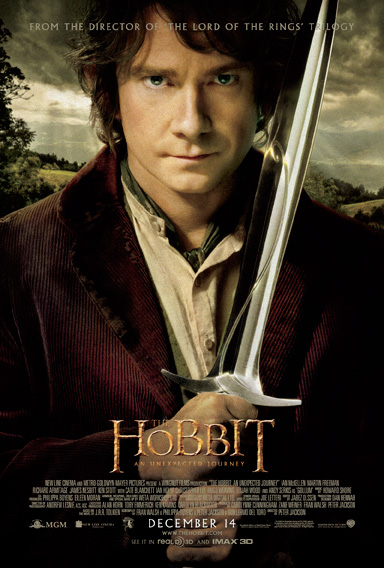
Bilbo Baggins (masterfully portrayed by Martin Freeman in a performance that will be lost amidst the eye-popping action sequences), as many readers will know, relishes his comfortable life in the cinematically familiar Bag End. He is interrupted by a gaggle of dwarves and a meddlesome wizard who for reasons he cannot himself explain, thinks Bilbo needs to travel with the dwarves.
All of this is familiar ground for readers of Tolkien’s original tale. And, as expected, the screenwriters (Fran Walsh, Phillipa Boyens, Guillermo del Toro and Peter Jackson) make great effort to up the stakes and ramp-up the tension.
People who haven’t been paying attention to the promotional lead-in campaign may be surprised to find that joining Freeman and Ian McKellen’s Gandalf as lead characters in the film is Richard Armitage as Thorin Oakenshield. It’s a role likely to launch Armitage, blessed with an already-fervent fanbase, masculine good looks, and ample ability, into the stratosphere. The character is deeply scarred and tragic. Thorin gives the children’s tale a Shakespearean disaster angle and the film makes the most of it in in ways that may not surprise viewers but will nevertheless delight them.
Andy Serkis returns to work his performance-capture magic as Gollum, and Jackson and his actors reach the peak of performance and technical … well … wizardry in a scene that is the film’s best. Despite being dialog-heavy, it is cinematic magic.
So Bilbo, content to play it safe in a movie that most definitely isn’t, is joined by all these dwarves who despite excellent design and characterization, just don’t have enough room in the movie. Considering Jackson’s Middle-earth legacy, many viewers will immediately begin pondering extended editions and hope for more from these characters.
Then -– especially if they see it in 48 fps -– they’ll want to schedule another viewing. This writer’s initial reaction to the film was wanting to see it again immediately. As of this writing, that has been impossible. Fans, and those who care about film as an art form (and perhaps as a science) will want to view The Hobbit: An Unexpected Journey in both its incredibly clear new format and as a traditional film.
Others, the Bilbo Baggins of the world, are perhaps better advised to simply see the film as they saw The Lord of the Rings. They will be thrilled with adventure and the interplay of now-familiar movie characters playing again inside the incredible landscapes of Middle-earth. Peering deeper into dwarven culture will come with a (pun-intended) deep satisfaction and they will be thrilled, despite some dark days for fans, back in a delightful rendition of Jackson’s Middle-earth..
It goes without saying that not everybody will like everything. Setting aside technology for a moment, sections of the film that delight some will frustrate others.
In one place Gandalf reuses a familiar story-telling device. For some that will hearken back to the familiar. For others it will seem like a rehash. There are a handful of such moments. The 100% CGI orc Azog may feel cartoon despite (or because of) his technical perfection; he is no Gollum. But putting aside the quibbles, Jackson has delivered a tightly paced action flick that is rollicking fun. He has captured again the magic of Tolkien’s world with his own stylistic, cinematic stamp.
Radagast the Brown is a delight and injects some of the fringe legends of Tolkien’s own hand and some of the lighter tone of the source material into the sometimes dangerously heavy Middle-earth. There is the expanded Goblin Town with its madcap action – more jolly than peilous – which takes license with underground kingdoms. But amidst all this fun we are tossed a dozen decapitations as well creating a puzzle for some parents and sensitive younger viewers. Cate Blanchett casts her graceful spell along with the most welcome Christopher Lee and appropriate the slightly less stressed Elrond from Hugo Weaving, iconic in his own right.
The dead-on casting with exemplary performances from the leads as well as those in small roles make the fantasy feel real more than any technician can -– and the technicians on this film are world-class here. And yes, fantasy films can have exemplary performances and actors selling the fantastic as the everyday, have achieved high-craft in their art. Technically masterful, this adaptation of a classic children’s tale is grand and glorious cinema that is indeed lighter than its Rings cousin but also with nasty battle elements.
What’s more, any discussion about the need for three films or the making the decision to do so based on anything but storytelling merits couldn’t be more incinerated if Smaug himself engulfed the conversation in dragon’s fire. The case for three films is settled.
But being first is difficult. Like Ebay selling its first item in 1995 (a laser pointer if you must know) new things can take a while to catch on. The lion’s share of reviews are going to address the step forward in display technology (including this one!) but the story will sink or swim because of the characters, their situations and the craft with which they are brought to life.
Viewers need to evaluate: Are they Bilbos? Do they want safe, familiar cinema or do they want to go on an adventure at the theater? The comparison isn’t mine originally but I like best the thought that somebody has taken the window out and now we are not looking through the filter of film but looking at the real world. It will take some adjusting.
Will you like it? Well, do you embrace change? Can your entertainment tastes evolve? This is like nothing you have ever seen and it will jar not just your eyes but your brain. The dragon slayers will revel in the new and the adventure. Not every note will ring true for every viewer but whatever else, this movie is about fun and adventure.
And (something that will obviously delight the studio) the real answer to this riddle is that this is a film that cries out to be seen in both formats and compared by the viewer. It is entertaining entertainment but it is also a landmark of technology and a test of crowd behavior. I agree with Jackson and Cameron; this is the future.
Whatever the public and critics conclude, Jackson and his team must be admired for operating on wires high above the crowd with no net or safety line with fearlessness and passion. As for me, I will take that at my cinema experience every time over another action film content to play it safe.
NOTE:Larry D. Curtis spent five weeks on the set during film of The Hobbit and freely acknowledges his opinion of this film is compromised. Further, he is dying to see the film again to have a more informed opinion.



 With the casting of Richard Armitage as Thorin, the leader of the dwarves, we couldn’t help but admit that we were conflicted. Supremely talented actor. But could he look dwarflike? Did he have to? Wait, yes, he has to. But should he? Head said yes, hormones said no. Shut up hormones.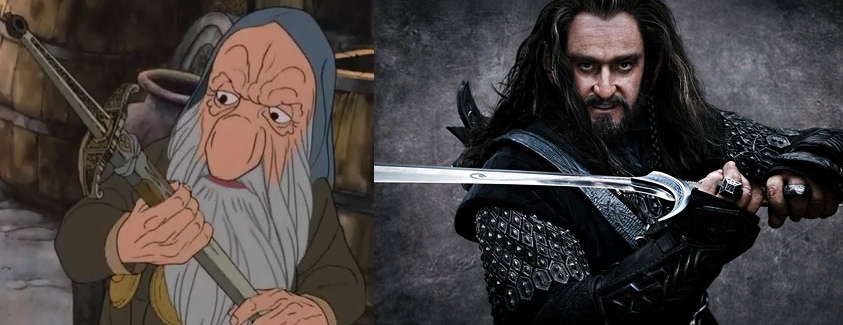
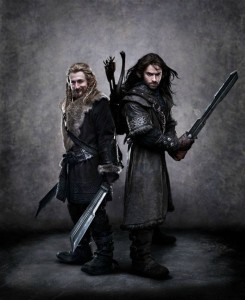 Which brings us to Kili and Fili.
  In the meantime, the phrase “Hot Dwarves” has spread across the globe since my story was first published.
 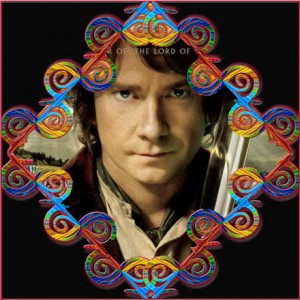 ‘The Hobbit: An Unexpected Journey‘ is a fulfilling and entertaining adventure that is sure to please most Middle-earth enthusiasts. Filled with direct book-to-screen moments and some unique new additions, the film stands as a strong first installment of a three-year adventure. If you think of it as a fine art masterpiece in a beautiful museum, it can sit proudly next to its LOTR siblings. Well, sorta. You see, someone chose an overly busy frame with bright colors and fancy patterns that distracts from the essential content. Luckily, in your experience, you can easily swap out the frame.
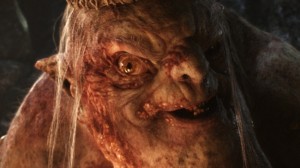 That theme permeates the film. The ‘bad guys’ are not quite horrible monstrosities that cause death and destruction but instead are similar to villains in an episode of the A-Team. You know, where no matter how many times they shoot at our heroes, they never actually hit their mark. It ultimately makes for exciting confrontations, but no real concern the heroes will meet their doom. Some who are not familiar with the childish nature of The Hobbit might find this a bit odd when they compare the drama to the LOTR films.
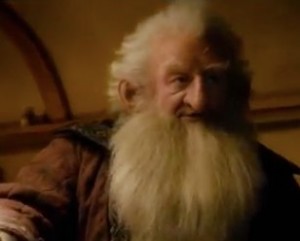 The dwarves were always a bit of a concern for me because I thought we’d be spending a lot of time getting to know each and dealing with lot of childish humor. This is not the case. They do all get introductions and each has their own distinct and unique contribution to the film. There is of course some ‘potty’ humor, but nothing that is overdone or inconsistent. Ken Stott as Balin delivers a stand-out performance — one that does not go unnoticed and puts him on par with the other key players.
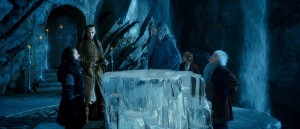 In the movie it’s not nearly so simple. You see, apparently the Elves in Rivendell have painstakingly built a ledge on a massive cliff-face complete with a special moon-table. To read moon-letters, you must gather around this table and place the suspected moon-letter document on the table. The table then glows with moon-light and reveals what is on it. I can’t imagine this ledge gets much use — typical of the wealthy elves to be so wasteful with space and function. Heh — yeah, I had a bit of a chuckle at that point.
 In fact, I was very excited to see this new technology and experience the ‘future of film.’ I was ready for it! Even with the uproar from those crusty cinema owners last year, I figured that was a bunch of old fogeys who simply didn’t want to update their equipment. I was fully expecting to be blown away and fall in love with this next evolution in film. I felt this way right up until the opening scenes of the movie. Then it happened…
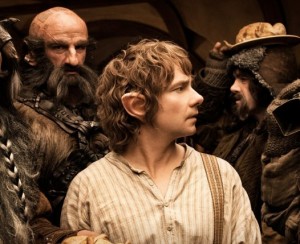 Bilbo Baggins (masterfully portrayed by Martin Freeman in a performance that will be lost amidst the eye-popping action sequences), as many readers will know, relishes his comfortable life in the cinematically familiar Bag End. He is interrupted by a gaggle of dwarves and a meddlesome wizard who for reasons he cannot himself explain, thinks Bilbo needs to travel with the dwarves.
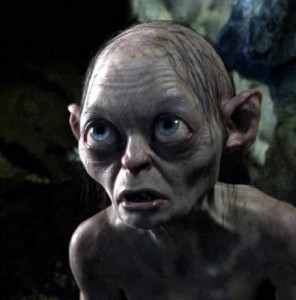 Andy Serkis returns to work his performance-capture magic as Gollum, and Jackson and his actors reach the peak of performance and technical … well … wizardry in a scene that is the film’s best. Despite being dialog-heavy, it is cinematic magic.
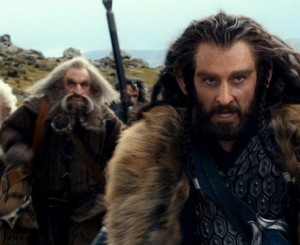 What’s more, any discussion about the need for three films or the making the decision to do so based on anything but storytelling merits couldn’t be more incinerated if Smaug himself engulfed the conversation in dragon’s fire. The case for three films is settled.