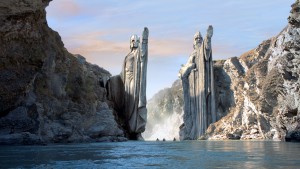
This is a very cool, very interesting Middle-earth history lesson wrapped into a list of its seven greatest architectural wonders. I find myself hard-pressed to disagree with any of the author’s choices. The ancient Dwarven cities of Nogrod and Belegost — and even Erebor — paled in comparison to Khazad-dûm’s lost glory.
Perhaps, at its peak, Osgiliath’s grandeur might have outstripped that of Minas Anor, but it lacked Minas Anor’s mountainous, physics-defying scale. The strange Pukel Men of Dunharrow might offer another option. And what of Thangorodrim and Angband, Morgoth’s fortresses from the First age and earlier? Would they have been mightier than Barad-dûr?
Anyway, have a read and add your thoughts in the comments. I’d encourage you to follow the links and read the full (and very extensive) entries on each wonder!
If you have a Tolkien/Middle-earth inspired poem you’d like to share, then send it to poetry@theonering.net. One poem per person may be submitted each month. Please make sure to proofread your work before sending it in. TheOneRing.net is not responsible for poems posting with spelling or grammatical errors.
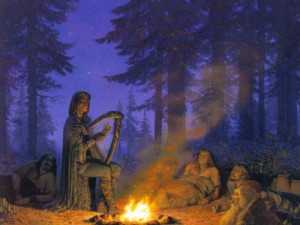
Finrod Felagund and the people of Bëor; art by Ted Nasmith. In this new TORn Library feature, Dr Timothy Furnish explores a lesser-known, but important, philosophical treatise from The History of Middle-earth and speculates whether J.R.R. Tolkien may have doing more than “merely” evoking Christian myth.
If you have a Tolkien/Middle-earth inspired poem you’d like to share, then send it to poetry@theonering.net. One poem per person may be submitted each month. Please make sure to proofread your work before sending it in. TheOneRing.net is not responsible for poems posting with spelling or grammatical errors.
The Reading Room on the TORn messageboards has in the last couple of days kicked-off their second TORn Amateur Symposium (affectionately known as TAS).
The first TORn Amateur Symposium earlier this year published 13 essays on a variety of topics, and the second edition of TAS features nine more of which four have been published thus far, with the remainder to debut over the coming week or so.
These essays may be philosophic opinions, scientific theories, or analytical approaches to understanding or highlighting some facet of Tolkien’s writings and world. These pieces are written with the goal of amateur scholarship at their core — thus inspiring our Symposium title. Authors may choose to include citations or footnotes, but they are by no means required. Keeping in mind the dual spirit of enjoyment and inquiry that we believe in (as much as we value cheer and song), and which is of paramount important to both the TAS team and our authors, we fully encourage discussion of the essays presented.
We hope you enjoy it as much as we enjoy posting it. The TAS is open for discussion, and any comments, questions or thought you wish to share about this essay can be posted in this response to this thread.
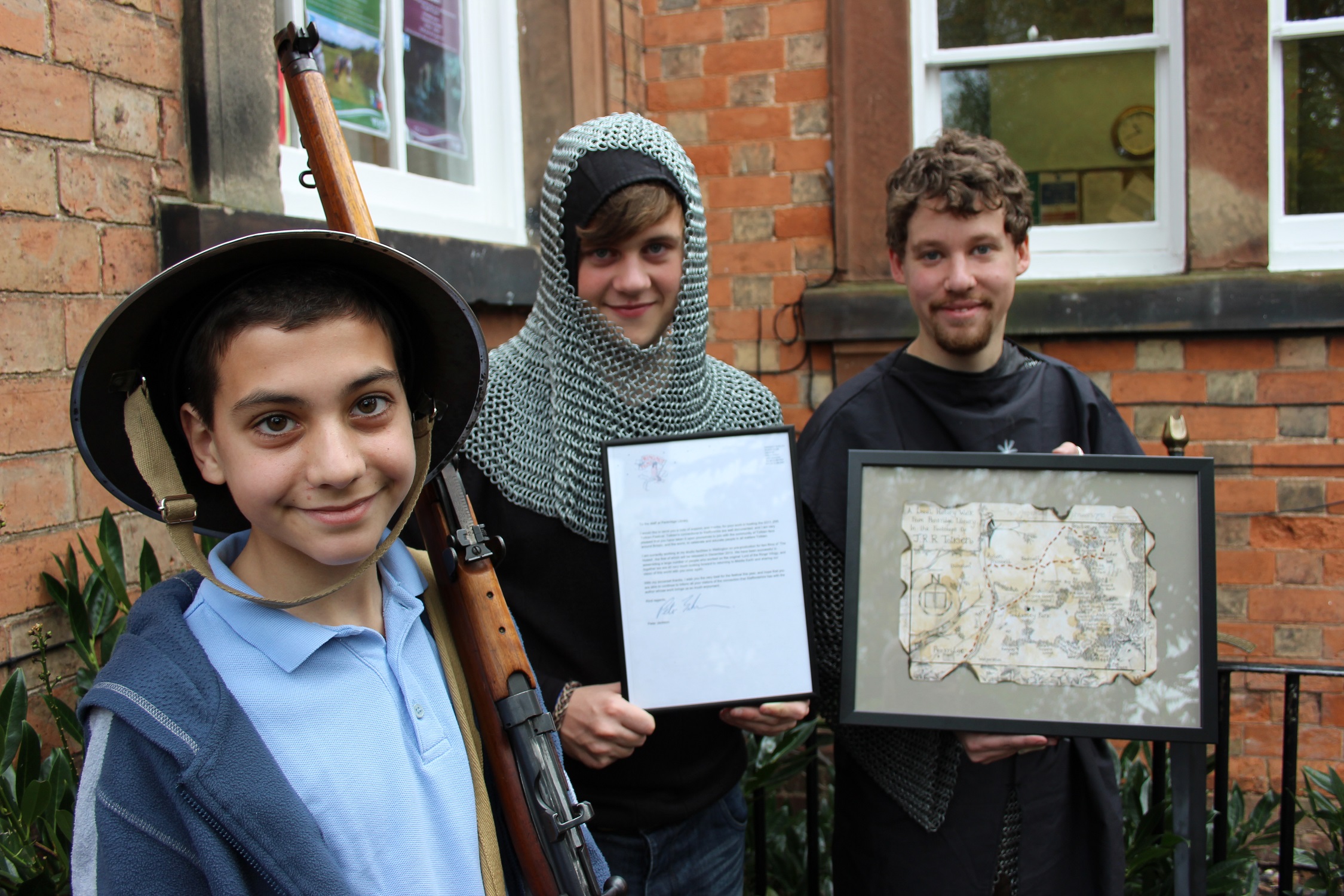
For a time in 1918, a cottage at Gypsy Green on the Teddesley Park Estate was home to J.R.R. Tolkien and his family, when the young officer was posted in Staffordshire. Now, nearly 100 years later, a local library is celebrating the area’s ties to the renowned author.
Hobbit Festival Family Fun Day will be held this Saturday, November 16, 2013 in Penkridge, Staffordshire, UK from 10 A.M. until 4 P.M at Penkridge Library. Admission for the event is free, along with many fun activities. Only face painting will cost a small charge. Continue reading “Celebrate ‘Hobbit Festival Family Fun Day’ in the (Stafford) Shire!”
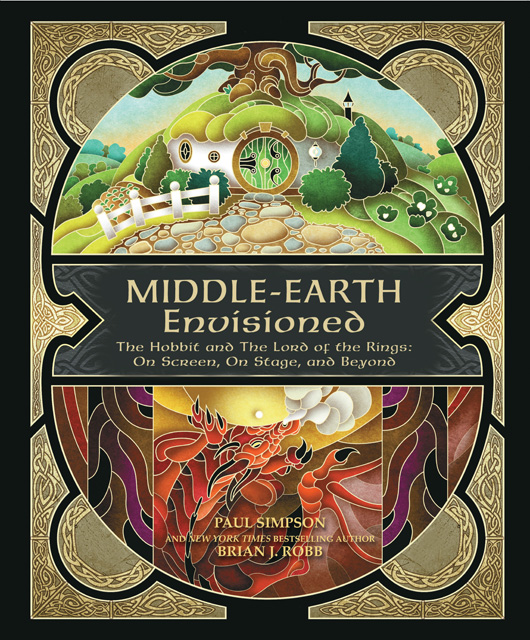
Middle-earth Envisioned by Brian J Robb and Paul Simpson. Over the decades, lots and lots of people have tried their hand at envisioning Middle-earth — in artwork, stage plays, musicals, television adaptations, comics, games, fan-art and, of course, animated and live action film.
Middle-earth Envisioned is a new, illustrated book From New York Times bestselling author Brian J. Robb and Paul Simpson, TV guide writer/reporter and the former editor of the Star Trek magazine, that comprehensively documents these portrayals of Middle-earth.
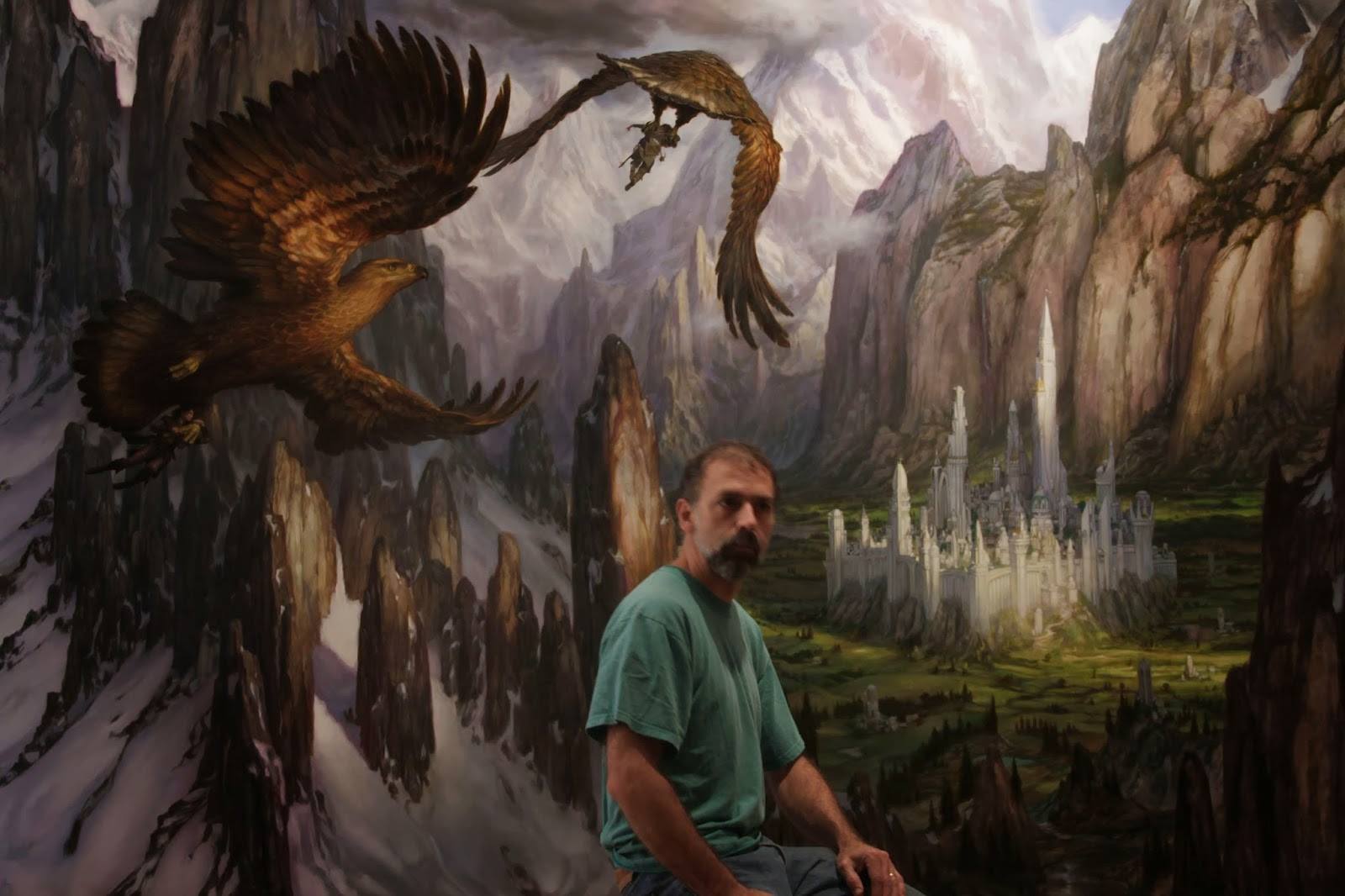
TORn’s good friend and artist extraordinaire Donato Giancola, who was part of TORn’s art show in Los Angeles last February, has recently completed a new masterpiece: a commissioned painting showing a scene from The Silmarillion, when Huor and his brother Hurin are rescued by eagles. The work is huge – roughly 9 foot by 6 foot! – and perfectly showcases Giancola’s skill in capturing landscape and living beings alike. (The image of Donato himself sitting in front of the painting gives you an idea of the scale of the piece!) The majestic scenery is breathtaking, with beautiful play of light and shadow over the mountains and the valley floor. The patches of glimmering snow on the peaks in the foreground of the picture are mirrored in the white towers of Gondolin,which gleam ‘like … spike[s] of pearl and silver’.
You can read about Giancola’s inspiration for his work – from artists in the Hudson River School of landscape painters, for example – at his website, here. You can also see more of his incredible Tolkien paintings in his book, Middle-earth: Visions of a Modern Myth. Tolkien isn’t the only writer who inspires Giancola; readers who are fans of George R R Martin’s Song of Ice and Fire can look forward to a calendar in 2014, for which Giancola will create 12 new paintings inspired by that world.
Meanwhile, enjoy Huor and Hurin Approaching Gondolin.


 This is a very cool, very interesting Middle-earth history lesson wrapped into a list of its seven greatest architectural wonders. I find myself hard-pressed to disagree with any of the author’s choices. The ancient Dwarven cities of Nogrod and Belegost — and even Erebor — paled in comparison to Khazad-dûm’s lost glory.