Our friends at La Sociedad Tolkien Española (STE) have informed us that they are now taking submissions for their 12 annual Ælfwine Awards contest. Held every year to further the study of the works and life of J.R.R. Tolkien, the contest is open to anyone who has an interest in writing about Tolkien and/or his writings, from amateurs to professionals. Essays may be submitted in either Spanish or English and are due no later than October 1, 2016 to the following email address: premiosaelfwine@sociedadtolkien.org
The winning essays will be published on their website in November, 2016. First prize includes 120 Euros and a year’s free membership in the Spanish Tolkien Society. Second prize is a year’s free membership in their Tolkien Society. Keep reading for the complete rules.
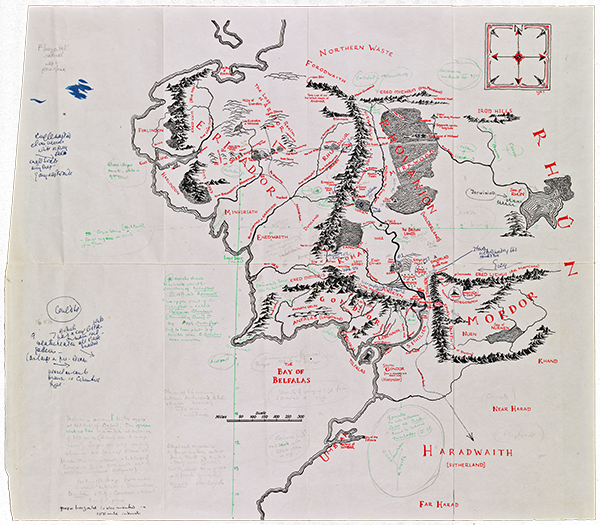
The Bodleian Libraries, home to the largest collection of Tolkien manuscripts and drawings in the world, has acquired a recently discovered map of Middle-earth annotated by J.R.R. Tolkien and artist Pauline Baynes during her early preparations to produce a poster map of Middle-earth that was later published in 1970. The fold-out map was pulled from one of Baynes’ copies of The Lord of the Rings. In order to help her represent Middle-earth as accurately as possible, Tolkien made notes on the map (those in green ink and pencil) regarding the climate of various areas, often equating them to real places in England and Europe, in order to give Baynes an accurate idea of the area’s flora and fauna.
The map was kept by Baynes, who passed away in 2008. It resurfaced in 2015 and was acquired by the Libraries. According to the Libraries:
“The annotated map went unseen for decades until October 2015 when Blackwell’s Rare Books in Oxford put the map on display and offered it for sale. The purchase of the map was funded with assistance from the Victoria & Albert Purchase Grant Fund and the Friends of the Bodleian.
This working document reveals that the creatures which enliven the final poster map – wolves, horses, cattle, elephants and camels – were all suggested by Tolkien and that Baynes drew the animals in the exact locations he specified. ‘Elephants appear in the Great battle outside Minas Tirith (as they did in Italy under Pyrrhus) but they would be in place in the blank squares of Harad – also Camels,’ wrote Tolkien.”
The Bodleian Libraries hopes to put the map on display to the public in the near future – a great reason to plan a special trip! In the meantime, read the fascinating full article here.
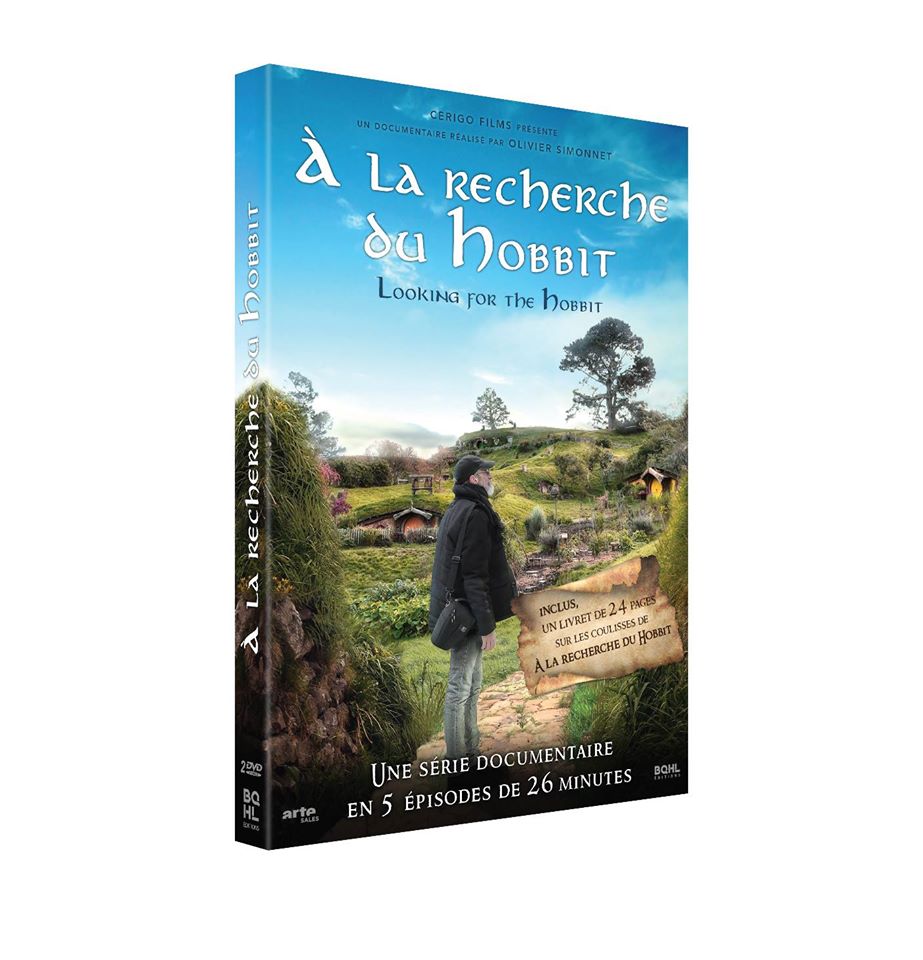
While Tolkien was a British writer, his readership and influence extend far beyond the English language. Middle-earth transcends both time and culture as we have seen again and again when having the pleasure to meet fellow fans from around the globe through both TheOneRing and Happy Hobbit. That said, sometimes it takes a little longer for Tolkien events and/or specials in other languages and countries to reach our ears. Fortunately for you, dear reader, famed Tolkien artist and scholar John Howe sent a message our way via thrush to let us know about a delightful Franco-English documentary he narrated in 2015 about the source material for Tolkien’s The Hobbit titled A la Recherche du Hobbit (Looking for the Hobbit).
You can watch the first episode of five in English below:
If you’re confident enough to navigate the French website (all you have to do is click on the shopping cart icon!) you can purchase a region-free English version here, and the series is available in French on DVD and streaming here (along with a preview). You can also peruse several delightful behind the scenes photos on their Facebook page.
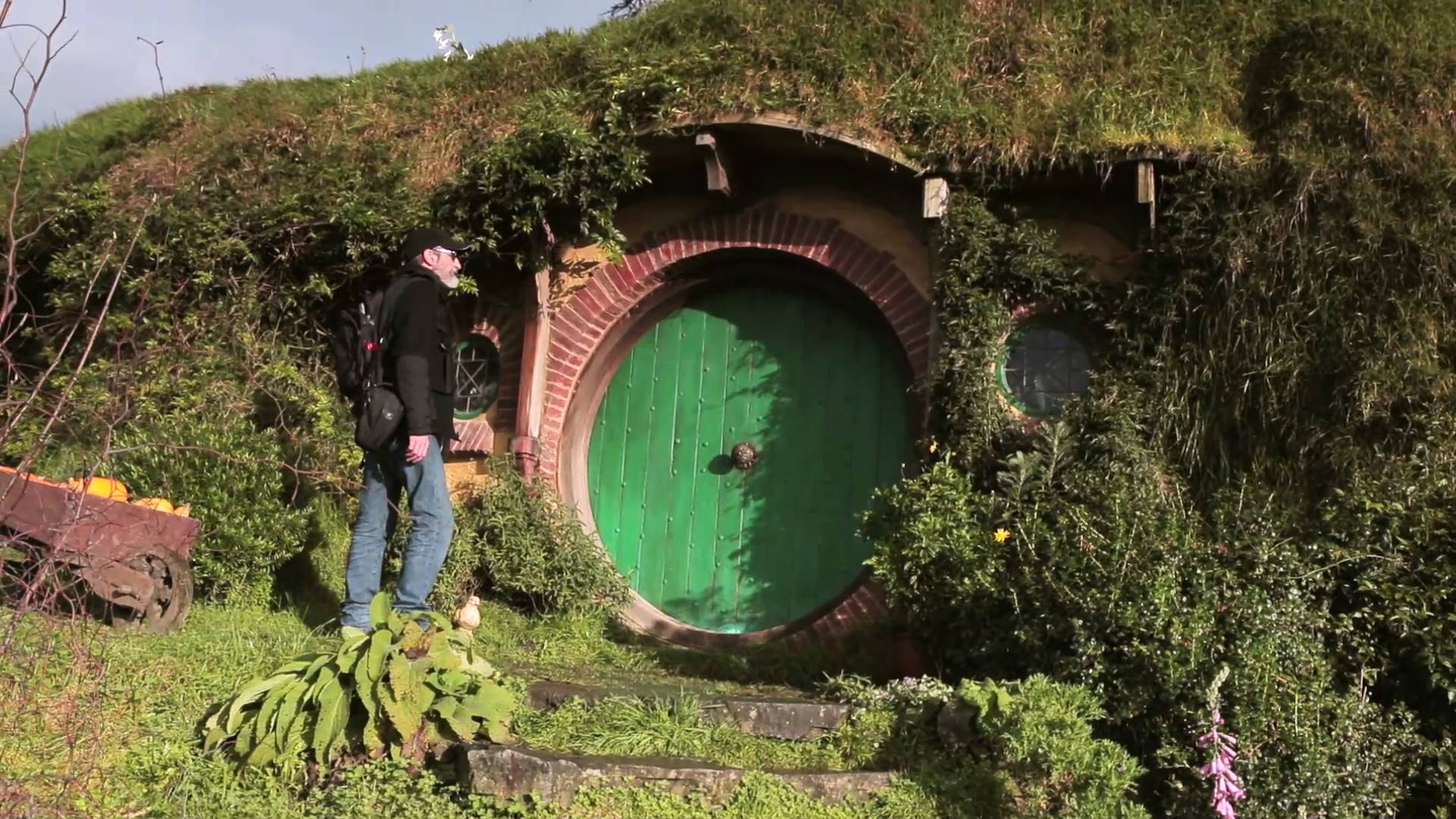
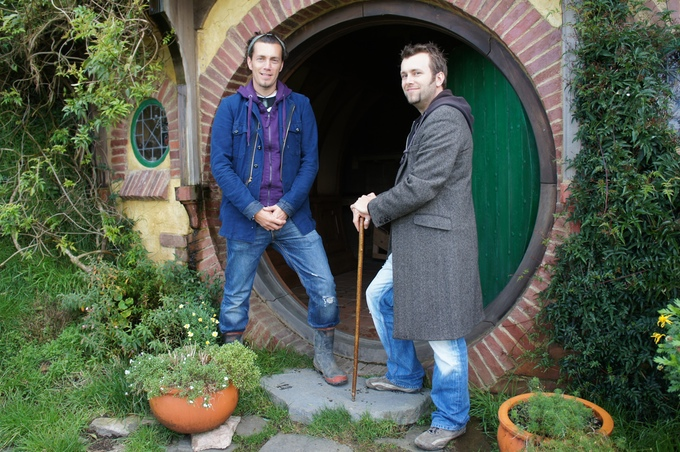
John Howe at Hobbiton in Matamata, NZ.
What’s more, John Howe has taken the time to provide us with his thoughts on why, even after all this time, he was excited to contribute to yet another exploration of Tolkien.
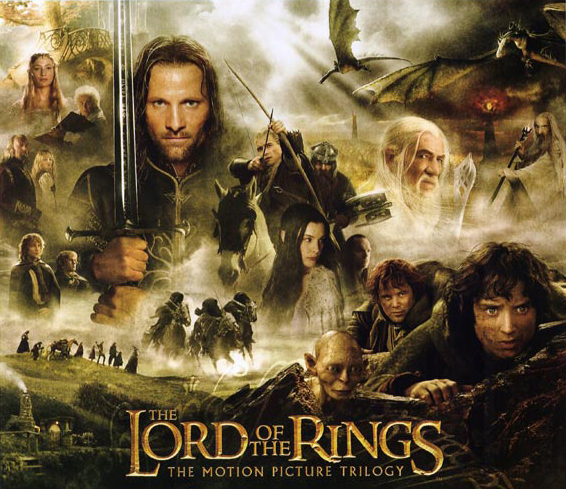
With the sixth season of The HBO series Game of Thrones just around the corner, are comparisons between it and The Lord of the Rings inevitable? The Irish Times seems to think so. In this provocative article, author Ed Power explores the irresistible urge of some fans to rank them against each other.
“Central to the whispering campaign against Tolkien is the idea that he peddled a reductive world view. While George RR Martin’s A Song Of Ice And Fire sequence is regarded as mature, complex and reflective of real human life, Lord of The Rings is felt to be fusty, puritanical and cheesily moralistic. Nobody in Game of Thrones is truly good or bad”
The Lord of the Rings is cheesy and puritanical? Oh dear. Of course, devoted fans of J.R.R. Tolkien would never describe it that way, but devoted fans of George R.R. Martin (who haven’t read LOTR?) might – and some apparently do. Can Jaime Lannister hold a candle to Aragorn, or vice versa? Are Gollum, Eowyn or John Snow one-dimensional?
As a devoted fan of both (yes, it’s quite possible), I personally think that the difference between the two is a good thing. Both approaches can be enormously entertaining, cringe-worthy at times, yet pierce the heart with both beauty and tragedy. What about you? Do you have a preference or do you enjoy both? Read the full article, and let us know!
It’s been almost a year since The One Last Party, but we haven’t forgotten it, and we didn’t want Peter Jackson to think we’d forgotten about him either. As you may remember, one of the promises we made on the Indiegogo campaign was that we would send Peter a “thank you” card. To be exact, we said, “Your name will go on an EPIC ‘thank you’ card we will present or send to Peter Jackson, from fans everywhere, to express our appreciation for the immense effort he and his cast and crew have put into the epic journey of The Lord of the Rings and The Hobbit films.”
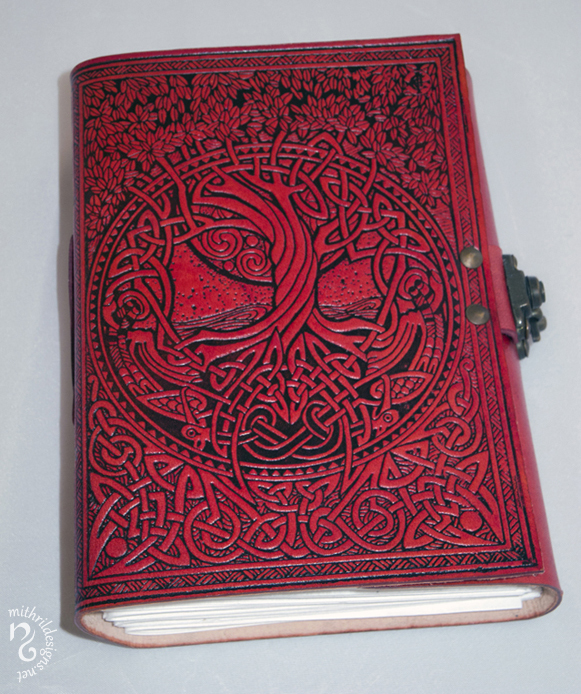
After the campaign ended, the TORn staff began brainstorming how to get all the names on one card – there were a lot of them! We decided to create a keepsake ‘Red Book’ for Peter. TORn staffer and designer, Mithril (Nancy Steinman), found a gorgeous leather journal and then designed and illustrated the interior pages and bound them into the book. Out of the 194 pages of the journal, 180 of them were the list of names!
Peter now has his journal, but we thought all of you deserved something to remember that fantastic night, too (besides your gift bags), so Mithril reached out with some questions to one of the party planners who was absolutely instrumental in making the party happen. Following is the interview with TORn Senior Staffer greendragon, and scroll down to see some photos of the journal and the party.
As we first reported here in December, after J.R.R. Tolkien’s great grandson Mike lost his battle to Motor Neuron Disease (MDS) almost one year ago, his older brother Royd took up the challenge to complete the bucket list of 50 items his younger brother left to him. A related article by the U.K. Independent paints a rich backstory of two brothers who seemed worlds apart, yet who came together in mutual support at the most difficult of times.


 Our friends at La Sociedad Tolkien Española (STE) have informed us that they are now taking submissions for their 12 annual Ælfwine Awards contest. Held every year to further the study of the works and life of J.R.R. Tolkien, the contest is open to anyone who has an interest in writing about Tolkien and/or his writings, from amateurs to professionals. Essays may be submitted in either Spanish or English and are due no later than October 1, 2016 to the following email address: premiosaelfwine