2012 will be a watermark year for the movie business but this week looks a lot like the 1990s and presented some problems for TheOneRing.net’s Film Friday. I didn’t want to watch “Titanic,” or “American Reunion,” which are likely this week’s biggest new releases. In each case, I feel like I have been there before.
I have been much more interested this week in a discussion with some Facebook friends about which films will rule the 2012 box office numbers. “The Hunger Games,” is proving to be a powerful financial force. Some of these friends are fans of “The Hobbit,” but don’t think the film can win the finally tally for the year’s biggest moneymaker. I disagree. (Oh and while we are talking about the film, any media member who writes that it is a prequel is lazy, inaccurate and deserves a gentle kick in the shins. The story stands alone, came first and is so much more than just a lead-up to LOTR.)
While studios care deeply about the financial returns, fans are a lot more interested in art and a thrill at the movies. Still, there is some fun in watching the box office derby and it seems like a dozen websites have sprung up devoted to doing just that.
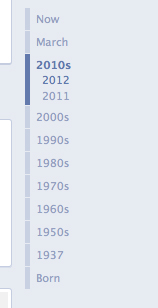
One of our Facebook friends has developed a fantastic new use for the timeline feature of the site. New TheOneRing.net contributor Irfon put together a broad outline of many of the works of Middle-earth. In his own words: In 1937, The Hobbit was published, which introduced us to Middle-earth. Since then there’s been many books, films, games etc. set in Middle-earth. In this page we take you on an journey which takes us as far back as 1892 in the History of Middle-earth.
You can like the new Faceook page to see how it works and view many of the interpretations of Middle-earth in things like games. It may also spark a lot of creative possibilities for a way to put lives, history and works into an interactive timeline. Thanks Irfon!
Join TheOneRing and the Tolkien Society, who started the event, by celebrating Tolkien Reading Day! Held annually since 2003, it is meant to encourage reading and is a great day to dust off a copy of one of J.R.R. Tolkien’s many works and dig in. (It also marks the downfall of Barad-dûr and the passing of Sauron, but that happened long before 2003.) Many schools mark the day with an in-class read, but since this year it falls on a Sunday, parents will be in charge of helping children celebrate but reading to pets, the infirm or yourself is also more than acceptable. Enjoy!
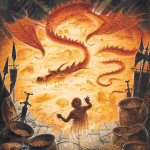
Bilbo and SmaugDenmark is hosting a Tolkien event, a reading from The Hobbit no less, approved by royalty. While we really wish we were in the neighborhood, it might be a little distant for our staff to drop in. However, for readers in Europe, this sounds pretty great! The info we received:
“The royal Danish Court has approved of Bri – The Tolkien Society of Copenhagen doing a reading from the Hobbit at the art museum Arken for this year’s Reading Day, by the LotR-inspired art of Queen Margrethe II of Denmark. We hope to see as many interested and inspired people as possible there, in your finest get-ups. We can’t wait to meet you!
The event will be marts 25, 13.00-15.00.
Skovvej 100
2635 Ishøj
Denmark”
Further info can be found here and here.
Join us LIVE at 5pm Pacific Standard Time tonight as we welcome the lovely and talented Simone Boyce (host of our very own “HOBBIT In 5” podcast and for Game of Thrones fans on Winteriscoming.net)! Simone will rap with TORn TUESDAY host Clifford Broadway, aka Quickbeam, and you can also join the fun live! We will be discussing the pros & cons of 3D fantasy movies and how Peter Jackson is bringing THE HOBBIT production into its final months of principal photography. Today’s live webcast launches at 5:00pm PST — There’s a built-in Barliman’s chat room or come in via Skype in TheOneRing.net’s Stickam page. Check out the broadcast in our LIVE Event section right here every week! [LIVE Event Area] (See All Times)
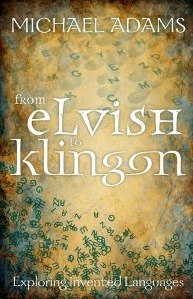
Back in 2001, I wrote Glossopoeia for Fun and Profit (also reprinted in The People’s Guide to J.R.R. Tolkien), for our Green Books department, in which I discussed three examples of invented languages: Esperanto, Elvish, and Klingon. For those who found that necessarily brief article of interest, University of Indiana linguistics professor Michael Adams has now edited a new book, From Elvish to Klingon: Exploring Invented Languages (Oxford University Press, 2011), comprising eight essays (including his a general introductory essay by Adams) about linguistic invention, though not precisely the “invented languages” suggested by the book’s title, as we will see. Each essay is accompanied by an appendix by Adams that extends or clarifies some aspect of the essay.
Adams’s introductory chapter deals with the spectrum of linguistic invention, and considers the motivations for such inventions. He considers whether invented languages are an attempt to re-create “the language of Adam”, i.e., a perfected language as spoken by Adam before the fall (it appears that Adams takes the Biblical texts quite literally here), and considers slang and poetry as examples of human linguistic creativity; Adams is the author of Slang: The People’s Poetry(Oxford Press, 2009).


 2012 will be a watermark year for the movie business but this week looks a lot like the 1990s and presented some problems for TheOneRing.net’s Film Friday. I didn’t want to watch “Titanic,” or “American Reunion,” which are likely this week’s biggest new releases. In each case, I feel like I have been there before.