In case you’re unaware of it, the folks of the Reading Room on the TORn messageboards (that’s the sub-forum devoted to discussion of Tolkien’s literary works) are currently calling for papers for their second TORn Amateur Symposium (also known as TAS2).
The first TORn Amateur Symposium earlier this year published 13 essays on topics as varied as The Physics of The Hobbit, The Corrupting Nature of The One Ring and How many fought at the Battle of the Five Armies.
J.R.R. Tolkien, one of the world’s most celebrated fantasy writers, was inspired by time spent on the bloodsoaked battlefield. John Garth, author of Tolkien and the Great War reports.
If you have a Tolkien/Middle-earth inspired poem you’d like to share, then send it to poetry@theonering.net. One poem per person may be submitted each month. Please make sure to proofread your work before sending it in. TheOneRing.net is not responsible for poems posting with spelling or grammatical errors.
Earendil and Elwing by Jenny Dolfen. In this new TORn Library piece, Gibbelins writes about the deep, yet extraordinarily subtle faith underlying Tolkien’s legendarium, and why it works for readers of all faiths — even those who profess to no faith at all. Continue reading “Why Tolkien works for readers of all faiths”
If you have a Tolkien/Middle-earth inspired poem you’d like to share, then send it to poetry@theonering.net. One poem per person may be submitted each month. Please make sure to proofread your work before sending it in. TheOneRing.net is not responsible for poems posting with spelling or grammatical errors.
Anyone who’s read both The Silmarillion and The Hobbit will have noted the strong similarities between the Elvenking of Mirkwood and Thingol Greycloak. In this article, Tolkien scholar Michael Martinez examines whether, at the time Tolkien was writing The Hobbit, the Elvenking was intended to be Thingol himself.
John Rateliff addressed this question in The History of The Hobbit without really closing the issue, although he favors the view (based on the available evidence) that the Elvenking of The Hobbit (whom we learn is named Thranduil in The Lord of the Rings) is NOT to be equated with King Thingol in The Silmarillion. Continue reading “Was the Elvenking of The Hobbit supposed to be Thingol?”
What do Game of Thrones’ Dothraki, Avatar’s Na’vi, Star Trek’s Klingon and LOTR’s Elvish have in common? They are all fantasy constructed languages, or conlangs.
Conlangs have all the delicious complexities of real languages: a high volume of words, grammar rules, and room for messiness and evolution. In this TED Talk, John McWhorter explains why these invented languages captivate fans long past the rolling credits. Continue reading “Are Elvish, Klingon, Dothraki and Na’vi real languages?”
In this new TORn Library piece, our newest feature writer Gibbelins examines the difference between skill and knowledge and whether the former has an unjustly sullied reputation in Middle-earth as a result of the rash and self-seeking acts of craftsmen such as Saruman and Fëanor.
Two paths of Wisdom
by Gibbelins
The concepts I wish to discuss are best expressed with the Quenya roots ‘curu-‘ and ‘nolo-‘, but I will try not to subject you to the Elvish for the entire essay. Both of these roots have at times been translated as ‘wisdom’, and yet they represent different sides of wisdom and different inclinations. I’ll use the English glosses ‘skill’ and ‘knowledge’ as reasonable approximations. The contrast between the two ideas is, I think, fundamental to Tolkien’s understanding of how to live righteously. Continue reading “On Tolkien’s two paths of wisdom”
If you have a Tolkien/Middle-earth inspired poem you’d like to share, then send it to poetry@theonering.net. One poem per person may be submitted each month. Please make sure to proofread your work before sending it in. TheOneRing.net is not responsible for poems posting with spelling or grammatical errors.


 In case you’re unaware of it, the folks of the Reading Room on the TORn messageboards (that’s the sub-forum devoted to discussion of Tolkien’s literary works) are currently calling for papers for their second TORn Amateur Symposium (also known as TAS2).
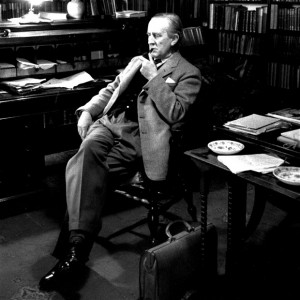 J.R.R. Tolkien, one of the world’s most celebrated fantasy writers, was inspired by time spent on the bloodsoaked battlefield. John Garth, author of Tolkien and the Great War reports.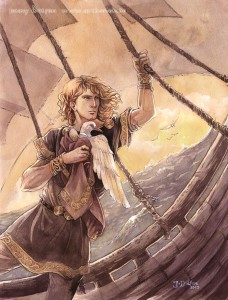
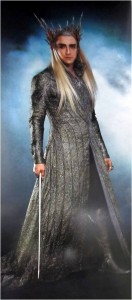 Anyone who’s read both The Silmarillion and The Hobbit will have noted the strong similarities between the Elvenking of Mirkwood and Thingol Greycloak. In this article, Tolkien scholar Michael Martinez examines whether, at the time Tolkien was writing The Hobbit, the Elvenking was intended to be Thingol himself.
 What do Game of Thrones’ Dothraki, Avatar’s Na’vi, Star Trek’s Klingon and LOTR’s Elvish have in common? They are all fantasy constructed languages, or conlangs.
 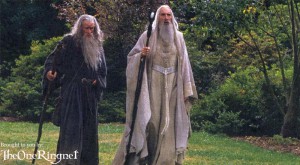 In this new TORn Library piece, our newest feature writer Gibbelins examines the difference between skill and knowledge and whether the former has an unjustly sullied reputation in Middle-earth as a result of the rash and self-seeking acts of craftsmen such as Saruman and Fëanor.