

 Ataahua writes: I just checked out the latest issue of Locus magazine, and ‘The Children of Hurin’ has now been in the top-ten list of hardback sales for the fifth month in a row, take a look at the list here.
Category: Tolkien

NEW YORK — Harry vs. Frodo. Lucy vs. Lyra. We don’t normally think of classic fantasy series as being pit against one another, because despite their differences, they have so much in common. Most of them are about little people (be they children or Hobbits) caught up in a war of good versus evil that requires a singular sacrifice to save the world, often with a bit of biblical allegory thrown in for good measure. But even if “Harry Potter,” “The Lord of the Rings,” “The Chronicles of Narnia” and “His Dark Materials” were all put on the same bookshelf, they’re not all friends, as “Materials” author Philip Pullman explained during his Times Talks appearance Tuesday. Continue reading “‘His Dark Materials’ Writer Philip Pullman Takes ‘Narnia,’ ‘Lord Of The Rings’ To Task”
 Sometimes, I just love being me…This week Houghton Mifflin sent me a surprise package which to my delight contained ‘The History of the Hobbit’ part 1 and 2 by John Rateliff. Each volume is available now, while the 3 book set (which included The Hobbit) is available for pre-order on Amazon.com today. Be sure to pick up your copy today!!
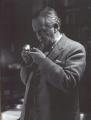 There is magic in the last line of The Lord of the Rings. To recap: the stolidly courageous Sam Gamgee, having watched his best friend, Frodo Baggins, sail towards the Grey Havens and into a kind of death, is left to walk back to the Shire where he finds his wife and children waiting with the promise of a quiet life far from the slaughter of the War of the Ring. J. R. R. Tolkien finishes with the sentence: “‘Well, I’m back,’ he said”. It is a touchingly understated conclusion which returns the prose to the homely simplicity of the inaugural chapters after the archaic epic mode of The Return of the King. However, as Diana Pavlac Glyer tells us in her scholarly and perceptive study The Company They Keep, this is not how Tolkien originally intended to finish his trilogy. He had in mind a further epilogue, set sixteen years after the events of the rest of the book, which would have provided another, superfluous glimpse into Gamgee’s domesticity. In this ultimately excised version, a grey-haired Sam reads stories of his adventures to his children, spinning them tales of wizards and orcs and walking trees. There is even the faint suggestion that Sam has been narrating the story of The Lord of the Rings itself, before, at last, we depart the Shire for good, leaving Sam and Rose in a state of connubial bliss, tale-telling by the fireside.
Ostadan writes: Parma Eldalamberon #17 is now available from the Elvish Linguistic Fellowship. This issue is a commentary by Tolkien from the late 1950s and early 1960s concerning the words and names from his invented languages incorporated into The Lord of the Rings. This includes not only the Elvish languages, but Dwarvish, Black Speech (including some analysis of the words in the ring inscription), and the language of Rohan. It has been edited and annotated by Christopher Gilson, with the permission and guidance of Christopher Tolkien and the Tolkien Estate. This 220-page journal is available for $35. [More]
Tolkien fans everywhere will soon be able to buy into a legend by subscribing to the public appeal to finance a sculpture celebrating the internationally acclaimed author and his Birmingham roots. From October 1st, courtesy of EBay, fans can bid for a metal leaf with a personalised dedication and associate themselves with this most famous of writers.
The iconic controversial 20 ft high “Ent” will be located on Birmingham’s Tolkien Trail close to where the author lived in Moseley Village, and between his childhood home of Sarehole, later immortalised as “Hobbiton” and the Edgbaston of his youth. The Ent, a benign and friendly tree-like being, is depicted striding across a carpet of metal leaves towards Moseley Bog, the inspiration for the “Old Forest” in “The Lord of the Rings.”
The sculptor is Tim Tolkien, grandson of JRR Tolkien’s younger brother, Hilary. Tim already has a track record in creating landmark public art like his spectacular `Sentinel’ sculpture on Spitfire Island in Castle Vale marking the area’s association with the WWII fighter plane.
The giant statue will be fabricated in recycled stainless steel with bronze and copper coatings. The individually wrought leaves will be embedded into a paving of resin bonded, crushed green glass at the base of the Ent. Tim will engrave each unique leaf with wording of the sponsor’s choosing.
There are a total of 400 silver coloured metal leaves, the first of which has been reserved by The Tolkien Society and some others sold to local patrons on a preferential basis. In addition there are 30 larger bronze leaves for corporate sponsors and private donors,
The Moseley Statue Group who finally obtained planning permission earlier this year has always envisaged an international dimension to the public appeal to raise the £80,000 needed to finance the sculpture. Tolkien is a worldwide phenomenon with readers, admirers and devotees in every corner of the globe.
For those familiar with the EBay worldwide marketplace, buying your leaf couldn’t be easier. Type ‘Ent Leaves’ into the search box, and you will be offered the opportunity to ‘Buy it Now’ on a strictly limited number of leaves. £500 will secure you a leaf, but if you are a risk-taker, you can make an offer – and take a leaf out of Tolkien’s book…