And then there were two… Middle-earth March Madness 2020 began just over two weeks ago, and here we are, arrived at the FINAL. We started out with 64 scenes from Peter Jackson’s Lord of the Rings and Hobbit movies, divided into four categories: Tearjerkers, Scenic, Laughter, and Drama/Action. Five rounds later, and just two scenes remain, to battle for the title of Grand Champion 2020.
Once again we had almost 5,500 people vote in the last round; if you missed last night’s live results show, you can watch it here. (Panelists on last night’s show also discussed what they would choose for their own personal top four scenes from PJ’s movies; see if your choices coincide with theirs!)
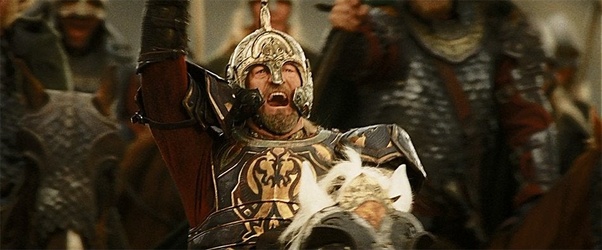
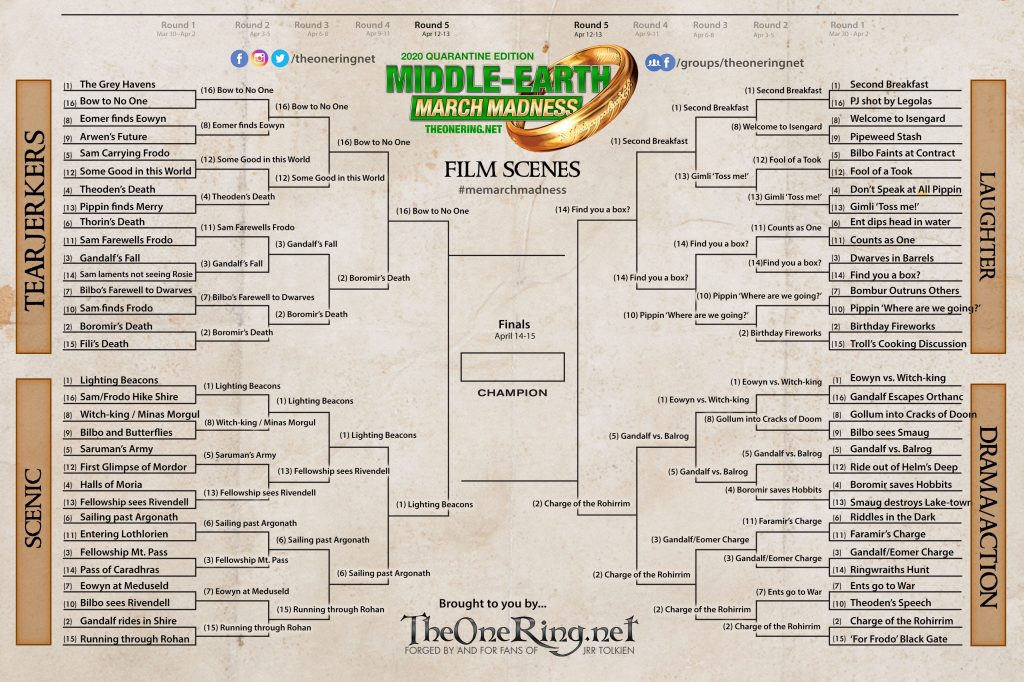
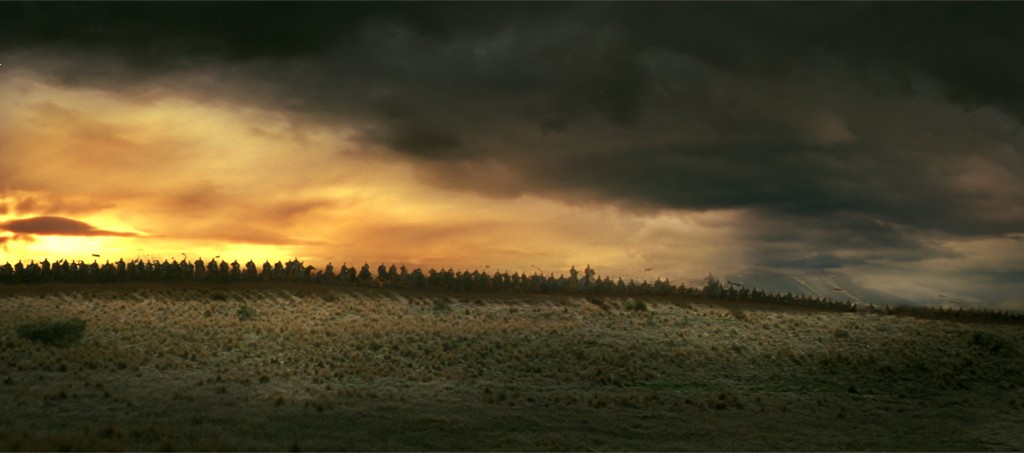
In Round Five, we saw the Laughter division winner take on the champion from the Drama/Action category: ‘Would you like me to find you a box?’ vs The Charge of the Rohirrim. Comedy, it turned out, was no match for an epic battle sequence; the Rohirrim took almost three quarters of the vote to secure their place in the final.
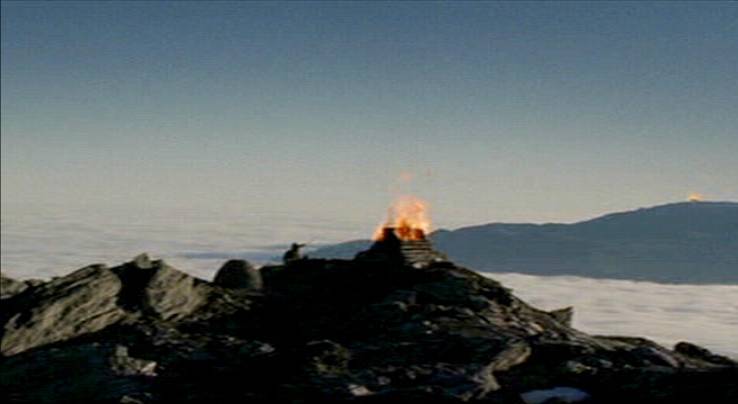
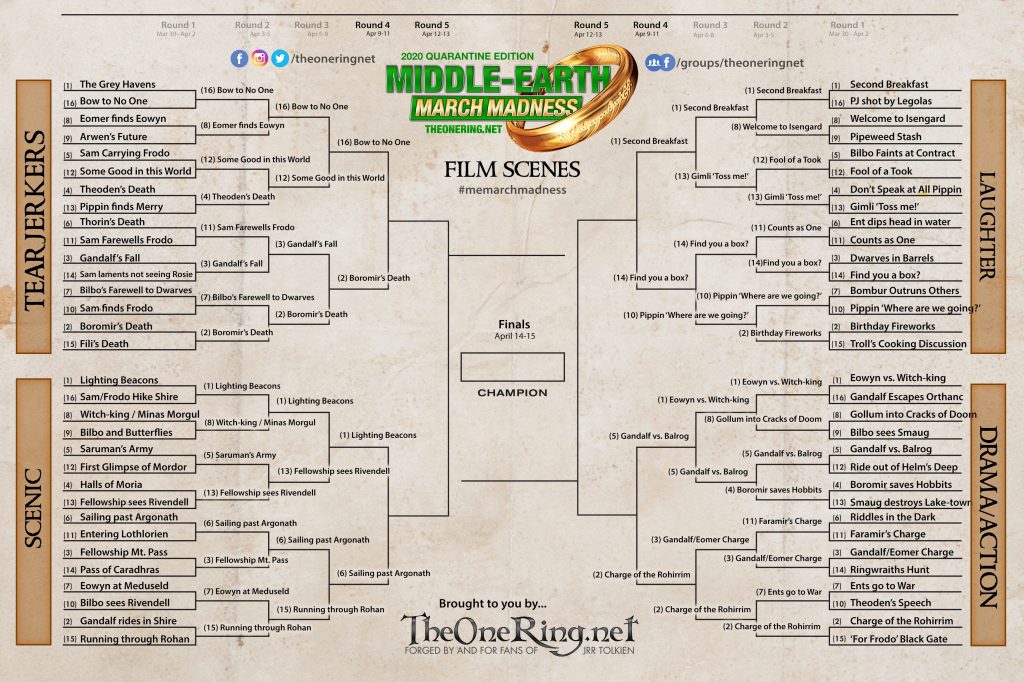
But Theoden shouldn’t be cheering too soon; the Rohirrim face a very tough opponent in the Final. The other Semi Final was between the Scenic and Tearjerker brackets, and this was a really closely fought contest. It went right down to the wire, with strong feelings on both sides; the final vote split was 51% to 49%! By this narrowest of margins, Lighting the Beacons defeated ‘You bow to no one’; so it is Gondor’s call for aid which goes through to this year’s final.
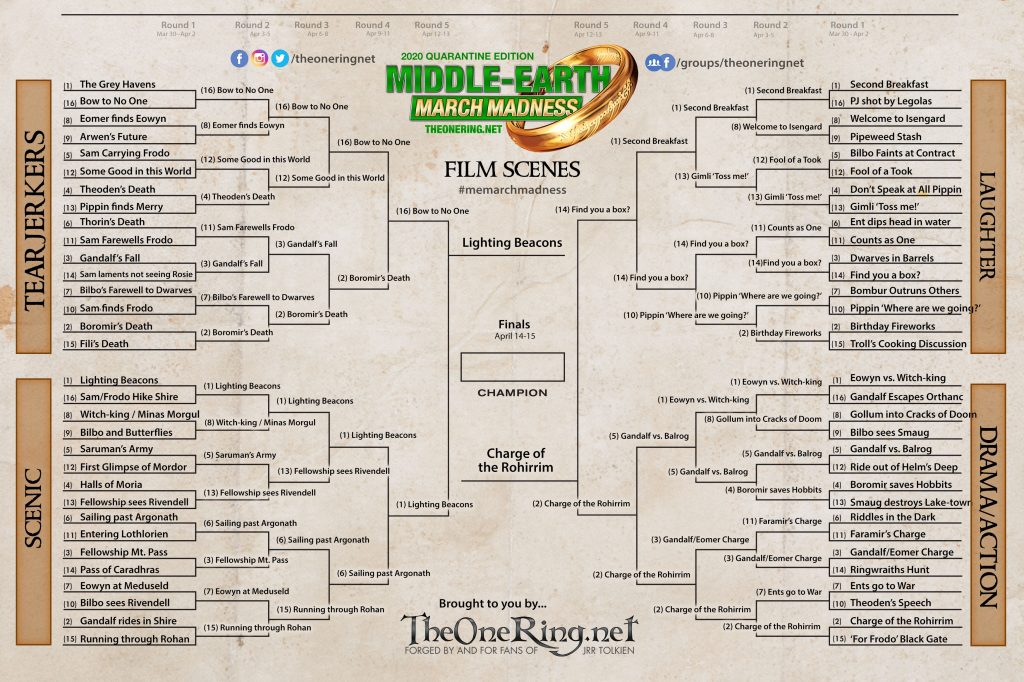
Here is the bracket as it currently stands:
Feelings are likely to run high for this face off. Which epic sequence gets YOUR vote? You have until 10pm TOMORROW night (Wednesday 15th) to make your voice heard, so don’t delay! We’re also still taking entries for our GIVEAWAY of an awesome Balrog statue, from our friends at Sideshow. Vote again, submit your details again, and be in with a second chance to win!
We’ll have our final LIVE RESULTS SHOW tomorrow night at 10pm ET; you can find that, as ever, on our facebook page. Hope to see you there; or check back here on Thursday morning to find out who is Middle-earth March Madness Grand Champion 2020. VOTE NOW!
THE BEACONS ARE LIT, and Gondor calls for aid – but the aid is needed for the ‘You bow to no one’ scene! We know that many of you want to see ‘You bow to no one’ go through to the Final of Middle-earth March Madness 2020. Right now, however, it’s being beaten by the Lighting the Beacons scene; but there is only 10% in it!
Muster the Rohirrim! (Whose charge, by the way, is currently easily beating the ‘Would you like me to find you a box?’ scene; but that could all change, if there is a final day surge in voting as there was in the previous round. No scene is safe!)
Rally the troops! Get your fellow fans to VOTE before 10pm ET TONIGHT!
And don’t forget, everyone who votes can enter to win an amazing Balrog statue, thanks to our good friends and sponsors Sideshow. So check out the Final Four scenes, make your choices, and vote! VOTE NOW!
Then tune in to our facebook page at 10pm ET tonight to watch our live results show!
It’s time for the Semi Final! The champions of each of our four brackets have been decided, and now just four entries remain in Middle-earth March Madness 2020. Which scene will go on to be our Grand Champion this year?
Thanks to everyone who voted in the Elite Eight round, and who tuned in to our Live Results show last night; strong feelings were shared on Facebook threads and in the chat room, and we had almost 5,500 votes placed! Let’s take a look at our bracket winners:
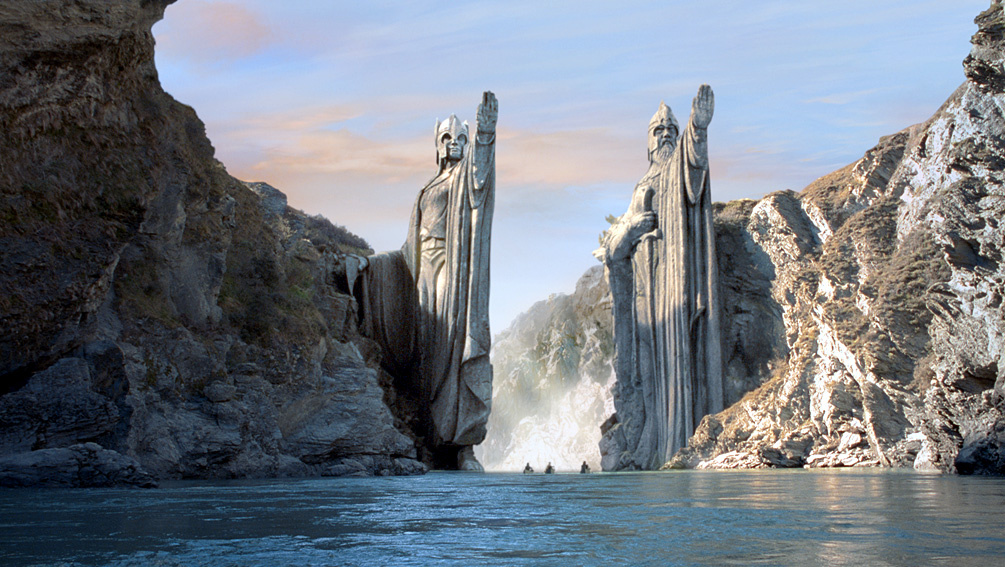
The easiest win this round was in the Scenic category, where in spite of many finding this to be a tough choice, the Lighting the Beacons scene took 69% of the vote against the Sailing past the Argonath scene. It’s hard to see the Kings of Old go out of the contest, but the beacons are continuing to look like a very strong contender for overall Champion.
The contest was only a tiny bit closer in the Drama/Action group, where Gandalf and the Balrog fell to the Charge of the Rohirrim. The wizard and his foe could only muster one third of the vote, so the horsemen charge on, into the Semi Final.
In the Tearjerker category, feelings not surprisingly ran high, and there was much discussion. Boromir’s death had many fans, who posted how this scene always makes them weep; but in the end, it was ‘You bow to no one’ which came out victorious, by a margin of 10%. Could the four humble hobbits at Minas Tirith be our future Grand Champion?
The closest battle was in the Laughter bracket, and I know many will be upset by this result: Pippin is out! His Second Breakfast, though it secured 48% of the vote, just could not overcome the Artoo and Threepio of Middle–earth; Gimli and Legolas’s ‘Would you like me to find you a box?’ scene goes on to the Semi Final.
So here’s how our Final Four pair up in the Semi Final:
‘Bow to no one’ vs Lighting the Beacons will surely be the closer of these two battles; how to choose between those two?! At the same time, how does one pick between a scene of humour and a sweeping, majestic battle scene? Tough calls indeed. But if you’re thinking, ‘I wish the decision had never come to me!’ and considering not voting in this round, let me urge you to reconsider… Because our good friends and sponsors Sideshow have given us an awesome prize to giveaway!
Every person who votes in the Semi Final will have the chance to enter to win a Balrog statue! He may not have made it to the Semi Final, but he could be making his way to your home; and he even comes complete with a mini Gandalf, so you can reenact their face-off to your heart’s content. Simply complete the voting survey and then, if you wish, fill in your details in the form at the end, and you’ll be in with a chance to win. And if you vote again in the Final, you can enter again! But let’s get through the Final Four first… Big thanks to Sideshow for such an amazing giveaway!
Don’t take too long over your choices; this round only goes until 10pm ET TOMORROW, Monday 13th April. Tune in to our facebook page at 10pm ET tomorrow night to watch our live results show! Which two scenes do you want to see facing off in the Final? YOU decide: VOTE NOW!
The Quarter Final of Middle-earth March Madness 2020 is now on; but it closes this evening! If you want your voice to be heard, don’t delay – vote now!
In the Elite Eight round, each of the four brackets has its final contest, before the victors go on to meet the winners of other categories. So there are four fights currently ongoing; two are very close, and two have fairly wide margins…
If you’re a lover of the Argonath, you should know that right now, the scene where the Fellowship sail past those mighty kings of old has only 30% against the Lighting of the Beacons scene. Likewise (and this one really surprises me!) the charge of the Rohirrim is currently trouncing Gandalf vs the Balrog, two thirds to one third. But a lot can change in a day! If you want to see the Argonath or Gandalf and the Balrog go through to the Semi Final, rally your troups and get them to VOTE!
Will it be Pippin or Gimli who comes out on top from the Laughter bracket? ‘Second Breakfast’ is in the lead just now, over ‘Would you like me to find you a box’ – but there are only 100 votes in it! The same margin stands between Boromir’s death and ‘You bow to no one’ – which of these two will turn the tide and sail on through to the Final Four?
A reminder of our Elite Eight pairings:
Tune in to our facebook page at 10pm ET TONIGHT to watch our live results show! But meanwhile, push for the result YOU want by sharing, tweeting, getting your friends involved, and voting!
Then come back here tomorrow morning to vote for the Final Four; and to find out about a very EXCITING GIVEAWAY we’ll be doing, for those who are joining in with March Madness this year! Love the Balrog? You’ll definitely want to stay tuned….
Thanks to all the thousands of folks who voted in Round Three of Middle-earth March Madness 2020; we’re now down to the Elite Eight, ie the Quarter Finals! Some of you were able to tune in for our LIVE results show last night; if you want to catch up, you can watch that show here. Let’s take a look at some of those results…
The choices are, for many voters, getting harder as the contest goes on; and that was shown in the outcomes, with most match ups being closely fought. The widest margin was in the Scenic bracket, with Lighting of the Beacons beating the Fellowship’s first glimpse of Rivendell by taking 79% of the vote. This isn’t as big a majority as it had in the previous round (87% against the Witch King and his army leaving Minas Morgul), but it’s still a pretty decisive win; and I’m still backing the Beacons to go all the way to be this year’s Champion! Its Quarter Final contest, however, is a VERY tough one: it goes up against the Fellowship sailing past the Argonath, which beat out Legolas, Aragorn and Gimli running through Rohan by 72% to 28%. Beacons vs Argonath; how to choose between those two epic scenes? Which one will get YOUR vote?
Only one of the other duels in Round Three had a resulting margin of more than 15%: in the Drama/Action category, where once again we had two charges facing off. The Charge of the Rohirrim (on Pelennor Fields) was able to overcome Gandalf and Eomer’s dawn charge at Helm’s Deep by almost 1,000 votes, or by 62% to 38%. It goes on to meet a demon from the ancient world in the Elite Eight, Gandalf’s fight with the Balrog in Moria having defeated Eowyn’s vanquishing of the Witch King. Our panel last night had a long discussion of the varied merits of these two scenes; most in the chat room agreed that Eowyn’s victory is more powerful in the book (where her identity is unknown right to the last moment), whilst many thought that the rendering of the Balrog in PJ’s movie actually enhances what we read in Tolkien’s work. Whatever your opinion, it was the fiery foe who won in Round Three; though there were fewer than 300 votes in it.
The closest pairing in the Sweet Sixteen round was found in the Tearjerkers group; I suspect some people may have had to toss a coin to decide this one! We are indeed all looking for ‘some good in this world’ right now; but nonetheless, ‘You bow to no one’ snuck through, with only just over 100 votes between those two amazing scenes. Boromir is still hanging in there; or rather, he’s not, but his death is! The mighty warrior’s death scene took 54% of the vote, and thus defeated the Fellowship’s reaction to Gandalf’s fall in Moria. So in the Elite Eight of Tearjerkers we have to choose between Aragorn being moved by his comrade’s death, and Aragorn being moved by four hobbits who changed Middle-earth. Will you need to toss that coin again…?
Talking of tossing things – the Laughter bracket continues to be Pippin vs Gimli. Pippin’s ‘What about second breakfast?’ was victorious over Gimli’s ‘Toss me!’, but to our panel’s (and my!) surprise, Legolas’s ‘Would you like me to find you a box?’, beat Pippin’s ‘Where are we going?’ There were only about 600 votes between the contestants in both these match ups; and so our final in this category is Pippin’s second breakfast vs Gimli’s box.
Here’s how the Elite Eight shapes up – the final duels within each of our four categories:
Get those votes in! Voting in the Elite Eight round will close at 10pm ET Saturday 11th April. Click here to go to the survey – open now! We’ll have another LIVE results show starting at 10pm ET on Saturday evening, which you’ll find on our facebook page. The Semi Final will then kick off with a post here on the morning of Sunday 12th April, when we’ll be down to the last four…
Are any of your favourites still in with a chance? Are these some of the toughest choices you’ve ever faced?! Join in the fun and let us know your thoughts!
Round Two is closed, with around 5,000 votes placed, and it’s almost time to launch the Sweet Sixteen round in Middle-earth March Madness 2020; but before we do that, we need to take a look at the results in Round Two! As at the end of Round One, we hosted a LIVE results show, with a great panel of folks discussing the various battles and their outcomes. If you missed it, you can still watch that show here. Take a moment to check it out; and be sure to tune in for another results show when this current round ends on Wednesday 8th April. If you don’t have time to watch, then read on for a look back at Round Two now…
As ever, we start with the Tearjerkers bracket. In Round One this category contained the closest battle overall (Theoden’s death vs Pippin finding Merry on Pelennor Fields); but here in Round Two, there were fairly hefty wins in all four fights. The closest one was Sam’s ‘There’s some good in this world’ speech against the previously mentioned Theoden death scene; Sam was triumphant, with just over two thirds of the vote. The widest margin here was the Fellowship’s reaction to Gandalf’s fall in Moria vs Sam saying farewell to Frodo after Shelob’s sting (80% to 20%). Our panelists on the live show last night were all pointing out how it is the superb acting of Elijah Wood, Sean Astin et al in the scene of Gandalf’s fall, as they weep or sit in stunned disbelief, which really makes it. A possible contender to go all the way to become Champion? Maybe; but first it faces very tough competition, as it goes up against Boromir’s death scene. Round Three of this bracket surely contains some of the hardest choices; the other pairing is ‘You bow to no one’ against ‘There’s some good in this world’. As our panelists remarked, we’re all looking for good in this world right now; that scene for sure will be getting my vote!
Let’s look next at the Scenic bracket. The first pairing here was the lighting of the beacons vs the Witch King and his army leaving Minas Morgul. Lighting the beacons won by the biggest margin in any match up, taking 87% of the vote. This scene is surely a strong contender for overall Champion 2020? It gets my vote for certain (well, given that my favourite great hall of Moria scene went out in Round One. Still grieving; grumble grumble…)
The closest duel in this category was Aragorn, Legolas and Gimli running through Rohan against Eowyn at Meduseld, gazing out across the land. Our live panel almost unanimously wanted Eowyn to win; but the running ‘boys’ took 700 more votes than the Shieldmaiden, so they go through to Round Three – where they face surely VERY tough competition from the sailing past the Argonath scene?
Laughter next: something we all need right now! As was remarked last night, this has now come down to a Pippin vs Gimli bracket. Pippin’s ‘What about second breakfast?’ defeated the scene where he and Merry welcome Aragorn, Gandalf and Gimli to Isengard; though it wasn’t the landslide I would have predicted, with second breakfast taking less than two thirds of the vote. The closest fight in the entire second round was between two Legolas/Gimli moments: ‘That still only counts as one!’ vs ‘Would you like me to find you a box?’ To our panel’s surprise, ‘find you a box’ was victorious; but there were only just over 100 votes in it!
Last but by no means least, let’s consider the Drama/Action bracket. Having beaten Gandalf escaping on an eagle in Round One, Eowyn taking on the Witch King had another fairly easy victory this round, taking 80% of the vote against Gollum falling into the Cracks of Doom. Now she faces Gandalf and the Balrog in Round Three; will she have another easy win, or will that scene be stiffer competition?
Two charges faced off in this group: Gandalf and Eomer’s dawn charge beat Faramir’s charge, with almost three quarters of the vote. And alas, another of my personal favourites has fallen, to another charge: the Ents going to war was beaten easily (69% to 31%) by the charge of the Rohirrim.
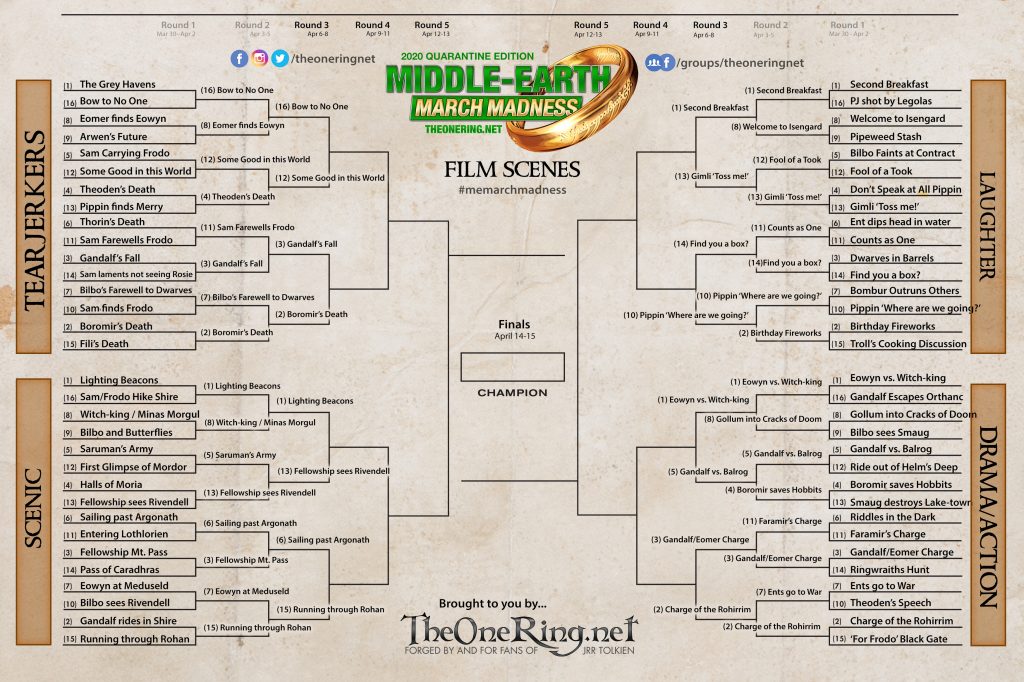
Here’s the entire Round Three bracket:
So now comes the Sweet Sixteen round! You have until 10pm ET Wednesday 8th April, to vote in this Round. Every vote counts; and the choices get harder as we move through the rounds. Click here to go to the survey and place your votes. Don’t forget to tune in to our LIVE results show starting at 10pm ET on Wednesday evening; as ever, you’ll be able to find that on our facebook page (and you can watch last night’s show here). As usual, results will also be posted here around 10am ET, on Thursday 9th in the morning; and then on to Round Four!
What are your predictions now for 2020’s Champion? Which pairings are the hardest choices? Share your thoughts on facebook, in the chat room or on the message boards. Onwards!